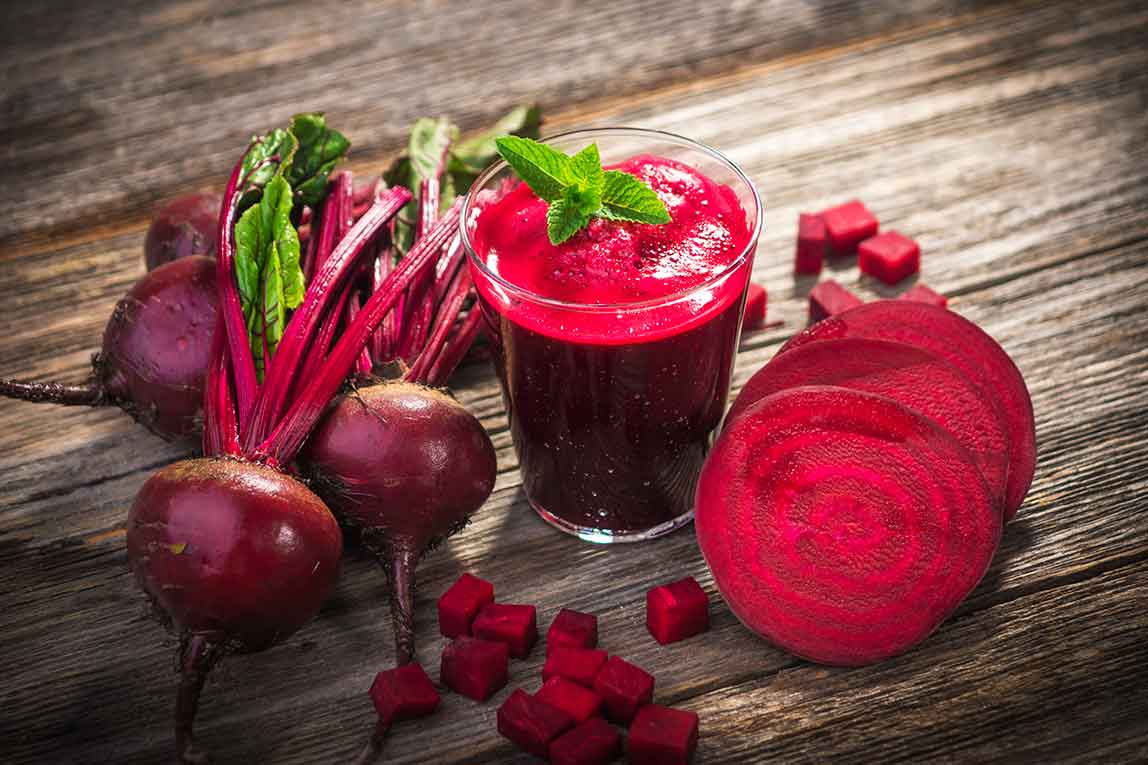
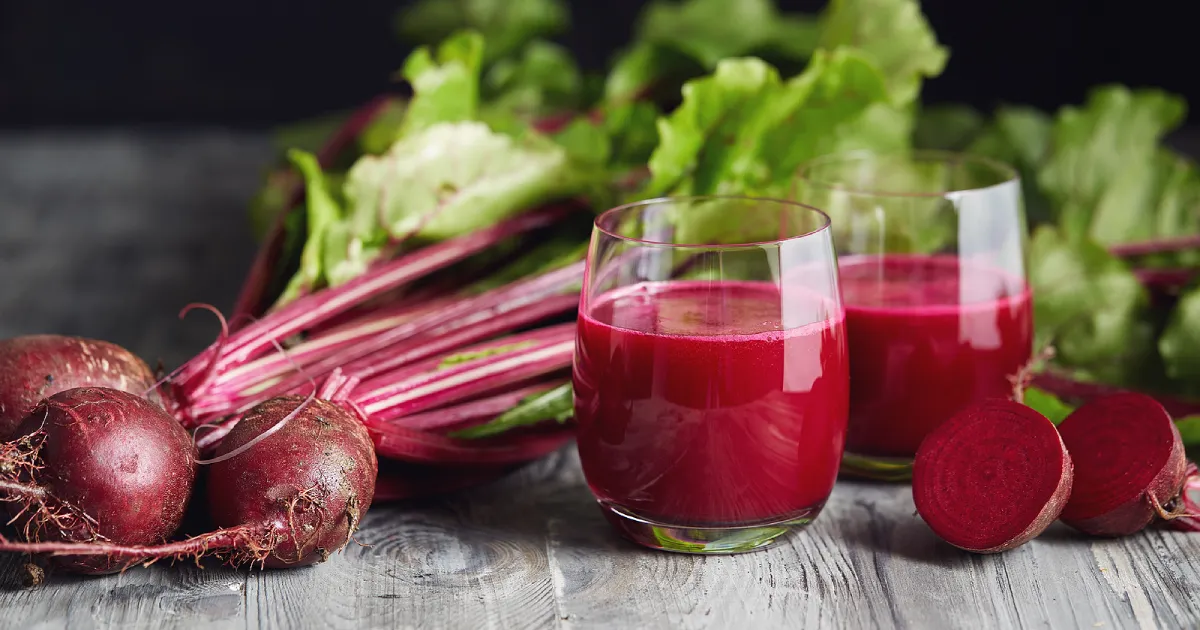
Beet juice, typically known as beetroot juice in scientific research, is a nitrate-rich vegetable juice made from whole beets.
There is a vast range of research exploring beet juice’s potential benefits for sports performance, healthy aging, blood pressure management, and more.
But does beet juice really provide these benefits? In short: it may, but the exact answer depends on the type, dose, and context.
This article reviews the most recent scientific research on beet juice to provide the answers and clarifies what they mean for you.
Table of contents
Why Beet Juice May Have Benefits
While beet juice contains a good mix of nutrients like magnesium and potassium, most of the research focus has been on its nitrate content:
- Beet juice contains high levels of nitrate, which can be present in concentrations ranging from around 300 mg to 1500 mg per dose (serving). The exact dose will depend on the quantity and type of juice consumed, with scientific research often using highly concentrated varieties.
- Nitrate is a compound that can convert to nitric oxide in the body through the nitrate-nitrite-nitric oxide pathway.
- Nitric oxide has vasodilation properties, which basically means that it can relax and widen blood vessels. This vasodilation may help to lower blood pressure and potentially improve sports performance.
In short, beet juice contains high amounts of naturally occurring nitrates which can increase the body’s nitric oxide production. This is why scientific research is investigating its potential benefits.
While whole beets are also high in nitrate, the amount provided can vary; reputable beet juice products are more likely to provide a significant, labeled dose.
Potential Benefits
First, let’s take a look at what recent science says about the potential benefits of beet juice.
The available research has primarily investigated the potential of beet juice for areas including:
- Impact on health markers like blood pressure
- Sports performance: Endurance, performance, and strength
- Healthy aging: Cognitive function, heart function
Beet Juice May Support Lower Blood Pressure
First, there are many studies that have investigated the effect of beet juice on blood pressure:
- A 2025 systematic review of five randomized controlled trials (RCTs) found that beet juice supplementation may lower systolic and diastolic blood pressure in participants with peripheral artery disease.
- A 2024 systematic review analyzed the impact of beet juice on blood pressure and referenced this against guidelines from the European Society of Hypertension. The review found that consuming an average 200–800 mg (3.2–12.9 mmol) of nitrate daily from beet juice may lower systolic blood pressure.
- In a 2022 systematic review, researchers reviewed the effects of herbal supplements on blood pressure. The review found that beet juice appeared to lower systolic blood pressure, but that two studies had found no effect. The researchers identified that participants in these two studies were aged over 65 years, which was an age difference compared to the studies showing positive effects.
- Another 2022 systematic review found that beetroot juice lowered systolic blood pressure in patients with arterial hypertension. Arterial hypertension was defined as systolic blood pressure over 130 mmHg and diastolic blood pressure over 80 mmHg.
Nutritionist’s Note
Systematic reviews are large studies that consider the totality of evidence from existing studies. Since these large reviews consistently found evidence for beetroot juice lowering systolic blood pressure, it is possible that beet juice may be beneficial for blood pressure.
However, I noticed that the authors of these studies listed some limitations. These included small sample sizes and differences between the studies they reviewed (known as heterogeneity), such as differences in dosage and participant health status. One review also noted that because beetroot juice is a source of potassium (known to lower blood pressure) it can’t be viewed as a nitrate-only benefit.
Note: If you have interest in using beetroot juice to help with blood pressure, please consult your healthcare provider. Also, I’m aware that conversions can be confusing: please note that 1 mmol of nitrate is approximately 62 mg.
Beet Juice May Improve Sports Performance
Like with blood pressure, much of the available research on beet juice focuses on sports performance. As mentioned earlier, this is because beet juice may enhance blood flow through its high nitrate content.
Below, you can see some of the latest, sport-specific findings from scientific research:
- Swimming: A 2025 systematic review found mixed evidence for beet juice. While no general effect was seen, it found that “high doses” – above 520 mg (8.4 mmol) nitrate – taken 3 hours before exercise may improve performance.
- Athletics: A 2025 systematic review found that beet juice “consistently enhanced oxygen efficiency” and improved endurance. Among juices, it was the “most reliable” for performance enhancement.
- Professional athletes: Another 2025 systematic review found that beet juice supplementation may improve short-term (3 hours before exercise) and long-term (when consumed for over 3 days) strength and physical performance. These observed effects were seen with nitrate doses of 515–1,017 mg (8.3–16.4 mmol).
- Cycling: A 2024 systematic review found that beet juice supplementation helped cyclists improve their time to peak power (time to reach top speed) during 30-second sprints. However, it had no impact on their mean power, meaning it improved acceleration rather than their average power.
- Soccer: A systematic review noted that beet juice rich in nitrate could help prevent performance decreases in elite soccer players at 24 hours and 48 hours after matches. This was measured based on performance during a 20m sprint, with the study also finding that beet juice supplementation reduced delayed muscular soreness (DOMS).
Nutritionist’s Note
While the evidence is mixed and research is ongoing, looking through these studies I see a general trend for beet juice appearing to have a slight beneficial impact on sports performance.
However, it is important to note the importance of nitrate dose size – these findings don’t mean that any generic store-bought beet juice will improve sports performance. They might if they contain a significant enough amount of nitrate, so be sure to check product labels carefully to see the dose they provide.
For individuals wishing to try beet juice as a potential performance aid, the effective nitrate dose in several of these systematic reviews was >500 mg.
Recent Research on Healthy Aging
While the evidence base for beet juice in healthy aging isn’t as wide as the previous categories, there has been some relevant published research:
- Cognition: A 2025 systematic review found inconclusive evidence for beet juice improving cognition (mental processes). However, it did improve blood flow – further research is necessary.
- Oral health: According to a 2024 systematic review, nitrate supplementation led to improvements in the oral microbiome – meaning the types and quantities of bacteria in the mouth. It also led to decreased gingival inflammation (gum inflammation) and reduced acidity (by raising salivary pH).
- Body composition: A 2023 systematic review evaluated the impact of beet juice on body composition. However, it found no evidence for any impact on waist circumference, body fat percentage, or any other measures of body composition.
Nutritionist’s Note
Looking at these studies, it is possible that beet juice supplementation may slightly improve some “healthy aging” measures. It appears to have a beneficial impact on oral health, and further research on its impact on cognition may shed more light in this area.
However, there is no evidence for it having an effect on weight.
Important Considerations
For anyone choosing to drink beet juice, the existing research shows us that there are some important factors to consider.
The most important of these appear to be dose, timing, and type of beet juice.
- Dose: Studies show that effective doses for sports performance are quite high. According to systematic reviews, the most effective results were seen at doses of >500 mg nitrate. In contrast, a systematic review on beet juice for blood pressure found that 200–800 mg nitrate doses may be effective.
- Timing: Research identified that beet juice had the highest acute (short-term) benefit for sports performance when consumed 3 hours before physical activity.
- Type of beet juice: The amount of nitrate in beet juice can vary significantly from product to product, so it’s important to choose wisely. For example, a 2019 study took a sample of 24 beet juice products and assessed their nitrate content per serving. Nitrate per serving ranged from 0.43 mmol (26.7 mg) to 18.77 mmol (1,163.7 mg).
Nutritionist’s Note
When considering findings from scientific research, we should also consider the individual response. What I mean by this is that responses can differ by person due to age, health status, type of exercise, and many other potential factors.
For this reason, it is important to consider how an ‘effective dose’ of beet juice may impact you personally. If considering beet juice for a health issue like high blood pressure, make sure you consult with your healthcare provider.
If you’re a professional athlete, consulting with a sports nutrition team (or similar) would be the best way to consider how it may help (or not) with your unique, personal needs.
Lastly, don’t blindly trust that any beet juice will be high in nitrate – research shows that some contain barely any. Make sure to check nutrition labels carefully to see the precise nitrate content of a specific beet juice product. ‘Beet shot’ products tend to contain around 400 mg nitrate (check labels to confirm).
Potential Drawbacks
While most of the research on beet juice is neutral to positive, there are some potential drawbacks we should consider.
Can Beet Juice Lead to Nitrosamine Formation?
Earlier we learned about the nitrate-nitrite-nitric oxide pathway, but there is another potential pathway where nitrite forms nitrosamines rather than nitric oxide. This is a serious issue because nitrosamines have been categorized as potentially carcinogenic in humans – meaning they can potentially cause cancer.
You may have heard health concerns about processed meat mentioned in the media, which is largely due to the ingredient sodium nitrite. Sodium nitrite is typically used as a preservative in processed meat.
Plant-based foods are less likely to form nitrosamines than processed meats because polyphenols and vitamin C in plants can help inhibit this conversion. However, beet juice is a highly concentrated source of nitrate, which converts to nitrite, so is there any reason to worry?
There are several factors to consider:
- How nitrosamines form: In the context of nitrate/nitrite, nitrosamines are formed when nitrates react with amines in protein. Unlike meat, beet juice is not a significant protein source. However, it is possible that it may be consumed alongside a protein source.
- Polyphenols and vitamin C: In addition to its high nitrate content, beet juice contains high levels of polyphenols and a moderate amount of vitamin C. Research shows that both vitamin C and polyphenols may help to prevent nitrites forming into nitrosamines.
- Heat and nitrosamine formation: Nitrosamines can form in the stomach, but they can also form when exposed to high heat processes (like frying bacon). This factor isn’t relevant to beet juice.
Research on Beet Juice and Nitrosamine Formation
Despite the lower possibility of nitrosamine formation, there have been concerns raised about beet juice since it is such a highly concentrated nitrate source.
A 2019 randomized controlled trial involving 29 participants investigated the potential for beet juice to increase nitrosamine formation:
- One dose: A significant increase in N-nitroso compounds (including nitrosamines) was found in urine after one dose of beet juice.
- Seven doses: After seven consecutive daily doses of beet juice, this formation of N-nitroso compounds had increased further.
- Impact of vitamin C: Vitamin C supplementation inhibited (significantly reduced) the increase after one dose. However, it failed to have this effect after seven daily doses.
- Dosage used: The study used a concentrated beet juice that contained 400 mg of nitrate.
Based on the results of this study, the authors urged caution over “chronic use” of beet juice, while admitting that more research is necessary.
Beeturia
An interesting potential side effect of beet juice is that it can potentially cause beeturia in a small proportion (10–14%) of people.
While it is considered a benign, short-term condition, beeturia is characterized by a slight reddening of the urine. This is due to the high concentration of betacyanins (polyphenols with a red pigment) in beet juice.
Beeturia will resolve naturally and has no lasting effects, nor does it cause any harm.
In fact, carrot juice can cause a similar condition (called carotenemia) due to the orange-pigmented compounds it contains.
Medical Interactions
Since beet juice may potentially lower blood pressure, its use should be considered with the consultation of a healthcare provider for some individuals.
For example, if beet juice had a blood-pressure-lowering effect, it could potentially cause hypotension in individuals with low blood pressure.
Additionally, anyone using hypertensive medications to lower blood pressure should consult with their healthcare provider before using beet juice.
What Nutrients Are In Beet Juice?
Lastly, if you’ve been wondering what nutritional value a serving of beet juice contains, we’ll now review its nutritional composition.
Remember that the nutrient content will depend on the amount and concentration of a beet juice product.
However, according to USDA data, a typical 248g (8 fl oz) glass of beet juice provides the following nutrients:
| Nutrient | Amount | % Daily Value |
|---|---|---|
| Calories | 62 kcal | |
| Carbohydrates | 14.7g | 5% |
| Fiber | 2.73g | 10% |
| Sugars | 12.0g | |
| Fat | 0.15g | <1% |
| Saturated fat | 0.03g | <1% |
| Protein | 1.79g | 4% |
| Cholesterol | 0 mg | 0% |
According to the USDA data, a cup of beet juice is also a good source of the following vitamins and minerals:
- Copper: 0.22 mg (24% DV)
- Folate, DFE: 64.5 mcg (16% DV)
- Magnesium: 34.7 mg (8% DV)
- Potassium: 317 mg (7% DV)
- Vitamin B6: 0.12 mg (7% DV)
- Vitamin C: 6.2 mg (7% DV)
- Riboflavin (B2): 0.08 mg (6% DV)
Note: Percent daily values are based on a typical 2,000 calorie diet.
Is Beet Juice a Good Dietary Addition?
In this article, we’ve looked at where evidence supports beet juice (potentially blood pressure, sports performance, and oral health). We’ve also seen where the science doesn’t support clear benefits (such as for body composition and cognitive health).
While beet juice also provides a good range of essential nutrients, it’s relatively expensive and these nutrients are available elsewhere. For these reasons, beet juice will be of more interest to people interested in its potential benefits for blood pressure and sports performance.
Although some of the studies had small sample sizes and mixed results, they do appear to show beet juice having a slight general benefit in these areas. Whether beet juice is a worthy addition to the diet will depend on how important this “slight” benefit may be to you.
Once again, if considering beet juice for health reasons, please discuss this with your healthcare provider to help make a safe and individualized decision.
References
Full List of Scientific References
(Click to Expand)
All citations used within this article are listed below, with full details for each scientific source.
- V. Kapil et al. (2020). The noncanonical pathway for in vivo nitric oxide generation: The nitrate-nitrite-nitric oxide pathway. View study in the Pharmacological Reviews journal
- Nathan S. Bryan et al. (2022). Nitric oxide deficiency is a primary driver of hypertension. View journal in the Biochemical Pharmacology journal
- Carlos A. Umaña Mejia et al. (2025). Efficacy of beetroot juice in patients with peripheral artery disease: A systematic review. View study in the Cureus journal
- Rebecca Grönroos. (2024). Effects of beetroot juice on blood pressure in hypertension according to European Society of Hypertension guidelines: A systematic review and meta-analysis. View study in the NMCD journal
- Anna Lipert et al. (2022). The effect of herbal supplements on blood pressure: Systematic review and meta-analysis. View study in Antioxidants journal
- Cicero Jonas R. Benjamin et al. (2022). Nitrate derived from beetroot juice lowers blood pressure in patients with arterial hypertension: A systematic review and meta-analysis. View study in Frontiers journal
- Raul Dominguez et al. (2025). Sport supplementation in competitive swimmers: A systematic review with meta-analysis. View study in the Journal of the International Society of Sports Nutrition
- Biljana Vitosevic et al. (2025). Juice-based supplementation strategies for athletic performance and recovery: A systematic review. View study in Sports journal
- Chen Tian et al. (2025). Effects of beetroot juice on physical performance in professional athletes and healthy individuals: An umbrella review. View study in Nutrients journal
- Rachel Tan et al. (2024). Effects of dietary nitrate supplementation on high-intensity cycling sprint performance in recreationally active adults: A systematic review and meta-analysis. View study in Nutrients journal
- Rodrigo Abreu et al. (2023). Effects of dietary supplements on athletic performance in elite soccer players: A systematic review. View study in the Journal of the International Society of Sports Nutrition
- Anna Nowak et al. (2025). Beetroot juice supplementation as a healthy aging strategy through improving physical performance and cognitive functions: A systematic review. View study in Nutrients journal
- Shatha S. Alhulaefi et al. (2024). Effects of dietary nitrate supplementation on oral health and associated markers of systemic health: A systematic review. View study in Critical Reviews in Food Science and Nutrition journal
- Reza Afrisham et al. (2023). The effects of beetroot and nitrate supplementation on body composition: A GRADE-assessed systematic review and meta-analysis. View study in the British Journal of Nutrition
- Edgar J. Gallardo et al. (2019). What is in your beet juice? Nitrate and nitrite content of beet juice products marketed to athletes. View study in the International Journal of Sport Nutrition and Exercise Metabolism
- National Toxicology Program. (2021). National Toxicology Program: 15th Report on Carcinogens. N-Nitrosamines: 15 Listings. View report in the National Library of Medicine
- S R Tennenbaum et al. (1989). Preventive action of vitamin C on nitrosamine formation. View study in the National Library of Medicine
- Siyang Deng et al. (2022). Effect of plant polyphenols on the physiochemical properties, residual nitrites, and N-nitrosamine formation in dry-fried bacon. View study in Meat Science journal
- Julia E. Berends et al. (2019). Consumption of nitrate-rich beetroot juice with or without vitamin C supplementation increases the excretion of urinary nitrate, nitrite, and N-nitroso compounds in humans. View study in the International Journal of Molecular Sciences
- Haley M. Sauder. (2023). Beeturia. View study in the National Library of Medicine
- USDA. (2024). Beet juice nutrients per 248g. View USDA data