
There is a relatively common claim that carbohydrates get stored as fat at high intake levels.
However, this is a bit of a nutrition myth.
While carbohydrates can be stored as fat, this usually does not happen in a significant manner.
This article will provide a simple overview of what happens when we eat carbohydrates and the circumstances in which they would be stored as fat.
What Happens When We Eat Carbohydrates?
Firstly, let’s take a very simplified look at what happens when we consume dietary carbohydrates.
When we consume carbohydrates, enzymes within the body break them down into simple sugars, which then enter the bloodstream. When in the blood, these sugars are known as “blood glucose” (1).
The Role of Insulin and Glycogen Storage
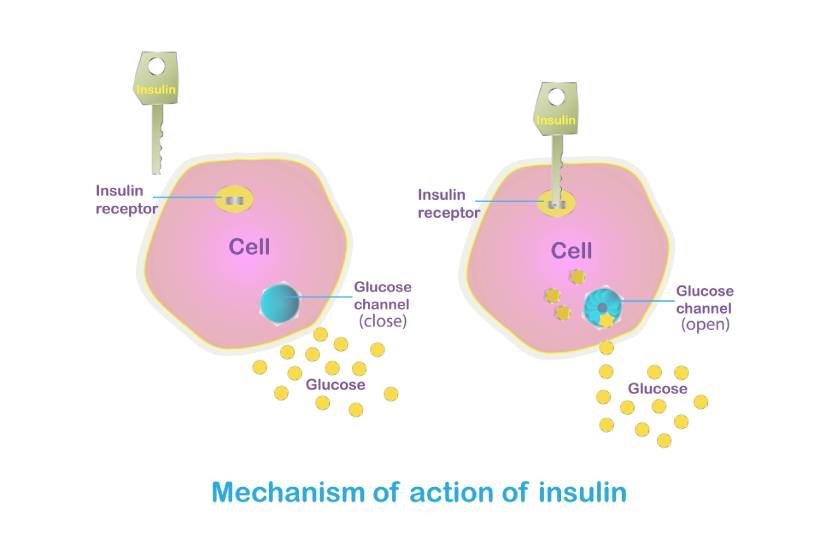
When blood glucose levels rise, the pancreas releases a hormone called insulin (2).
The major role of insulin is to promote glucose uptake in the liver and muscle cells all around the body (3).
If the body can sufficiently meet immediate energy needs, glucose entering the cells is stored in the form of glycogen. Glycogen is sometimes referred to as the human body’s ‘storage form of glucose’ for later use (4, 5).
The process of converting sugars into glycogen is known as glycogenesis.
As insulin levels rise, blood glucose levels fall. This decrease in blood glucose happens because of the increased cellular uptake of glucose from the blood.
When Does Carbohydrate Get Stored As Fat?
If carbohydrates usually get stored as glycogen, then in what situation would carbohydrates be stored as fat?
This scenario can occur when glycogen stores are fully saturated.
In this scenario, the further consumption of carbohydrates would lead to some of these carbs being converted to fatty acids. The process of converting carbohydrates into fat is known as ‘de novo lipogenesis’ (6, 7).
However, rather than being actually converted to fat, excessive carbohydrate intake usually leads to fat storage via different means.
How this fat storage occurs is explained by daily energy intake, energy expenditure, and oxidative priority.
The Oxidative Priority of Fuels and Overall Energy Intake
Oxidative priority refers to the preferential sequence in which the human body burns available fuels.
Dietary fat has the lowest oxidative priority, which means that the body will use carbohydrates and protein (and alcohol) before it oxidizes—or “burns”—dietary fat.
A high-carbohydrate diet that features excessive energy will lead to fat storage not because the carbs are turned into fat. Instead, the dietary fat itself isn’t being oxidized and is thus stored as fat (8).
In other words: since carbohydrates have oxidative priority over fat, the carbohydrates in the diet will be burned before the dietary fat.
To put this simply:
- Carbs get preferentially burned at the expense of dietary fat.
- Thus, a higher intake of dietary carbohydrates slows the rate of fat oxidation.
- In an energy surplus (excessive calorie diet), this means that not all of the dietary fat being consumed will be oxidized.
- The unoxidized fat will be stored as body fat because carbohydrate oxidation displaced fat oxidation.
Carbohydrate Oxidation Displaces Fat Oxidation, But Energy Intake Is Key
As explained above, higher carbohydrate intake can result in more body fat being stored. However, the dietary fat portion of the diet is usually stored rather than the carbohydrate itself.
It is also important to note that this does not say anything negative about carbohydrates themselves.
Excessive intake of carbohydrates and/or fat will both lead to fat storage. Likewise, a reduced energy intake diet would mean both carbohydrates and fat can be fully oxidized, and hence the body will not store fat (9).
All in all, excessive energy intake rather than a particular macronutrient is the main driver of fat storage:
- Excessive carbohydrate intake slows/displaces fat oxidation, leading to fat storage.
- Excessive fat intake increases fat needing to be oxidized, leading to fat storage.
How Much Glycogen Can We Store Before Carbohydrates Are Converted To Fat?
If the body converts carbohydrates to fat when glycogen stores are full, then the question is: how much glycogen can we store?
The answer seems to be: quite a lot.
While total glycogen storage will somewhat vary depending on the individual, published scientific literature estimates that the human body stores approximately 500 to 600 grams of glycogen (10, 11, 12).
Furthermore, based on a ‘massive carbohydrate overfeeding’ study on human participants, the absolute capacity for glycogen storage was 15 grams of glycogen per kilogram of body weight (11).
In this study, the process of de novo lipogenesis—converting carbohydrates to fat—did not start until stored glycogen levels were approximately 500 grams. Furthermore, even at this level of glycogen saturation, it took 475 grams of carbohydrate per day to make just 150 grams of fat (11).
Although carbohydrates can “turn into fat” and get stored as body fat, this really shows that the process is inefficient and requires massive levels of carbohydrate overfeeding.
Glycogen Stores Can Be Depleted Quickly
Since de novo lipogenesis only kicks in when glycogen stores are full, it is also important to consider the ease of depleting glycogen stores.
The Role of Glucagon, Diet, and Exercise
When blood glucose levels fall, the pancreas releases a hormone called glucagon. This hormone tells the liver and muscle cells that the body requires more glucose. As a result, these cells start breaking down glycogen and releasing it back into the bloodstream as glucose (12).
This process is known as glycogenolysis, and as blood glucose rises, glycogen levels are depleted.
Activities such as vigorous exercise and fasting can also significantly increase glucagon levels, thereby depleting glycogen stores (13, 14).
Summary
- Excessively high carbohydrate intake can increase fat storage, but it’s mostly not the carbs being stored as fat.
- Most stored fat comes from dietary fat.
- Dietary fat gets stored due to reduced fat oxidation resulting from an excessive energy intake, whether from carbohydrates or dietary fat.
- Carbohydrates can be converted to fat when glycogen levels are full via de novo lipogenesis, but this process is inefficient and only stores a small amount of fat.
Related Articles