
While some people may wish to reduce their carbohydrate intake, active people or athletes may require higher intakes to support their energy needs. Others may just want to focus on higher-carb foods that actually provide a good range of nutrients.
In this article, to help you make smarter carbohydrate choices, we provide a list of 20 healthy high-carb foods that also provide key vitamins and minerals.
How We Chose Each Food
To be included, each food must be high in at least three vitamins or minerals per typical serving, based on the FDA definition that a food serving providing 20% of the Daily Value (DV) for a nutrient is “high” in that nutrient.
It must also contain a minimum 20 grams of carbohydrate per serving; this was to allow a wide variety of carb-rich foods rather than solely grains.
For each food, we’ll let you know its carbohydrate content per 100g, per serving, the vitamins and minerals it provides, and a pairing suggestion for further increasing carbohydrate intake. The foods are presented in order of the highest carbohydrate per serving.
If you want to include more carbohydrates in your diet while still focusing on nutrient quality, the foods in this guide provide a good foundation for your nutrition strategy.
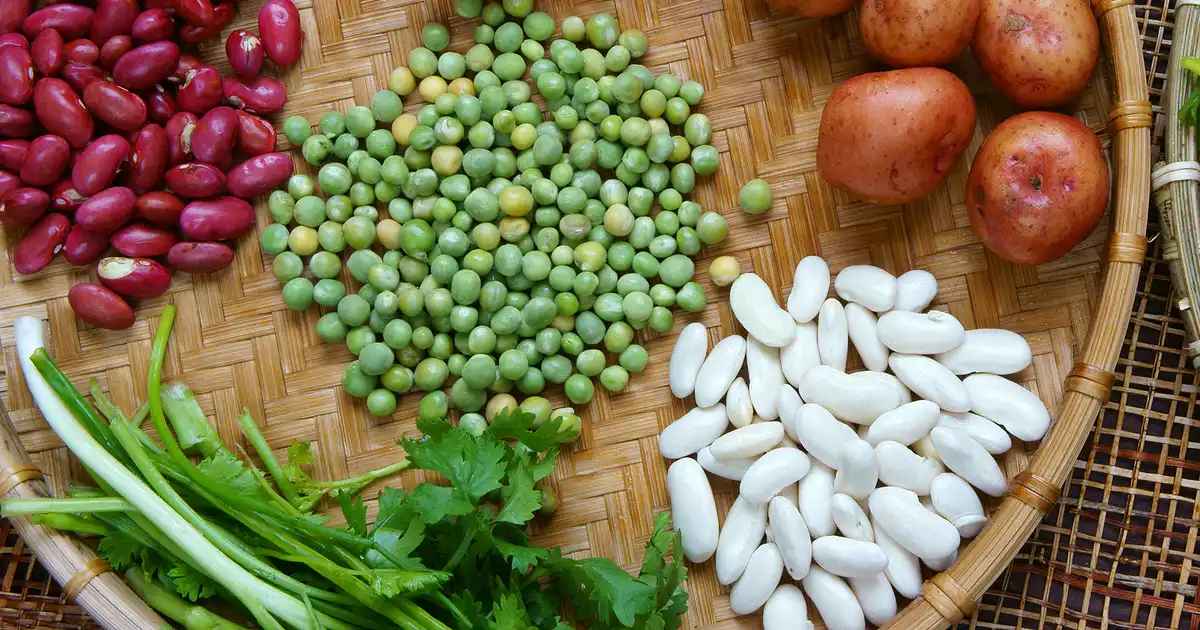
1) Adzuki Beans
Adzuki beans are a carbohydrate-rich legume that can be a great addition to stews.
- Carbohydrate per 100g: 24.8g
- Carbohydrate per 230g cup: 57g
- Key nutrients per cup: Thiamin (B1), folate, magnesium, phosphorus, potassium, manganese
- Increase carbohydrate further: Mix with brown rice or wild rice
Source: USDA – Beans, adzuki, boiled
2) Oats
Oats are a carbohydrate-rich grain that can be used for making oatmeal (oat porridge) or as an ingredient in smoothies.
- Carbohydrate per 100g: 67.7g
- Carbohydrate per 81g cup: 54.8g
- Key nutrients per cup: Thiamin, magnesium, phosphorus, zinc, copper, manganese, selenium
- Increase carbohydrate further: Add chopped bananas or mixed berries
Source: USDA – Oats, regular, dry
3) Mango
Mangoes can provide a significant amount of carbohydrates when eaten as a whole fruit.
- Carbohydrate per 100g: 15.0g
- Carbohydrate per 336g fruit: 50.4g
- Key nutrients per 336g fruit: Vitamin C, folate, copper
- Increase carbohydrate further: Mix with chopped pineapple
Source: USDA – Mangos, raw
4) Amaranth
Amaranth is a whole grain that offers a broad range of nutrients in addition to high carbohydrate levels. You can make porridge with it or use it in soups and stews.
- Carbohydrate per 100g: 18.7g
- Carbohydrate per 246g cup: 46.0g
- Key nutrients per 246g cup: Iron, magnesium, phosphorus, copper, manganese, selenium
- Increase carbohydrate further: Mix with red kidney beans or green peas
Source: USDA – Amaranth grain, cooked
5) Swiss-Style Muesli
Swiss-style muesli is full of oats, wheat, and dried fruit, giving it a substantial carbohydrate content.
- Carbohydrate per 100g: 73.8g
- Carbohydrate per 1/2 cup (66g): 45g
- Key nutrients per 1/2 cup (66g): Riboflavin (B2), magnesium, copper
- Increase carbohydrate further: Cup of milk
Source: USDA – Cereals, FAMILIA
6) Chickpeas
Chickpeas are a great addition to curries, stir-fries, and stews.
- Carbohydrate per 100g: 27.4g
- Carbohydrate per 164g cup: 44.9g
- Key nutrients per 164g cup: Folate, iron, phosphorus, zinc, copper, manganese
- Increase carbohydrate further: Combine with couscous or sweet potato
Source: USDA – Chickpeas, boiled
7) Black Beans
Black beans are a popular legume that can be used in many ways, from stews and stir-fries to tortilla wraps and more.
- Carbohydrate per 100g: 23.7g
- Carbohydrate per 172g cup: 40.8g
- Key nutrients per 172g cup: Thiamin, folate, iron, magnesium, copper, manganese
- Increase carbohydrate further: Eat with rice or a tortilla wrap
Source: USDA – Beans, black, boiled
8) Pomegranate
Pomegranates are another fruit which provide a substantial amount of carbohydrates when you consume the whole fruit.
- Carbohydrate per 100g: 18.7g
- Carbohydrate per 282g fruit: 40.7g
- Key nutrients per 282g fruit: Folate, vitamin C, vitamin K, copper
- Increase carbohydrate further: Add pomegranate to oatmeal or swiss-style muesli
Source: USDA – Pomegranates, raw
9) Lentils
Lentils are another nutrient-rich carbohydrate source that can be added to dishes like curries, stir-fries, and stews.
- Carbohydrate per 100g: 20.1g
- Carbohydrate per 198g cup: 39.8g
- Key nutrients per 198g cup: Iron, phosphorus, zinc, copper, manganese, thiamin, pantothenic acid (B5), vitamin B6, folate
- Increase carbohydrate further: Mix with rice
Source: USDA – Lentils, boiled
10) Quinoa
Quinoa is a whole grain that can be used as a rice alternative or added to soups and stews.
- Carbohydrate per 100g: 21.3g
- Carbohydrate per 185g cup: 39.4g
- Key nutrients per 185g cup: Magnesium, phosphorus, copper, manganese
- Increase carbohydrate further: Mix with lentils or eat with sweet potato
Source: USDA – Quinoa, cooked
11) Sweet Potato
Sweet potatoes are among the most carb-rich vegetables and are available in a range of sizes; opt for large ones for the most carbohydrate.
- Carbohydrate per 100g: 20.7g
- Carbohydrate per 180g sweet potato: 37.3g
- Key nutrients per 180g sweet potato: Vitamin A, vitamin C, pantothenic acid, vitamin B6, copper, manganese
- Increase carbohydrate further: Pair with rice, quinoa, or amaranth
Source: USDA – Sweet potato, baked in skin
12) Baked Potato
Baked potatoes are another vegetable that can come in a range of sizes, and they can be eaten with carbohydrate-rich toppings.
- Carbohydrate per 100g: 21.2g
- Carbohydrate per medium (173g) potato: 36.7g
- Key nutrients per medium (173g) potato: Vitamin B6, potassium, copper
- Increase carbohydrate further: Top with bean chilli or sweet corn
Source: USDA – Potatoes, baked, flesh and skin
13) Whole-wheat Pasta
Whole-wheat pasta provides a nutritional upgrade on regular pasta, and it can be used in the same way. Use it in pasta dishes or as a side.
- Carbohydrate per 100g: 30.1g
- Carbohydrate per 117g cup: 35.2g
- Key nutrients per 117g cup: Niacin (B3), copper, manganese, selenium
- Increase carbohydrate further: Serve a pasta dish with bread
Source: USDA – Pasta, whole-wheat, cooked
14) Buckwheat
Buckwheat is technically a seed but it’s considered a whole grain, and it can be used in porridge, stews, and as an alternative to rice in dishes.
- Carbohydrate per 100g: 19.9g
- Carbohydrate per 168g cup: 33.4g
- Key nutrients per 168g cup: Magnesium, copper, manganese
- Increase carbohydrate further: Mix with sweet potatoes and green peas
Source: USDA – Buckwheat groats, cooked
15) Acorn Squash
Acorn squash is a popular seasonal vegetable that can be roasted, mashed, or made into soups and stews.
- Carbohydrate per 100g: 14.6g
- Carbohydrate per 205g cup: 29.9g
- Key nutrients per 205g cup: Vitamin C, thiamin, pantothenic acid, magnesium, manganese
- Increase carbohydrate further: Stuff roasted acorn squash with chickpeas, tomatoes, and cheese
Source: USDA – Squash, winter, baked
16) Whole-wheat Bread
Whole-wheat bread offers more vitamins and minerals than refined bread, and can be used for making sandwiches and breadcrumbs.
- Carbohydrate per 100g: 42.7g
- Carbohydrate per 2 slices (64g): 27.3g
- Key nutrients per 2 slices (64g): Manganese, selenium, thiamin
- Increase carbohydrate further: Make a sandwich using a protein source with salad fillings like avocado, tomato, and sweet corn.
Source: USDA – Bread, whole-wheat, commercially prepared
17) Parsnips
Parsnips are a popular root vegetable that can be used as a side or in soups and stews.
- Carbohydrate per 100g: 17g
- Carbohydrate per 160g parsnip: 27.2g
- Key nutrients per 160g parsnip: Vitamin C, folate, copper, manganese
- Increase carbohydrate further: Serve with carrots and peas
Source: USDA – Parsnips, boiled
18) Green Peas
Green peas are very versatile and can be a side vegetable or used in dishes as varied as curries and stews to rice and pasta dishes.
- Carbohydrate per 100g: 15.6g
- Carbohydrate per 160g cup: 25.0g
- Key nutrients per 160g cup: Vitamin C, thiamin, vitamin B6, folate, vitamin K, copper, manganese
- Increase carbohydrate further: Mix with rice or potatoes
Source: USDA – Peas, green, boiled
19) Butternut Squash
Butternut squash is another carbohydrate-rich vegetable that can be roasted, mashed, stuffed, or used in soups and stews.
- Carbohydrate per 100g: 10.5g
- Carbohydrate per 205g cup: 21.5g
- Key nutrients per 205g cup: Vitamin A, vitamin C, manganese
- Increase carbohydrate further: Stuff with quinoa, peas, and mashed sweet potato
Source: USDA – Squash, butternut, baked
20) Wild Rice
Wild rice isn’t quite as common as brown rice. While both are good choices, wild rice contains higher amounts of some nutrients, making it more suitable for this list.
- Carbohydrate per 100g: 21.3g
- Carbohydrate per 164g cup: 34.9g
- Key nutrients per 164g cup: Zinc, copper, manganese
- Increase carbohydrate further: Mix with beans or lentils and peas or edamame
Source: USDA – Wild rice, cooked
How Much Carbohydrate Do You Need?
The FDA has set a daily value of 275 grams for carbohydrates, which is based on a typical 2,000-calorie reference diet. However, this is very much an average, and the exact amount of carbohydrates each individual requires will always depend on context and their personal situation:
- Are they trying to lose, gain, or maintain weight?
- What are their energy requirements based on their body weight and activity levels?
- Are there any sporting performance considerations?
Research has suggested that athletes with high activity levels may need significantly more carbohydrates than the general public:
- Athletes doing 1 hour of exercise per day: A joint position stand between several organizations, including the American College of Sports Medicine, advises 5–7 grams of carbohydrate per kg of body weight, per day.
- Maximizing glycogen: The International Society of Sports Nutrition have recommended 8–12 grams per kg per day for athletes wanting to “maximize glycogen stores,” with glycogen being the body’s storage form of carbohydrate for energy, located in the muscles and liver.
If you need help with establishing the right carbohydrate intake for you, please consult with your healthcare provider, sports performance team, or a nutritionist.
Foods commonly used for quick “energy” such as white rice, honey, and bagels all provide a significant amount of carbohydrates and can be excellent for short-term energy.
However, for people wishing to consume more carbohydrates, the foods in this guide allow you to do so without sacrificing nutrient quality. In other words, you can be sure that you’re increasing your intake of vitamins and minerals in addition to carbohydrates.
Related: For more on carbohydrate, see this guide to foods high in fiber.