
Lemons are a popular citrus fruit packed with vitamin C and flavonoid polyphenols like eriocitrin and hesperidin.
Research on lemons has shown that they may help to reduce post-meal blood sugar levels as well as lower the risk of developing calcium oxalate kidney stones. However, research has also shown that lemon juice is highly acidic and can erode tooth enamel.
In this article, we look at the relevant research on lemons, their potential benefits and downsides, and we present their nutritional profile in full.
Potential Health Benefits
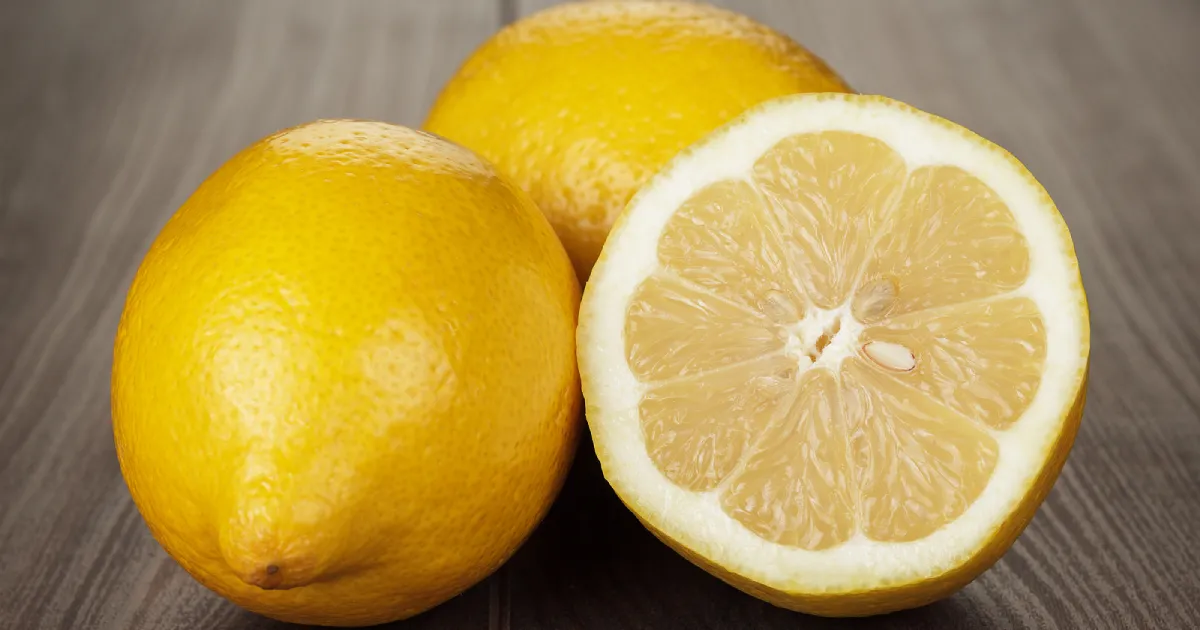
Here are some of the potential benefits of lemons based on findings from scientific studies.
May Lower Post-Meal Blood Sugar Levels
While more research has focused on vinegar, some studies have investigated lemon juice’s effects on blood sugar levels:
- Lowers blood sugar compared to water: A small randomized crossover study published in 2022 fed participants 100 grams of bread with either 250 ml of water, water-diluted lemon juice, or black tea. The study found that the lemon juice drink lowered the blood sugar response to bread by about 35% compared to water 55 minutes post-meal, with tea having no impact.
- Slows down starch digestion: An earlier 2020 randomized crossover trial also found that lemon juice lowered post-meal blood sugar compared to water and black tea. Notably, the study demonstrated that lemon juice delayed the peak blood sugar response by 35 minutes compared to water, suggesting that it slowed starch digestion.
Based on the results of these small studies, consuming lemon alongside a starchy meal like bread or pasta may lower the blood sugar response to the carbohydrates.
The studies also fit with a larger body of evidence suggesting that low-pH (acidic) meals may help lower blood sugar levels. For example, a 2025 systematic review of seven controlled clinical trials found that apple cider vinegar significantly reduced fasting blood sugar.
Further research should help us understand whether acidity itself or other compounds in the food are behind these effects.
Lemons Contain Notable Polyphenol Content
Lemons are a notable source of bioactive compounds called flavonoids, which are a type of polyphenol. These compounds are capable of having health effects in the body:
- Polyphenol content: According to Phenol Explorer, lemons have an average per-100-gram polyphenol content of 59.80 mg.
- Major polyphenol present: The main polyphenols found within lemons are called eriocitrin and hesperidin, which are thought to possess antioxidant and anti-inflammatory properties.
A 2022 randomized controlled trial found that 200 mg of eriomin per day decreased blood sugar and reduced some markers of inflammation over 12 weeks of supplementation. Eriomin is 70% eriocitrin by weight and also contains other citrus polyphenols like hesperidin and naringin.
However, research shows that the mean amount of eriocitrin in fresh lemons is 9.5 mg per 100g. This is less than 7% of the clinical study dose, which means you’d need to eat an unrealistic 1.5 kg of lemons to get the same dose of eriocitrin.
There is little human research on lemon polyphenols, but animal research has found that lemon polyphenols may improve the microbiome (gut health) and lifespan of mice (by three weeks). Please note that this is weak evidence in regard to human health, and we cannot assume lemon polyphenols have the same effect in humans.
May Lower the Risk of Calcium Oxalate Kidney Stones
Some studies have also found that lemon juice may reduce the risk of developing calcium oxalate kidney stones.
This is because the citric acid naturally found in lemons converts to something called citrate in the body. Citrate can bind to calcium in the urine, which forms a compound called calcium citrate.
The formation of calcium citrate can help to prevent free calcium from binding with oxalate, which can cause calcium oxalate kidney stones.
A small randomized trial involving 30 patients with kidney stones supports the potentially protective effect of lemon juice. In this study, 10 patients consumed 85 ml of lemon juice per day over three months, which resulted in:
- More urinary citrate: Patients consuming lemon juice experienced a 2.5x increase in the amount of citrate in their urine, whereas the dietary recommendation group had a slight (0.8x) decrease.
- Decrease in urinary calcium: The lemon juice patients had significantly less calcium in their urine after the study (suggesting it had been bound by citrate), while the dietary recommendation group experienced no decrease.
Can Lemon Juice Reduce Kidney Stone Recurrence Rates?
A large 2022 randomized controlled trial involving 203 patients investigated whether lemon juice supplementation actually decreases the recurrence rate for kidney stones.
Interestingly, the study showed that:
- Recurrence drops after one year: Only 10 patients who supplemented 60 ml of lemon juice twice per day had kidney stone recurrence within one year. In contrast, 22 participants in the (no lemon juice) control group developed another kidney stone.
- No significant difference over two years: Despite the initial success rate, there was no significant difference in recurrence over two years. However, the authors suggested that this may have been influenced by the patients’ adherence rate to daily supplementation falling from 68% after one year to only 48% over two years.
The findings of this study suggest that lemon juice may lower the risk of kidney stone recurrence if someone can successfully adhere to daily supplementation. However, while the lower adherence rate may explain the 2-year findings, we can’t conclusively know if this was the cause of greater recurrence.
Other Studies on Lemons and Health
There have also been some further studies on lemons, but these provide weaker evidence for making health conclusions.
Lemon Juice and Cardiovascular Health
A randomized clinical trial found that one daily tablespoon of lemon juice for eight weeks may lower LDL cholesterol (LDL-C), which is also commonly known as “bad cholesterol.”
These changes were seen from both lemon juice alone and from lemon juice mixed with garlic. However, the effect from lemon juice alone wasn’t statistically significant, which means we can’t be certain it wasn’t caused by random chance.
The effect from 1 tablespoon of lemon juice and 20g of garlic was statistically significant and stronger than supplementing garlic alone.
Lemon Juice Diet and Body Fat Reductions
A “lemon detox diet” study involving Korean women led to reductions in body fat levels over 11 days.
However, the participants consumed lemon juice as part of a daily dietary intake of only 800–1000 calories, making it an extremely low-calorie diet.
This makes it difficult to attribute any of the body fat reductions to lemon juice itself. In fact, the study itself found that a low-calorie control group lost precisely the same amount of body fat.
As a result, there is a lack of evidence for claims of lemon juice having any kind of unique “fat-burning” properties.
Do Lemons Have Any Downsides?
Aside from rare allergies to lemons or lemon seeds, the most notable potential drawback of lemons is dental erosion.
Lemons and Enamel Erosion
A study using bovine teeth compared the potential for various non-alcoholic drinks to cause enamel and dentine loss.
In the study, equivalent-sized enamel and dentine specimens extracted from bovine teeth were placed in either 200 ml of Coca-Cola, Coca-Cola light, Sprite, apple juice, Red Bull, orange juice, Bonaqua Fruits, tap water, swimming pool water, or lemon juice.
After seven days, the results showed that:
- Lemon juice was most erosive: Lemon juice was the most erosive drink.
- Enamel and dentine loss: Lemon juice led to enamel loss of 32 mg and dentine (the inner tooth) loss of 28.3 mg.
- Lemon juice vs. Coca-Cola: Since Coca-Cola led to enamel loss of 7.5 mg and dentine loss of 6.6 mg, lemon juice was more than four times as erosive.
- Significantly higher erosivity: Lemon juice was significantly more erosive than all the other drinks aside from Sprite and apple juice.
While nobody is going to bathe their teeth in lemon juice for seven days, this study does show how erosive lemon juice and its citric acid content can be. For this reason, habitual daily intake of lemon and lemon juice may lead to enamel erosion.
On this point, it is worth noting that the American Dental Association warns that acidic fruit juice may increase the risk of erosion. If you consume lemons or lemon juice and have any dental concerns, please seek guidance from your dentist.
Full Nutrition Facts
Now that you know about some of the potential benefits and downsides of lemons, let’s look at precisely what nutrients they provide.
The following tables show the full nutritional values for lemons per 100 grams and per 84g medium lemon, without peel. We have calculated Percent Daily Values (% DV) and rounded them to the nearest percentage.
Nutrition data source: USDA – Lemons, raw, without peel
Calories and Macronutrients
| Nutrient | Per 100g (% DV) | Per 84g medium lemon (% DV) |
|---|---|---|
| Calories | 29 kcal | 24 kcal |
| Carbohydrates | 9.32g (3%) | 7.83g (3%) |
| Fiber | 2.8g (10%) | 2.35g (8%) |
| Sugars | 2.5g | 2.1g |
| Fat | 0.3g (<1%) | 0.25g (<1%) |
| Saturated fat | 0.04g (<1%) | 0.03g (<1%) |
| Monounsaturated fat | 0.01g | 0.01g |
| Polyunsaturated fat | 0.09g | 0.08g |
| Omega-3 | 0.03g | 0.02g |
| Omega-6 | 0.06g | 0.05g |
| Cholesterol | 0 mg (0%) | 0 mg (0%) |
| Protein | 1.1g (2%) | 0.9g (2%) |
Lemons are low in calories and are primarily a source of carbohydrates. Approximately one-third of their carbohydrate content comes from fiber.
Vitamins
| Vitamin | Per 100g | Per 84g medium lemon |
|---|---|---|
| Vitamin A (RAE) | 1 mcg (<1%) | 0.84 mcg (<1%) |
| Vitamin C | 53 mg (59%) | 44.5 mg (49%) |
| Vitamin D | 0 mcg (0%) | 0 mcg (0%) |
| Vitamin E | 0.15 mg (1%) | 0.13 mg (1%) |
| Vitamin K | 0 mcg (0%) | 0 mcg (0%) |
| Thiamin (B1) | 0.04 mg (3%) | 0.03 mg (3%) |
| Riboflavin (B2) | 0.02 mg (2%) | 0.02 mg (2%) |
| Niacin (B3) | 0.1 mg (1%) | 0.08 mg (1%) |
| Pantothenic acid (B5) | 0.19 mg (4%) | 0.16 mg (3%) |
| Vitamin B6 | 0.08 mg (5%) | 0.07 mg (4%) |
| Folate (B9) | 11 mcg (3%) | 9.24 mcg (2%) |
| Vitamin B12 | 0 mcg (0%) | 0 mcg (0%) |
| Choline | 5.1 mg (1%) | 4.28 mg (1%) |
Lemons provide a substantial amount of vitamin C. They contain most other vitamins, but only in small quantities.
Minerals
| Mineral | Per 100g | Per 84g medium lemon |
|---|---|---|
| Calcium | 26 mg (2%) | 21.8 mg (2%) |
| Iron | 0.6 mg (3%) | 0.5 mg (3%) |
| Magnesium | 8 mg (2%) | 6.72 mg (2%) |
| Phosphorus | 16 mg (1%) | 13.4 mg (1%) |
| Potassium | 138 mg (3%) | 116 mg (2%) |
| Sodium | 2 mg (<1%) | 1.68 mg (<1%) |
| Zinc | 0.06 mg (1%) | 0.05 mg (<1%) |
| Copper | 0.04 mg (4%) | 0.03 mg (3%) |
| Manganese | 0.03 mg (1%) | 0.03 mg (1%) |
| Selenium | 0.4 mcg (1%) | 0.3 mcg (1%) |
While lemons provide a small amount of every mineral, they are not a significant source of any specific one.
Are Lemons a Healthy Choice?
If you enjoy lemons, then they can fit into a balanced diet and they do contribute beneficial nutrients.
Lemons are an excellent source of vitamin C, so if you need to increase your intake of this essential nutrient then they could be a good option. That said, they are far from being the only dietary source, and other citrus fruits like oranges, limes, and kumquats also provide plenty of vitamin C.
Research on their potential to lower post-meal blood sugar levels when consumed alongside carbohydrates is interesting. However, consuming acidic lemon juice each day may not be the best idea for dental health.
How to Use Them
If you do want to include lemons in your diet, then here are some common ways to use them:
- For flavoring in cooked dishes: Squeezing some fresh lemon juice into a stir-fry-style dish can help to enhance the flavor profile. However, please note that vitamin C is sensitive to heat and this will likely degrade the vitamin C content.
- Eat them whole: If you don’t mind their sour taste, you could try to eat lemon in whole pieces. It is probably rare to eat them in this way due to how tart they are.
- Lemon tea: Cut some slices of lemon and put them in a cup with hot water and a green or black tea teabag. This will give the tea a lemon flavor without being too acidic. If you prefer, you could also use the lemon slices without the teabags.
- Lemon water: Add freshly squeezed lemon juice to a glass of plain water.
- Salad dressings and marinades: Freshly squeezed lemon juice works well in salad dressings and marinades. For example, you could combine some lemon juice with olive oil, balsamic vinegar, and toasted sesame seeds for a flavorful dressing.
References
Full List of Scientific References (Select to Expand)
All citations used within this article are listed below, with full details for each scientific source.
- Daniela Freitas et al. (2022). Glycemic response, satiety, gastric secretions and emptying after bread consumption with water, tea or lemon juice: A randomized crossover intervention using MRI. View study in the European Journal of Nutrition
- Daniela Freitas et al. (2020). Lemon juice, but not tea, reduces the glycemic response to bread in healthy volunteers: A randomized crossover trial. View study in the European Journal of Nutrition
- Donya Arjmandfard et al. (2025). Effects of apple cider vinegar on glycemic control and insulin sensitivity in patients with type 2 diabetes: A GRADE-assessed systematic review and dose-response meta-analysis of controlled clinical trials. View study in Frontiers in Nutrition journal
- Phenol Explorer. (n.d.). Showing all polyphenols found in Lemon. View polyphenol data
- Liangliang Yao et al. (2022). Eriocitrin: A review of pharmacological effects. View study in Biomedicine & Pharmacotherapy journal
- Thais Borges Cesar et al. (2022). Nutraceutical eriocitrin (Eriomin) reduces hyperglycemia by increasing glucagon-like peptide 1 and downregulates systemic inflammation: A crossover-randomized clinical trial. View study in the Journal of Medicinal Food
- Siyu Liu et al. (2022). Dietary bioactives and essential oils of lemon and lime fruits. View study in Food Science and Human Wellness journal
- Chikako Shimizu et al. (2019). Effects of lifelong intake of lemon polyphenols on aging and intestinal microbiome in the senescence-accelerated mouse prone 1 (SAMP1). View study in Scientific Reports journal
- Aida Haddad and Shamim S. Mohiuddin. (2023). Biochemistry, citric acid cycle. View article on the National Library of Medicine
- Bekir Aras et al. (2008). Can lemon juice be an alternative to potassium citrate in the treatment of urinary calcium stones in patients with hypocitraturia? A prospective randomized study. View study in Urological Research journal
- Piero Ruggenenti et al. (2022). Fresh lemon juice supplementation for the prevention of recurrent stones in calcium oxalate nephrolithiasis: A pragmatic, prospective, randomized, open, blinded endpoint (PROBE) trial. View study in eClinicalMedicine journal
- Negar Aslani et al. (2016). Effect of garlic and lemon juice mixture on lipid profile and some cardiovascular risk factors in people 30–60 years old with moderate hyperlipidaemia: A randomized clinical trial. View study in the International Journal of Preventive Medicine
- Mi Joung Kim et al. (2015). Lemon detox diet reduced body fat, insulin resistance, and serum hs-CRP level without hematological changes in overweight Korean women. View study in Nutrition Research journal
- O. Stephanie Kayode et al. (2020). Lemon seed allergy: A case presentation. View case study in Allergy, Asthma & Clinical Immunology journal
- Stefan Zimmer et al. (2015). Influence of various acidic beverages on tooth erosion. Evaluation by a new method. View study in PLOS One journal
- American Dental Association. (2025). Dental erosion. View information at the American Dental Association
- USDA. (2019). Lemons, raw, without peel. View nutrition data at USDA FoodData Central