Apples are one of the most common fruits, and an old saying states “an apple a day keeps the doctor away.”
But is there any truth to that statement?
In this article, we review the latest scientific research on the potential benefits of apples. We also examine their complete nutritional properties, including their provision of essential nutrients like fiber, vitamin C, and vitamin K.
Note: While there are many different apple varieties, we will use nutritional data for the popular Gala apple for the purpose of this article.
Table of contents
Apples May Support Heart Health
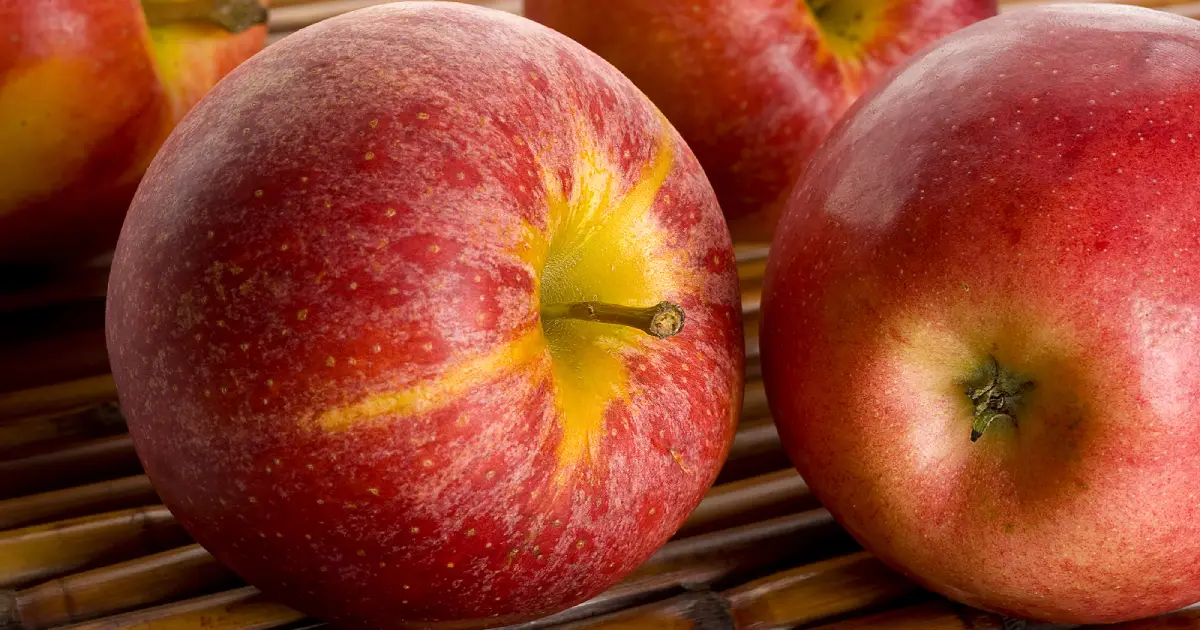
Apples are high in fiber, with a medium-sized Gala apple (172g) providing 4 grams, approximately 14% of the daily value.
There are two main types of fiber: soluble and insoluble. Approximately 30% of the fiber found in apples is soluble fiber.
Soluble fiber has the biggest impact on lowering “bad” LDL cholesterol (LDL-C), which is associated with a higher risk of cardiovascular disease.
Recent findings specifically on apple consumption indicate that apples may have cardiovascular benefits for several reasons:
- A 2022 systematic review of 18 randomized controlled trials evaluated whole apple, apple extract, and apple juice intake’s impact on cardiovascular disease risk markers. The review found a trend for apple products lowering total and LDL cholesterol after at least a week of intake. However, these findings weren’t statistically significant.
- 2021 systematic review of randomized controlled trials found that either apple or apple polyphenol intake led to lower C-reactive protein (CRP) levels. These changes are associated with a lower risk of heart disease.
- An earlier 2017 randomized controlled trial found that high-flavonoid apple intake may improve endothelial function. In the study, consuming apples with their skin on was more beneficial than skinless apples. The researchers noted that the skin of apples is rich in flavonoids, which may confer protective effects.
Nutritionist’s Note
To avoid any confusion, let’s try to put these findings into perspective. I know there are some phrases here that may need explaining. Overall, the studies suggest that apples may help to lower “bad” LDL-C and CRP. CRP is a marker of inflammation – increased CRP levels suggest raised inflammation levels in the body.
The findings on LDL-C weren’t “statistically significant.” This means a clear trend was visible, but the available results didn’t provide enough certainty to confirm it.
Regarding the findings on endothelial function, this refers to the health blood vessel linings. This lining is called the endothelium. Poor endothelial function (known as dysfunction) is associated with an increased cardiovascular risk.
The trial on apple skin (which is rich in flavonoids) indicates that the polyphenol profile of apples potentially provides benefits. Polyphenols such as flavonoids are sometimes referred to as “bioactive compounds” or “antioxidants” and they are associated with health benefits.
Apples and Inflammation
We briefly covered apples and inflammation in the heart health section, but there is more available research on this topic.
Specifically, two studies have investigated the effect of daily apple intake on inflammation:
- A randomized controlled trial assigned participants with overweight and obesity to consume three whole Gala apples per day for six weeks. Participants saw a significant decrease in markers of inflammation (such as -17% CRP) compared to control.
- Another randomized controlled trial in participants with overweight and obesity found that three whole Gala apples led to lower inflammation levels 2, 4, and 6 hours after a high-fat meal compared to control. The apple group also showed higher antioxidant levels in their blood.
These studies suggest that regular apple intake may help reduce inflammation, which may support improved long-term health. For instance, chronically raised inflammation levels have been associated with an increased risk of several chronic diseases.
Rich Source of Bioactive Compounds
Apples contain a broad range of bioactive compounds. These compounds are also known as phytonutrients and they can potentially lead to beneficial health effects.
These bioactive compounds in apples include various classes of polyphenols, including:
- Anthocyanins (particularly red-skinned apples)
- Flavanols
- Flavonols
- Phenolic acids
Based on this, research identifies apples as among the most commonly consumed, widely available high-polyphenol foods.
While they are less common, red-fleshed apples have a unique polyphenol composition. Their red flesh is actually due to the red pigment of anthocyanins, a type of flavonoid they contain.
Anthocyanins have been associated with potential health benefits. They are typically found in blue, red, and purple-colored berries.
Nutritionist’s Note
As you can see above, apples are a great source of polyphenols. However, just a quick note to mention that a significant amount of these compounds are concentrated in the apple’s peel.
In other words, if you peel your apples, you’ll be discarding a large proportion of apple polyphenols. The skin also contains fiber, vitamins, and minerals.
Apples May Improve Digestion
As mentioned, apples are a good source of fiber, with a medium Gala apple providing around 4 grams.
Fiber can have various digestive benefits, including its ability to lower the risk of constipation.
However, a recent 2025 randomized controlled trial suggests that compounds in apples other than fiber may also have benefits for constipation.
In this study, 24 participants either consumed four daily tablets of apple polyphenols (600 mg) or a placebo for 12 weeks. Notably, the participants consuming the apple polyphenols had an additional 2.2 bowel movements each week.
Nutritionist’s Note
I’d like to just add that although the apple polyphenol trial is interesting, we should be careful not to overplay its significance. The results suggest a benefit, but the trial was small (only 24 participants). More research is necessary to better understand the results.
Additionally, research indicates that on average, apples contain around 200 mg of polyphenols per 100g. Therefore, a 600 mg dose would, on average, require around 300g of apple, which is approximately two whole apples.
Nutritional Profile
Now that we know some of the potential benefits of apples, let’s look at the essential nutrients they provide.
The following tables use USDA data for a Gala apple, with nutritional data presented per 100g and per 172g medium apple. Percent daily values (% DV) have been calculated based on this data and are based on a typical 2,000 calorie diet.
Calories and Macronutrients
| Nutrient | Per 100g | Per medium apple (172g) (% DV) |
|---|---|---|
| Calories | 57 kcal | 98 kcal |
| Carbohydrates | 13.7g (5%) | 23.6g (9%) |
| Fiber | 2.3g (8%) | 3.96g (14%) |
| Sugars | 10.4g | 17.9g |
| Fat | 0.12g (<1%) | 0.21g (<1%) |
| Protein | 0.25g (1%) | 0.43g (1%) |
Vitamins
| Vitamin | Per 100g (% DV) | Per medium apple (172g) (% DV) |
|---|---|---|
| Vitamin A (RAE) | 1 mcg (<1%) | 1.72 mcg (<1%) |
| Vitamin C | 4.6 mg1 (5%) | 7.9 mg1 (9%) |
| Vitamin D | — | — |
| Vitamin E | 0.18 mg (1%) | 0.31 mg (2%) |
| Vitamin K | 1.3 mcg (1%) | 2.24 mcg (2%) |
| Thiamin (B1) | 0.02 mg (2%) | 0.03 mg (2%) |
| Riboflavin (B2) | 0.03 mg (2%) | 0.05 mg (4%) |
| Niacin (B3) | 0.08 mg (1%) | 0.13 mg (1%) |
| Pantothenic acid (B5) | 0.06 mg (1%) | 0.10 mg (2%) |
| Vitamin B6 | 0.05 mg (3%) | 0.08 mg (5%) |
| Folate (B9) | 3 mcg (1%) | 5.16 mcg (1%) |
| Vitamin B12 | 0 mcg (0%) | 0 mcg (0%) |
| Choline | 3.4 mg (1%) | 5.85 mg (1%) |
1: Vitamin C data is from the generic USDA entry for ‘apples, raw’ (vitamin C data was unavailable for Gala apples)
While they contain a broad range of essential vitamins, apples are not high in a specific vitamin like oranges are with vitamin C.
Minerals
| Mineral | Per 100g (% DV) | Per medium apple (172g) (% DV) |
|---|---|---|
| Calcium | 7 mg (1%) | 12 mg (1%) |
| Iron | 0.12 mg (1%) | 0.21 mg (1%) |
| Magnesium | 5 mg (1%) | 8.6 mg (2%) |
| Phosphorus | 11 mg (1%) | 18.9 mg (2%) |
| Potassium | 108 mg (2%) | 186 mg (4%) |
| Sodium | 1 mg (<1%) | 1.72 mg (<1%) |
| Zinc | 0.05 mg (<1%) | 0.09 mg (1%) |
| Copper | 0.02 mg (2%) | 0.04 mg (4%) |
| Manganese | 0.04 mg (2%) | 0.06 mg (3%) |
| Selenium | 0 mcg (0%) | 0 mcg (0%) |
Apples contain most essential minerals, but in small amounts.
Do Apples Have Any Drawbacks?
Apples would be a beneficial inclusion in the diet for most people. However, let’s quickly look at some potential drawbacks identified in studies.
Allergies
Apple allergies are rare and linked to birch pollen, with the condition being dubbed ‘pollinosis-related apple allergy.’
A small proportion of individuals who have hayfever may cross-react with apples, which typically causes mild symptoms.
According to the American Academy of Asthma & Immunology (AAAAI), this happens because apples contain proteins similar to those found in pollen.
While typically mild, the AAAAI note that some highly reactive individuals could still experience anaphylaxis (severe allergic reaction). Anyone with concerns over allergic reactions to apples should consult their healthcare provider.
FODMAPS
Apples contain a significant amount of FODMAPs due to their fructose and sorbitol content. FODMAPS are a type of carbohydrate that is more difficult to digest than simple carbohydrates like sucrose (table sugar) and starch.
Some people with irritable bowel syndrome (IBS) struggle to digest FODMAPS and may experience gastrointestinal symptoms such as gas and bloating after eating apples.
While a slice or two may be OK depending on the individual, a whole apple is generally unsuitable for a low-FODMAP diet.
Summary
To answer the opening question, there is no evidence that apple intake “keeps the doctor away.” No single food can have such an effect alone, and it is the overall diet that matters most.
However, as reviewed in this article, studies indicate that regular apple intake may offer benefits for cardiovascular and digestive health. As always, this is providing they are part of an overall healthy and well-balanced dietary pattern.
While apples are not a significant source of any essential vitamin or mineral, they do provide smaller amounts of most nutrients. However, it is likely their high fiber and phytonutrient content that best supports their potentially beneficial health effects.
All in all, I consider apples as a worthwhile and health-promoting dietary addition.
References
Full List of Scientific References
(Click to Expand)
All citations used within this article are listed below, with full details for each scientific source.
- USDA (2019). Apples, raw, gala, with skin. View USDA data
- Jardel Araujo Ribeiro et al. (2021). Application of prebiotics in apple products and potential health benefits. View study in the Journal of Food Science and Technology
- Abed Ghavami et al. (2023). Soluble fiber supplementation and serum lipid profile: A systematic review and dose-response meta-analysis of randomized controlled trials. View study in the Advances in Nutrition journal
- Sun Jo Kim et al. (2022). Metabolic and cardiovascular benefits of apple and apple-derived products: A systematic review and meta-analysis of randomized controlled trials. View study in the Frontiers in Nutrition journal
- Xiaoqing Zhu et al. (2021). Apple or apple polyphenol consumption improves cardiovascular disease risk factors: A systematic review and meta-analysis. View study in the Reviews in Cardiovascular Medicine journal
- Nicola P. Bondonno et al. (2017). Flavonoid-rich apple improves endothelial function in individuals at risk for cardiovascular disease: A randomized controlled clinical trial. View study in the Molecular Nutrition and Food Research journal
- Shigeo Godo and Hiroaki Shimokawa. (2017). Endothelial functions. View study in the arteriosclerosis, thrombosis, and vascular biology journal
- Danyelle M Liddle et al. (2021). Daily apple consumption reduces plasma and peripheral blood mononuclear cell-secreted inflammatory biomarkers in adults with overweight and obesity: a 6-week randomized, controlled, parallel-arm trial. View study in The American Journal of Clinical Nutrition
- Danyelle M Liddle et al. (2021). Apple consumption reduces markers of postprandial inflammation following a high fat meal in overweight and obese adults: A randomized, crossover trial. View study in the Food & Function journal
- David Furman et al. (2019). Chronic inflammation in the etiology of disease across the life span. View study in the Nature Medicine journal
- Shuhan Feng et al. (2021). Systematic review of phenolic compounds in apple fruits: Compositions, distribution, absorption, metabolism, and processing stability. View study in the Journal of Agriculture and Food Chemistry
- Josephine Kschonsek et al. (2018). Polyphenolic compounds analysis of old and new apple cultivars and contribution of polyphenolic profile to the in vitro antioxidant capacity. View study in the Antioxidants journal
- Anna Pedret et al. (2024). A red-fleshed apple rich in anthocyanins improves endothelial function, reduces inflammation, and modulates the immune system in hypercholesterolemic subjects: The AppleCOR study. View study in the Food & Function journal
- Lidija Jakobek et al. (2024). Phenolic compounds from apples: From natural fruits to the beneficial effects in the digestive system. View study in the Molecules journal
- Leigh O’Brien et al. (2024). A systematic review and meta-analysis of the dietary fiber menu provision and consumption for older adults living in residential care facilities. View study in The American Journal of Clinical Nutrition
- Takahiro Sekikawa. (2025). Apple polyphenols and defecation in overweight adults with constipation – a randomized controlled trial. View study in the Journal of Dietary Supplements
- Phenol Explorer. (n.d.). Polyphenols total in apple. View data on Phenol-Explorer
- USDA. (2019). Apples, raw, with skin. View USDA data
- Yukinori Kato et al. (2025). Comprehensive review of pollen-food allergy syndrome: Pathogenesis, epidemiology, and treatment approaches. View study in the Allergology International journal
- American Academy of Allergy Asthma & Immunology. (2024). Oral Allergy Syndrome (OAS). View information at the American Academy of Allergy Asthma & Immunology
- National Institute of Diabetes and Digestive and Kidney Diseases. (2017). Eating, Diet, & Nutrition for Irritable Bowel Syndrome. View information at the National Institutes of Health