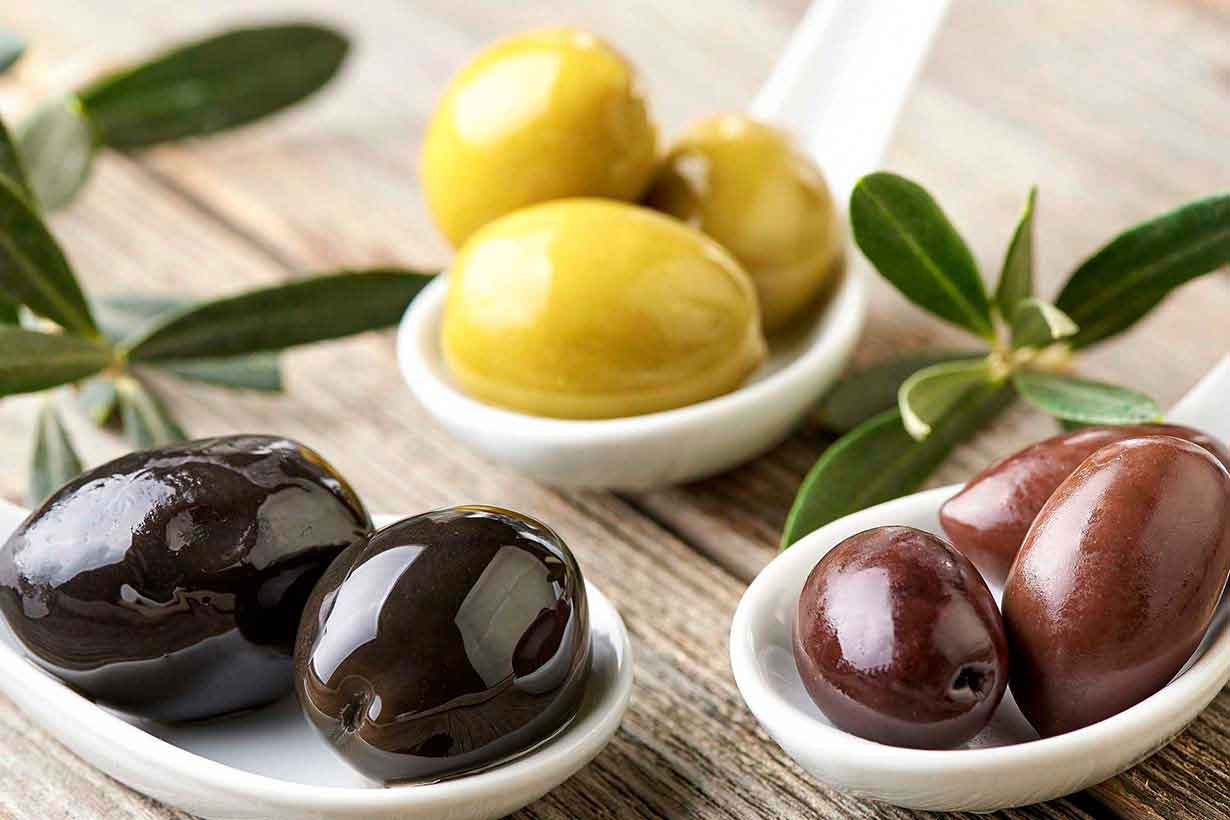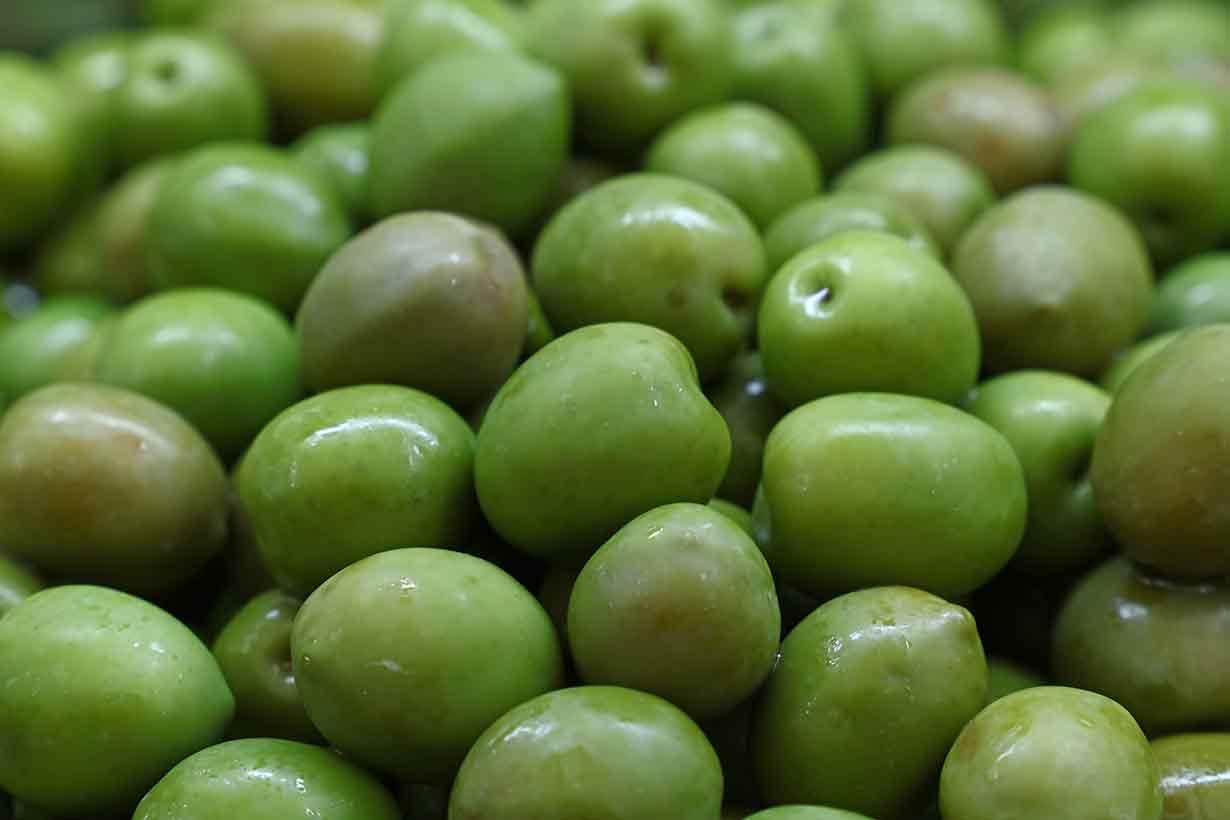
Many people know olives by simple generic terms like “green” and “black,” but in this article we’ll investigate purple Kalamata olives.
Due to their unique appearance, Kalamata olives are among the most interesting olive varieties, but what do they provide nutritionally?
This article takes an in-depth look at their nutritional values, polyphenol content, and potential benefits and drawbacks.
Table of contents
What Are Kalamata Olives?
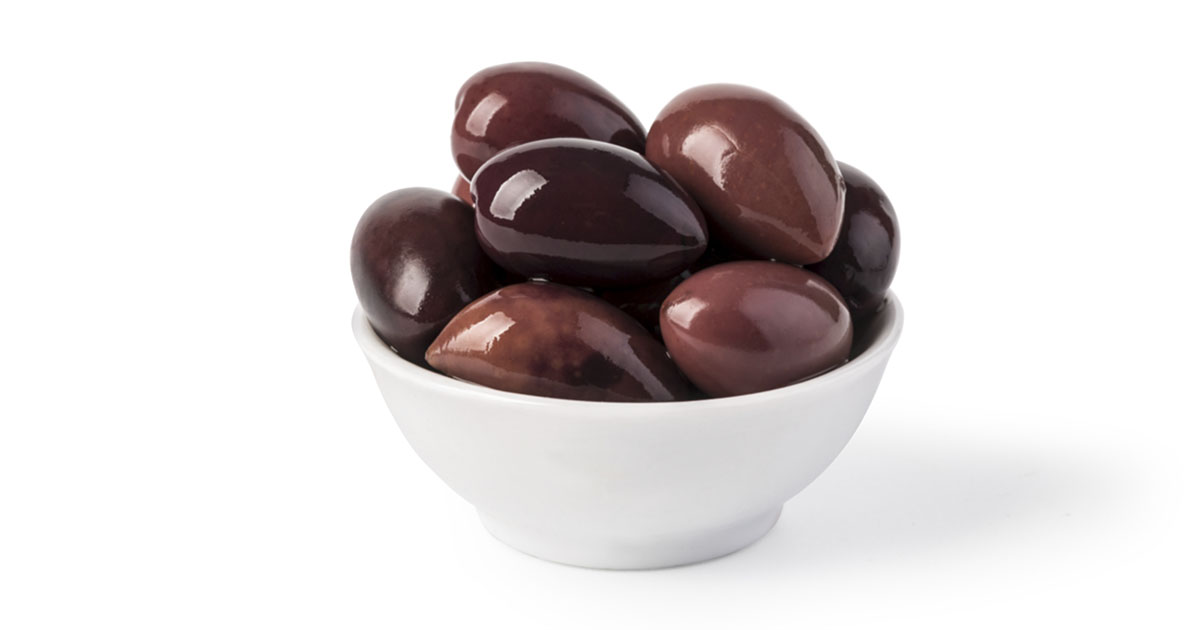
Kalamata olives, known scientifically as Olea europaea, originate in Kalamata, a small town in the Greek southern Peloponnese.
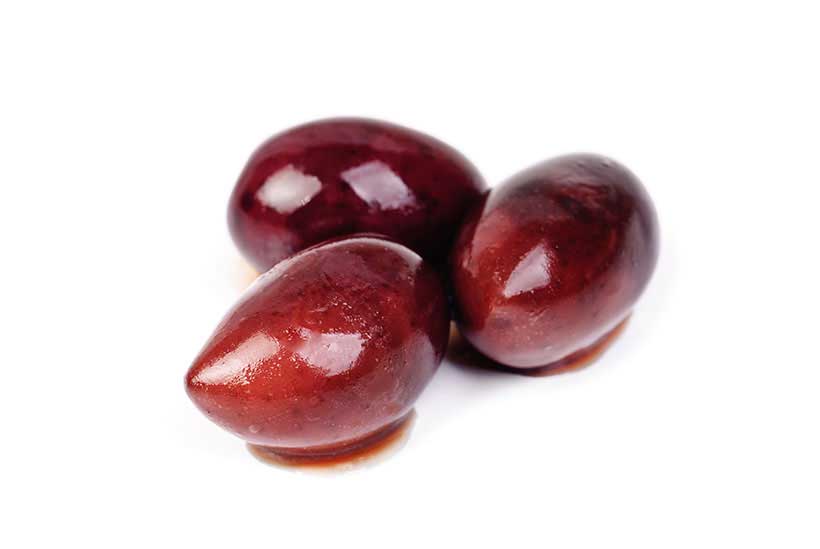
They grow on small kalamon trees and are slightly different to regular canned olives in size, being roughly the size of a grape tomato. They have a slightly larger, more oblong shape.
Despite having a purple-to-brown color, Kalamata olives are actually a variety of black olive. The purple color isn’t anything unique to the olive variety itself.
Instead, it stems from how the olives are produced. Most black olives are picked when they are still green and exposure to oxygen during their processing turns them black.
In contrast, Kalamata olives are allowed longer time to ripen before picking, slowly and naturally changing from green to a purple color. Kalamata olives are picked at this point, and undergo no treatments to chemically change their color.
The purple color of Kalamata olives comes from their high anthocyanin content, which naturally develops as they ripen.
Anthocyanins are a type of polyphenol that typically have a blue to purple-red pigment. They are responsible for influencing the color of foods like blueberries, grapes, and red wine.
Nutritional Profile
Now that we know what Kalamata olives are, let’s examine the nutrients they provide.
The following tables show the complete nutritional values of Kalamata olives per 100g and per 5-olive serving based on USDA data for black olives.
We have calculated the 5-olive data to provide data for a more realistic serving size. We have also calculated percent daily values (% DV), which are based on a 2,000 calorie diet.
Note: While the USDA entry has a generic ‘black olives’ title, the ‘other information’ tab shows that Kalamata olive samples were used.
Calories and Macronutrients
| Nutrient | Per 100g (% DV) | Per 5-olive (25g) serving (% DV) |
|---|---|---|
| Calories | 116 kcal | 29 kcal |
| Carbohydrates | 6.04g (2%) | 1.51g (1%) |
| Fiber | 1.6g (6%) | 0.4g (1%) |
| Sugars | 0g | 0g |
| Fat | 10.9g (14%) | 2.73g (4%) |
| Saturated fat | 2.28g (11%) | 0.57g (3%) |
| Monounsaturated fat | 7.65g | 1.91g |
| Polyunsaturated | 0.63g | 0.16g |
| Omega-3 | 0g | 0g |
| Omega-6 | 0.63g | 0.16g |
| Protein | 0.84g (2%) | 0.21g (<1%) |
| Cholesterol | 0 mg (0%) | 0 mg (0%) |
As the data shows, Kalamata olives are primarily a source of fat and contain very little protein.
They provide a moderate amount of carbohydrates, with approximately a quarter of this coming from fiber.
Vitamins
| Vitamin | Per 100g (% DV) | Per 5-olive serving (% DV) |
|---|---|---|
| Vitamin A (RAE) | 17 mcg (2%) | 4.25 mcg (<1%) |
| Vitamin C | 0.9 mg (1%) | 0.23 mg (<1%) |
| Vitamin D | 0 mcg (0%) | 0 mcg (0%) |
| Vitamin E | 1.65 mg (11%) | 0.41 mg (3%) |
| Vitamin K | 1.4 mcg (1%) | 0.35 mcg (<1%) |
| Thiamin (B1) | <0.01 mg (<1%) | <0.01 mg (<1%) |
| Riboflavin (B2) | 0 mg (0%) | 0 mg (0%) |
| Niacin (B3) | 0.04 mg (<1%) | 0.01 mg (<1%) |
| Pantothenic acid (B5) | — | — |
| Vitamin B6 | <0.01 mg (<1%) | <0.01 mg (<1%) |
| Folate (B9) | 0 mcg (0%) | 0 mcg (0%) |
| Vitamin B12 | 0 mcg (0%) | 0 mcg (0%) |
| Choline | 10.3 mg (2%) | 2.58 mg (<1%) |
Kalamata olives provide about 11% of the daily value for vitamin E per 100 grams. However, a typical serving size only contains a small amount.
Aside from this, they are not a significant source of essential vitamins.
Minerals
| Mineral | Per 100g (% DV) | Per 5-olive (25g) serving (% DV) |
|---|---|---|
| Calcium | 88 mg (7%) | 21 mg (2%) |
| Iron | 6.28 mg (35%) | 3.14 mg (9%) |
| Magnesium | 4 mg (1%) | 1 mg (<1%) |
| Phosphorus | 3 mg (<1%) | 0.75 mg (<1%) |
| Potassium | 8 mg (<1%) | 2 mg (<1%) |
| Sodium | 735 mg (32%) | 183.75 mg (8%) |
| Zinc | 0.22 mg (2%) | 0.06 mg (1%) |
| Copper | 0.25 mg (28%) | 0.06 mg (7%) |
| Manganese | — | — |
| Selenium | 0.9 mcg (2%) | 0.23 mcg (<1%) |
As the table shows, a typical 5-olive serving of Kalamata olives provides moderate amounts of iron, copper, and sodium.
Kalamata Olives Are a Rich Source of Polyphenols
In addition to their provision of essential vitamins and minerals, Kalamata olives also provide high amounts of polyphenols.
Polyphenols are a kind of chemical found in plants (a type of phytochemical, to be precise) that can have biological effects in the body.
According to scientific research, diets containing high amounts of these compounds may potentially reduce long-term chronic disease risk:
- A 2024 systematic review included data from seven large studies involving 178,657 people. It found “consistent evidence” linking higher total polyphenol intake to a 7% lower risk of all-cause mortality.
- A previous 2019 systematic review found that intake of certain polyphenols (flavonoids) but not total polyphenols, was associated with a reduced risk of type 2 diabetes, cardiovascular events, and all-cause mortality.
What Polyphenols Do Kalamata Olives Contain?
Research on the composition of Kalamata olives shows that they provide high levels of:
- Hydroxytyrosol
- Luteolin
- Tyrosol
These polyphenols have demonstrated anti-inflammatory properties in experimental studies. However, more research is necessary to confirm their effects in human trials.
Kalamata olives, as well as all olives in general, also contain another type of polyphenol called catechols. On this note, a small 2018 study involving 6 participants demonstrated that olive intake led to significant increases of catechols in the blood.
Composition analyses of all the polyphenols in black olives show that they also contain phenolic acids and flavonoids like anthocyanins.
These analyses also show that they are a rich source of oleuropein compounds, with over 150 mg per 100 grams.
Oleuropein is a polyphenol that has been the subject of significant research interest.
Do Kalamata Olives Have Health Benefits?
Before we answer whether Kalamata olives have potential health benefits, let’s quickly summarize their known benefits, potential benefits, and drawbacks.
Benefits
- Copper and iron: A 5-olive serving of Kalamata olives provides 9% and 7% of the daily value, respectively, of iron and copper. These are good amounts for such a small serving and a simple way to increase intake of these essential minerals.
- Oleic acid: Kalamata olives are approximately 11% fat by weight, with 5 olives providing nearly 3 grams of fat. Most of this fat comes from the monounsaturated oleic acid. The FDA notes that supportive data indicates (but doesn’t confirm) that consuming more than 20 grams of oils containing oleic acid daily may reduce heart disease risk.
Potential Benefits
- Oleuropein content: Kalamata olives are a rich source of oleuropein. A 2024 systematic review of 12 randomized controlled trials found that oleuropein supplementation at doses over 100 mg lowered “bad” LDL cholesterol. However, the study found no consistent, significant evidence for any other benefits, such as blood pressure management or insulin sensitivity.
Nutritionist’s Note
While the findings discussed in the systematic review on oleuropein supplementation are interesting, let me explain the wider context around them.
Firstly, the seemingly effective dose of oleuropein for lowering LDL cholesterol started at 100 mg, with no effects seen at lower doses. It is possible to consume these amounts from whole olive consumption. However, it may not be a realistic amount for many people with typical olive consumption.
As previously mentioned, black olives (of which Kalamata olives are one type) typically contain 153 mg of oleuropein per 100 grams. This means approximately 67 grams of Kalamata olives would be needed to get 100 mg of oleuropein. This serving size would also contain a significant amount of sodium – around 490 mg, which is 21% of the daily value. This is a significant dose of sodium in one go that probably isn’t a wise choice for anyone trying to improve heart health.
Drawbacks
- High sodium content: With a significant 735 mg of sodium per 100 grams, Kalamata olives have very high sodium levels. A typical 5-olive serving provides around 8% of the daily value (184 mg) for sodium.
Kalamata olives may not be suitable for individuals trying to lower their sodium intake. Individuals monitoring their sodium intake or blood pressure should discuss this with their healthcare provider before making dietary changes.
Summary
Kalamata olives are a nutrient-rich fruit that can work well as a snack or incorporated into a meal.
Nutritionally, a typical serving provides a good dose of copper and iron, but it is also high in sodium.
While there is evidence for potential health benefits at higher serving sizes due to their oleuropein content, this may be offset by the high sodium levels they contain.