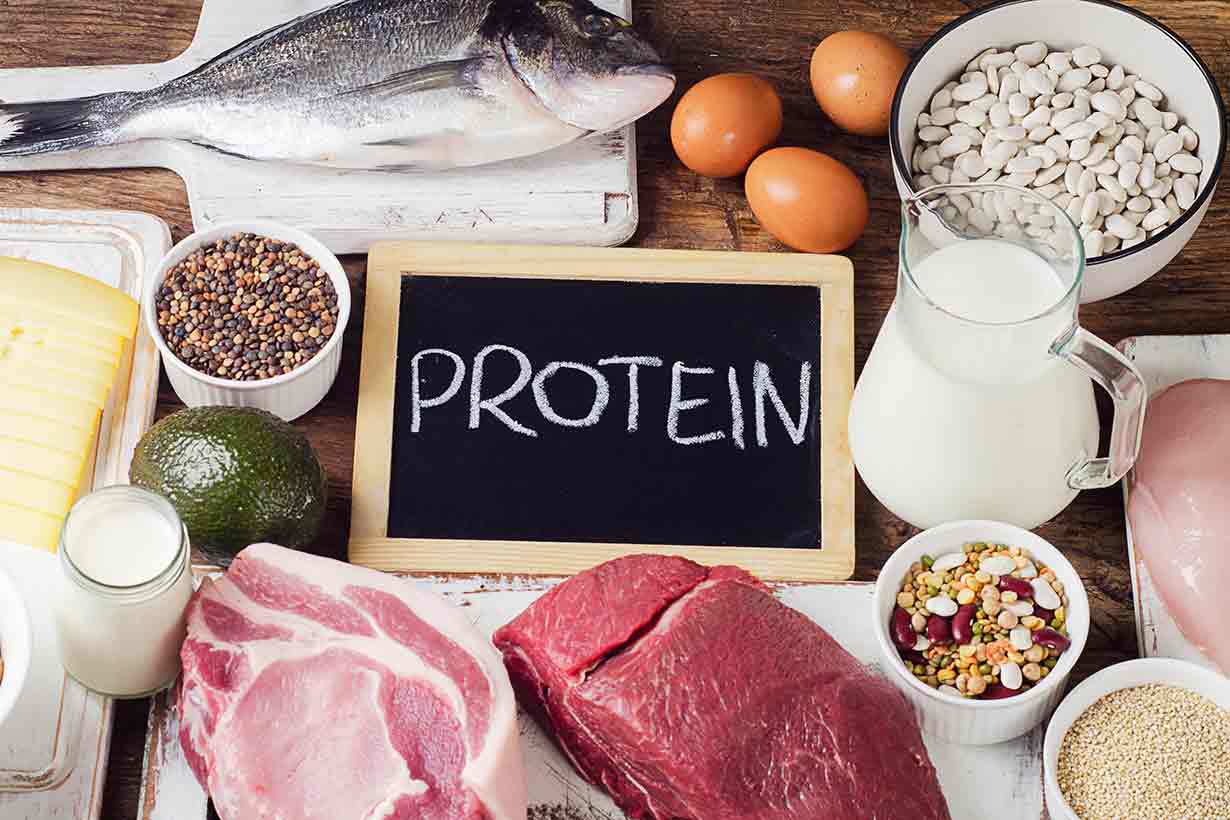
You may have heard that consuming more protein can help with maintaining or building lean muscle mass. However, you may also have heard claims that too much protein can damage the kidneys.
It is not surprising that so many people are confused about nutritional topics like this, so let’s try to understand what the scientific research shows here and explain it clearly.
As it stands, current evidence has not established a consistent association between higher protein intake and kidney problems in healthy adults. However, more caution is warranted for individuals who already have kidney disease.
In this article, we examine the evidence on protein intake and kidney health, the role the kidneys play in filtering waste products from protein metabolism, and what recent findings from scientific research mean for you.
Table of contents
Why Do People Think Protein is Bad For the Kidneys?

While protein is essential for overall health and has several important functions in the body, it is the waste products from protein metabolism that concern some people.
Related: The Benefits of Protein
Nitrogen-containing waste products are created from the process through which the body metabolizes amino acids from protein. You may have heard of some of them, with a notable example being urea.
Urea is produced from byproducts of protein metabolism, like ammonia, which is a toxic compound. Urea then leaves the body via excretion through the urine, but this process requires the kidney to filter it out of the blood.
People may think it logical to assume that the higher the protein intake is, the more waste products there will be from protein metabolism, and the more work the kidney will have to do.
In other words, some people assume that high protein intake must be bad for the kidneys as excessive waste products might increase the work the kidneys have to do and eventually impair their function.
However, there is a significant difference between increased demands on the kidneys and kidney function being negatively affected.
Research Review: Protein Intake and Kidney Health
Let’s now take a look at what the scientific research shows on protein intake and kidney health. To do this, we will look at findings from several recent systematic reviews which examined the topic and other relevant studies.
Effect of High-Protein Diets on Kidney Function in Adults Without Chronic Kidney Disease
A 2026 systematic review examined the impact of high-protein diets on kidney function. The systematic review included 22 randomized controlled trials.
- Primary findings: Higher protein intake was associated with an increase in glomerular filtration rate (GFR), a metric used to measure how effectively the kidneys are filtering waste products.
- Points of interest: The researchers were measuring GFR as a marker of kidney function, and reductions would have been a potential sign of impaired kidney function. However, in this review, high-protein diets actually increased GFR.
- Limitations: While the findings from this study were promising for high-protein intake, the duration of most trials was short and the results cannot be used for making long-term assessments.
In a nutshell: According to this systematic review, experimental evidence from the included human trials did not show that higher-protein diets adversely impact kidney function.
However, the short duration of the included studies means caution is required as short-term and long-term effects may not be the same. Future research with studies of a longer duration may provide more reassurance.
Dietary Protein Intake and Kidney Function (2026)
A systematic review published in 2026 examined the association between protein intake and kidney health in adults aged 65 years and over. This systematic review included six studies, involving 15,989 participants.
- Primary findings: There was a lack of association between total protein intake and declines in kidney function. This was observed in adults with normal kidney function and in individuals with chronic kidney disease not requiring dialysis.
- Points of interest: The researchers noted that the findings warrant caution when considering protein restriction guidance for adults with mild chronic kidney disease, given protein’s known benefits in older adults.
- Evidence certainty: The authors stated that the overall certainty of evidence was very low, partly because only one of the six included studies was judged to have a low risk of bias.
In a nutshell: While the results of this systematic review suggest that total protein intake may not negatively impact kidney health, the very low certainty of evidence means we can’t be overly confident about this.
Dietary Intake of Total, Animal, and Plant Proteins and Chronic Kidney Disease Risk (2025)
A 2025 systematic review investigated the association between different types of protein and total protein with the risk of chronic kidney disease. It included ten large observational studies involving 218,741 participants.
- Primary findings: The systematic review contained a meta-analysis that found no significant association between total protein intake and the risk of chronic kidney disease. In fact, both plant and animal proteins were associated with a reduced risk, with the association being stronger for plant proteins.
- Points of interest: Two studies included in the systematic review had conflicting findings. A Japanese study found that animal protein intake significantly reduced chronic kidney disease risk, whereas an American study found that animal protein intake raised the risk.
- Evidence certainty: The authors rated the certainty of evidence as high for animal protein data, moderate for plant protein, and low for total protein.
In a nutshell: This large systematic review did not find a link between higher protein intake and chronic kidney disease risk.
Looking at the conflicting results on animal protein intake from the American and Japanese populations, this may potentially be influenced by a cultural difference in the typical consumption of animal proteins in the United States and Japan.
For instance, the Japanese diet is known for its high seafood content, whereas a significant proportion of animal proteins in the United States come from foods like burgers and processed meat, foods that are also often part of fast food meals.
These differing food choices would provide different nutrients, particularly nutrients like saturated fat (red meat) and omega-3 (oily fish), which may play a role in kidney health.
Limited Evidence on Protein and Kidney Health in a 2025 Review
A 2025 systematic review examined protein intake and bone and kidney health as well as sarcopenia. Among the studies included, it found only one randomized controlled trial on protein intake and kidney disease that met its inclusion criteria. This was because other studies were judged to have a high risk of bias.
This trial assigned male adults to follow either a high-protein or high-carbohydrate energy-restricted diet for one year. Sixty-eight men completed the 52-week trial.
- Primary findings: The high-protein diet resulted in a similar loss of body weight but a greater retention of lean muscle mass. However, it did not show any significant effects on creatinine clearance, which is a marker of kidney function.
- Points of interest: While the systematic review included this trial, it wasn’t specifically designed to investigate kidney health. It was a weight loss study involving individuals with normal kidney function, but it just measured a marker of kidney function. Additionally, the high-protein diet used in the study was 1.24 grams of protein per kilogram of body weight per day. It is worth noting that many people consume higher amounts of protein than this.
- Limitations: The data was judged to be insufficient for drawing conclusions on high-protein diets and kidney disease risk. This is because there was only one small trial included in the review.
In a nutshell: Overall, this systematic review drew on only one randomized controlled trial. It showed that 1.24 grams of protein per kilogram of body weight per day didn’t have a negative impact on a marker of kidney function in people with normal kidney function.
However, it was one small study, it didn’t involve people with impaired kidney function, and it doesn’t allow a conclusion that all “high-protein” diets (which may be much higher in protein) are safe for kidney health for all people.
Association Between Dietary Protein Intake and Chronic Kidney Disease Risk
A 2024 systematic review evaluated six studies involving 148,051 participants to understand the association between protein intake and chronic kidney disease.
- Primary findings: Higher protein intake was associated with a lower risk of chronic kidney disease whether from total, animal, or plant protein. However, animal proteins had no significant effect on chronic kidney disease risk when studies involving fish and seafood intake were removed.
- Points of interest: A dose-response relationship was found between plant protein intake and chronic kidney disease risk reduction. The reduction in risk was 28% at 15 grams per day, 43% at 30 grams, and 45% at 45 grams.
- Limitations: The findings were associations from observational research, so they can’t comment on any causal relationship. However, all the studies in the review were considered to have a low risk of bias.
In a nutshell: This was another systematic review that did not show a harmful association between higher protein intake and the risk of chronic kidney disease.
In fact, higher protein intake was associated with a reduced risk, which does not support the idea that high-protein diets are harmful for kidney function.
However, it was again observational research, and it is not strong enough to confirm that the high-protein intake caused the reduction in risk.
Protein Intake and Kidney Harm: What the Evidence Says
As the systematic reviews we’ve looked at show, current evidence has not established a consistent association between protein intake and kidney harm.
By kidney harm, this means an increase in chronic kidney disease risk, worsened markers of kidney health, or a reduction in kidney function.
Looking at the evidence across the included systematic reviews, several findings stand out:
- Total protein: Total protein intake was not associated with a higher risk of chronic kidney disease, and some observational research found an association with a reduced risk.
- Plant protein: Higher consumption of plant protein was associated with a reduced risk of chronic kidney disease in observational research.
- Animal protein: While animal protein in general was associated with a reduced risk, some studies identified a neutral or increased risk from ‘red meat and processed meat’ categories.
- Protein from seafood: Seafood, such as fish, was associated with a reduced risk of chronic kidney disease.
However, the limitation to remember here is that these are all associations from observational research.
While there is a lack of association between protein and kidney issues, we can’t use this lack of an association to conclude that high-protein diets can’t harm kidney health with a strong degree of certainty.
Additionally, the existing research is based on common definitions of high-protein diets, which vary depending on the study; for example, some of the research discussed above used over 1.5g per kg of bodyweight. It does not allow us to say that protein intake at any level is safe for long-term kidney health.
Guidance Advises Lower Protein Intake for Individuals With Chronic Kidney Disease
There is less extensive research to draw from on protein intake and kidney health in individuals who currently have chronic kidney disease. However, guidance in this context advises limitations on protein intake.
A 2025 review published by the American Society of Nephrology provided dietary protein intake guidance for patients with non-dialysis-dependent chronic kidney disease.
This guidance noted that both insufficient and excessive dietary protein presents risks to chronic kidney disease patients in stages 3–5. Insufficient protein was judged to be 0.6 grams per kg of body weight, whereas excessive was stated as anything over 1.3g per kg.
Furthermore, organizations like the National Kidney Foundation and the Centers for Disease Control (CDC) still recommend diets lower in protein for certain stages of chronic kidney disease.
Important note: Anyone with chronic kidney disease should consult with their healthcare provider for personalized dietary guidance that fits your individual needs.
Is Too Much Protein Bad For Your Kidneys?
As we’ve seen from the research, total protein intake does not appear to be associated with an increased risk of chronic kidney disease.
However, clearly defining “too much protein” is difficult, and it is possible that protein intake above a certain level may not be safe over the long term.
That said, an interesting study published in the Journal of the International Society for Sports Nutrition fed resistance-trained healthy adults 3.4 grams of protein per kilogram of body weight for several weeks.
The results showed improvements in body composition in 48 adults who completed the study. Blood tests also showed that markers of kidney health, such as creatinine and urea, did not change.
In its 2017 position stand on protein and exercise, the International Society of Sports Nutrition (ISSN) noted that several small studies involving chronic high protein intake (3.0–4.4g per kg of body weight) showed no adverse effects on kidney function
While these studies are relatively short (<1 year) and involve small participant numbers, they do indicate that high protein intake levels don’t appear to result in adverse changes in kidney function over the short term for otherwise healthy adults.
Related: Learn more about protein in this complete guide