Coffee is one of the world’s most popular drinks and research has found that it may have some potential benefits.
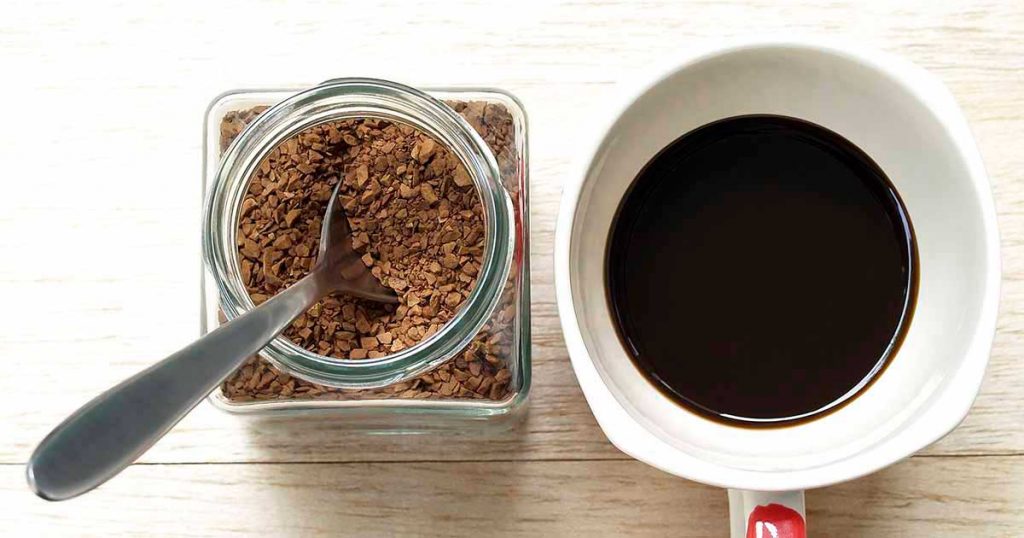
However, instant coffee tends to be more highly processed, so are there any key differences? Instant coffee is made from brewed coffee that has been either freeze-dried or spray-dried, which turns the coffee into granules. Since the drying process removes the water, the end result is water-soluble coffee granules.
While it is chemically similar to ground coffee, instant coffee may contain lower levels of caffeine and polyphenols like chlorogenic acid. Additionally, it may contain higher levels of acrylamide; this compound has links to an increased lifetime risk of cancer in animal studies, but the risk to human health is not firmly established.
In this article, we will examine recent research on instant coffee, look at how it differs from ground coffee, and explain what that means for you.
As mentioned in the introduction, instant coffee is a coffee product comprising coffee granules produced from drying brewed liquid coffee. When you add hot water to these granules, they dissolve and become a hot liquid coffee once more.
The clear advantage of instant coffee is for convenience; all you need to do is add a teaspoon to a cup, add hot water, and your coffee is ready.
To make instant coffee granules, manufacturers typically use one of two methods:
Spray-drying: Most instant coffee is produced by spray-drying, a method which involves brewed coffee being sprayed with extremely hot air, which instantly evaporates the water and leaves only coffee granules.
Freeze-drying: Freeze-drying involves freezing brewed coffee, breaking it down into extremely small pieces, and then removing all water and ice by vacuum. This method is more expensive than spray-drying so it isn’t as widely used, but it is thought to produce higher-quality coffee.
Types of Instant Coffee
When you buy instant coffee, it is worth being aware of the different varieties that are available. This is because some products may contain added sugars and fats.
Instant coffee granules: Pure instant coffee granules typically come in a glass jar or plastic pouch and they have no additional ingredients. This type of instant coffee has an extremely small calorie, carbohydrate, and fat content. For example, a 6 fl oz (179g) serving of instant coffee prepared with water has 4 calories, 0.6g carbohydrates, and 0g of fat.
Decaffeinated coffee granules: Decaffeinated coffee is made from decaffeinated coffee beans, which gives it a low to negligible caffeine content. Aside from this, it is otherwise the same as regular instant coffee.
Coffee sticks and sachets: While instant coffee sold in sticks and small sachets can be pure granules, it often contains added sugars and creamers. If they do have these additional ingredients, then you will be adding extra sugars, fats, flavorings, and calories to your drink. As these products require additional processing and packaging, they are also significantly more expensive per gram of coffee. As an example, a serving of Kraft French Vanilla instant coffee contains 67 calories, 10.4g carbohydrates, and 2.7 grams of fat.
Ready to drink: Ready-to-drink coffee products typically come in cans, plastic bottles, and cartons. These drinks usually contain sweeteners or creamers, and they tend to be the most expensive choice. They also tend to be high in calories, sugars, and fats; a 296ml bottle of a Nescafe ready-to-drink chilled latte provides 240 calories, 39.1g carbohydrates, and 6 grams of fat.
Key Differences Between Instant Coffee and Brewed Coffee
Aside from the potential addition of sugars and fats, there are some other key differences to understand between instant and brewed coffee from grounds. These include their respective caffeine, polyphenol, and acrylamide content.
1) Caffeine Content
Instant coffee contains slightly less caffeine than brewed coffee made with ground coffee:
Instant coffee: USDA data shows that a 6 fl oz (179g) cup of instant coffee brewed with water contains roughly 47 mg of caffeine. This is equal to 26 mg of caffeine per 100g. However, this may vary from brand to brand and depend on the type of coffee bean used to make it.
Brewed coffee: An 8-fl oz (237g) cup of brewed coffee has about 95 mg of caffeine, which is equal to 40 mg of caffeine per 100g. Again, this will vary by brand and is an approximation based on multiple samples.
There are several reasons why instant coffee has less caffeine, including the way it has been processed and also because a typical serving contains less coffee.
While caffeine can potentially help with focus and sports performance, it can also have negative effects for some people. Therefore, the slightly lower caffeine content of instant coffee may be a positive or a negative depending on the person and their preferences.
Note: Caffeine Levels in Coffee Wildly Vary
If you are sensitive to caffeine or tracking your caffeine intake, it is important to remember that the exact amounts in coffee are hard to estimate and vary wildly.
This is because caffeine levels can be influenced by the amount of coffee used, the type of coffee beans, roasting time, and more.
While the estimates backed by USDA data above are a good starting point, it is worth investigating the caffeine content of a particular brand further if caffeine levels are important to you.
2) Instant Coffee Contains Higher Levels of Acrylamide
Acrylamide is a chemical that forms when sugars mix with an amino acid called asparagine. This reaction is known as the Maillard Reaction, which is what causes browning in toast.
According to the World Health Organization, acrylamide is carcinogenic and genotoxic, which means that it can cause cancer and harm genes.
The highest dietary sources of acrylamide tend to be potato chips, instant coffee, cookies, and cereal grain products. Coffee develops acrylamide during the roasting process. While all coffee contains acrylamide, instant coffee appears to contain more than brewed coffee.
For example, one study measured the amount of acrylamide in 42 coffee samples; 28 of these samples were ground coffee and 11 were instant coffee. The results found that the average acrylamide content of both products were as below:
Instant Coffee: 358 mcg per kg
Roasted Brewed Coffee: 179 mcg per kg
As you can see from these figures, instant coffee contained precisely double the amount of acrylamide.
Acrylamide and Human Health
If you’re wondering why acrylamide is relevant, it’s because high doses have caused cancer in animal studies. However, the first thing you need to know is that these animal study doses were far higher than the amount of acrylamide the average human consumes.
For example, the European Food Safety Authority’s (EFSA) ‘Scientific Opinion on Acrylamide in Food’ reported increased tumours in mice starting at a dose of 0.17 mg of acrylamide per kg of body weight per day.
Meanwhile, a systematic review of 16 observational studies involving more than one million participants found that the average daily acrylamide intake was 23 mcg per day. For someone weighing 60 kilograms, this would be 0.38 mcg per kg of body weight.
Micrograms (mcg) are one-thousand times smaller than milligrams, so 0.38 mcg per kg is equal to 0.00038 mg per kg. So, the EFSA found that mice developed more tumors when consuming 0.17 mg of acrylamide per kg, and the average human may consume around 0.00038 mg of acrylamide per kg.
While humans are not mice and we cannot directly compare the two, the above data shows that the doses causing harm in mice were considerably higher than realistic human intakes. However, the FDA notes that it is unclear what health risks acrylamide poses to humans, and further research is necessary.
3) Polyphenol Content
Coffee is among the most polyphenol rich foods and drinks in the human diet, and one of the main polyphenols it contains is a type of phenolic acid called chlorogenic acid.
Chlorogenic acid may have potential biological effects in the body, and it is thought to have anti-inflammatory and antioxidant properties. However, research suggests that instant coffee may contain lower levels of chlorogenic acid than brewed coffee.
Chlorogenic Acid Content of Instant Coffee vs. Other Coffee Types
For example, a comparative study published in the Journal of Advanced Research investigated the chlorogenic acid content of 83 coffee products, including 19 instant coffee products.
Based on samples taken from the United Kingdom and the Republic of Korea, the study found average chlorogenic acid content by type of coffee as listed below:
Instant coffee (UK): Median of 64 mg per serving
Instant coffee (Korea): Median of 36.7 mg per serving
Espresso coffee (UK): Median of 126 mg per serving
Americano (Korea): Median of 115 mg per serving
Store-bought ground coffee (Korea): Median of 136 mg
As this shows, instant coffee tended to contain the least amount of chlorogenic acid when compared to ground coffee, espresso, and Americano.
There are some differences in the potential health effects of instant coffee and freshly ground brewed coffee, as listed below:
Cafestol and kahweol: Coffee beans contain two fat-soluble compounds known as diterpenes which are called cafestol and kahweol. These compounds can increase “bad” LDL cholesterol (LDL-C). However, virtually all cafestol and kahweol is removed from instant coffee during its processing.
Impact on cholesterol: A large observational study involving 21,083 participants found that regular drinkers of unfiltered coffee have increased LDL cholesterol levels and there was a dose-response trend. However, drinking more instant coffee was not associated with any dose-response increase in cholesterol. Instant coffee’s lack of a significant effect has been understood for several decades. A 1995 randomized controlled trial found that consuming instant coffee led to no significant elevations in LDL cholesterol.
Diet quality: If someone regularly consumes instant coffee made with creamers and sweeteners, this may lower the overall quality of their diet due to the added calories, sugars, and fats.
Aside from these differences in processing, instant coffee and brewed coffee share a similar chemical composition and may offer some of the same potential benefits and downsides.
Among other research findings, coffee has been linked to:
Based on what we’ve looked at so far as well as the inherent characteristics of instant coffee, here are some of the advantages and disadvantages of using it.
Pros
Affordability: Instant coffee is much cheaper than ground and store-bought coffee both per gram and per serving.
Convenience: Add a teaspoon or two of instant coffee to a cup and pour hot water over it and it’s ready. It is simple to make and requires no extra coffee-making equipment.
Portability: It is possible to take instant coffee sachets with you to work or when you’re traveling.
Lower caffeine: Compared to ground coffee and coffee shop drinks, instant coffee typically has significantly lower caffeine content. This may be a benefit for caffeine-sensitive people or those looking to cut down on caffeine.
Cons
Less caffeine: For people wanting caffeine boost before work or exercise, instant coffee is milder than other coffee options and may not provide the same boost.
Acrylamide: Research has found that instant coffee contains significantly higher concentrations of acrylamide than ground coffee. However, the amounts it does contain are still significantly lower than the amounts that appear to cause harm in animal studies.
May contain additives: Some types of instant coffee, particularly flavored coffee sticks, may contain sugars and oil-based creamers. These drinks are significantly higher in calories, fats, and sugars than black coffee.
Is Instant Coffee a Healthy Choice?
As we’ve established in this article, instant coffee is generally similar to ground coffee but it typically has a higher acrylamide and lower caffeine and chlorogenic acid content. However, a large systematic review found that typical acrylamide intakes in humans do not appear to raise cancer risk, suggesting the amounts in instant coffee are unlikely to be a health concern.
Whether this makes it a healthy choice really depends on the individual and the context. If you’re trying to cut down on caffeine, then it may be a better option than freshly brewed coffee.
In contrast, if you’re fine with the higher caffeine content of freshly brewed coffee and want the highest polyphenol content, then instant coffee may not be the best choice.
Since instant coffee doesn’t contain the diterpenes found in unfiltered brewed coffee, it doesn’t have the same cholesterol-raising properties. This may also be a valid consideration for individuals attempting to lower their cholesterol.
Note: Using a paper filter with brewed coffee also removes cafestol and kahweol from brewed coffee.
Regina Ewa Wierzejska et al. (2024). Evaluation of the caffeine content in servings of popular coffees in terms of its safe intake — can we drink 3–5 cups of coffee per day, as experts advise?. View study in Nutrients journal
World Health Organization. (2011). Evaluations of the joint FAO/WHO expert committee on food additives: Acrylamide. View acrylamide evaluation
U.S. Food & Drug Administration. (2024). Acrylamide and diet, food storage, and food preparation. View U.S. FDA information
Tommaso Filippini et al. (2022). Dietary acrylamide exposure and risk of site-specific cancer: A systematic review and dose-response meta-analysis of epidemiological studies. View study in Frontiers in Nutrition journal
Vi Nguyen et al. (2024). Chlorogenic acid: A systematic review on the biological functions, mechanistic actions, and therapeutic potentials. View study in Nutrients journal
Asne Lirhus Svatun et al. (2022). Association between espresso coffee and serum total cholesterol: the Tromso Study 2015–2016. View study in Open Heart journal
M. L. Burr et al. (1995). Instant coffee and cholesterol: A randomised controlled trial. View study on PubMed
Yu Zhang et al. (2026). Coffee and tea intake, dementia risk, and cognitive function. View study in JAMA journal
Michael works as a nutritionist in a community setting and holds a Master's degree in Clinical Nutrition. He is a Registered Associate Nutritionist (ANutr) with the Association for Nutrition (AfN), and has published peer-reviewed research.