Mozzarella cheese is among the most popular cheese varieties, featuring as an ingredient in everything from pizzas to salads and mozzarella sticks.
This Italian cheese is enjoyed around the world, and it provides notable amounts of protein, calcium, phosphorus, selenium, and vitamin B12. However, the nutritional properties of mozzarella vary depending on the fat composition of the milk it’s made from and whether it’s fresh or shredded.
In this article, we examine the nutritional properties of popular mozzarella products and the potential benefits and downsides of the cheese.
Table of contents
What Is Mozzarella Cheese?
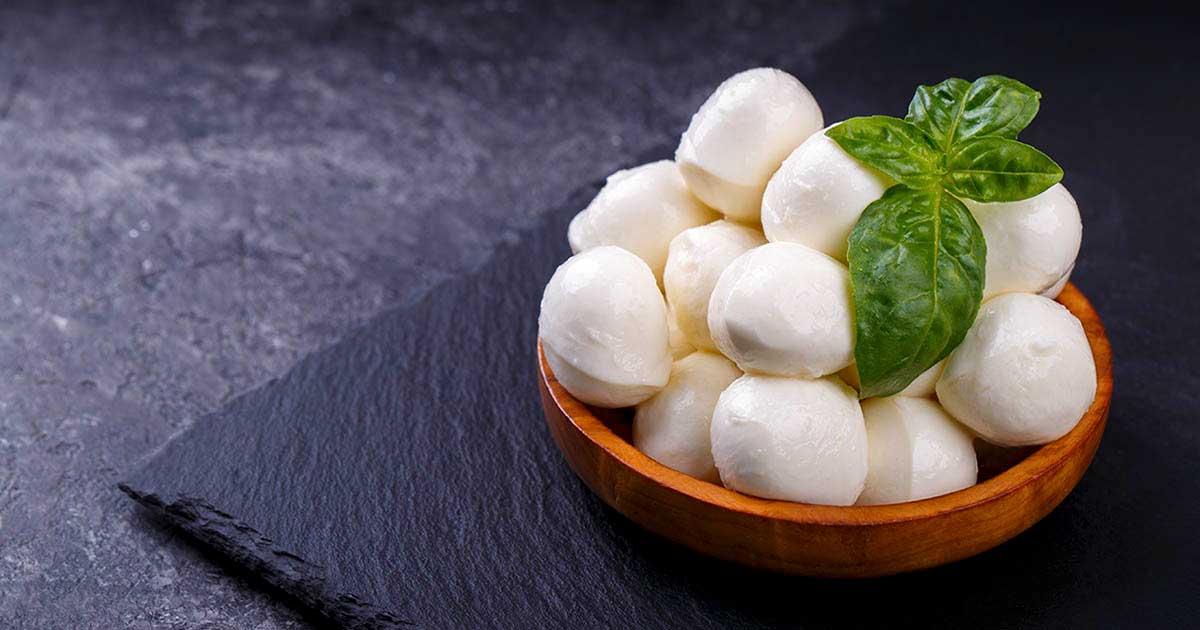
Mozzarella is a soft and mild-tasting cheese hailing from Italy. While traditional mozzarella products were made with buffalo milk, many modern mozzarella products are made from regular cow’s milk.
While ingredients can vary, most mozzarella products are a simple combination of pasteurized milk, salt, and citric acid, which functions as an acidity controller.
Mozzarella has a mild, creamy taste that doesn’t have the sharp notes of mature cheeses. Since it doesn’t overpower other flavors, mozzarella is a popular ingredient in a diverse range of foods.
What Are the Different Types of Mozzarella?
Due to its popularity, numerous mozzarella cheese products are available, and they include:
- Whole milk mozzarella: Most regular fresh mozzarella is made from whole milk.
- Part-skim mozzarella: Made from part-skim milk and also known as light mozzarella, this variety has a slightly firmer texture and a lower fat and calorie content.
- Fat-free mozzarella: Since it is made from fat-free milk, the fat-free form of mozzarella isn’t as creamy as other varieties, doesn’t melt as well, and has a chewier texture. However, it is low in calories and has a comparatively higher protein content than other mozzarella products.
- Shredded mozzarella: This has been pre-cut and mixed with anti-caking ingredients like cellulose or potato starch to stop the pieces sticking together. Also known as grated mozzarella, it is convenient for melting on top of foods and dishes. Since shredded mozzarella contains less moisture (water) than a fresh block of mozzarella, it has comparatively more calories and nutrients.
Aside from the above products, mozzarella is often the cheese used to produce string cheese too.
Benefits of Mozzarella
Mozzarella may offer some benefits due to the key nutrients it contains, particularly its protein, calcium, phosphorus, and vitamin B12 content.
Can Be High in Protein
Regular mozzarella contains a notable amount of protein, providing 6.3 grams per ounce (28.35g) serving.
However, for those wanting to prioritize protein density, fat-free mozzarella can offer more significant amounts. For instance, fat-free mozzarella contains 31.3 grams of protein per 100 grams, which works out at 8.9 grams per ounce.
Mozzarella can also enhance the protein content of meals since it is often added as an extra ingredient or topping.
Related: If you’re specifically looking for protein, here are some of the most protein-rich cheese options.
Contains Bone-Supportive Nutrients
Two of the most concentrated minerals in mozzarella are calcium and phosphorus:
- Calcium: 11% of the Daily Value (% DV) per ounce
- Phosphorus: 8% DV per ounce
Maintaining a sufficient intake of these two minerals may help to support bone density and overall skeletal health.
Additionally, the amount of calcium in mozzarella is significantly higher than some other soft cheese varieties, such as brie.
As stated, mozzarella contains 11% of the Daily Value per ounce, which is 143 mg. However, the same portion of brie only provides 52 mg of calcium.
Related: What Is Brie Cheese? A Complete Nutritional Guide
Nutritionist’s Note: Why Mozzarella Has More Calcium Than Brie
You may be wondering why mozzarella contains significantly more calcium than brie when they’re both primarily made of milk. The simple answer to this is due to differences in how the two cheeses are made.
Brie is higher in fat, and some brie varieties have added cream for a softer, creamier texture, which also reduces the nutrient (and calcium) density of the final product.
Research has also shown that the acidity levels of white mold-ripened cheese varieties, like brie, softens the core, which causes calcium to migrate to the external rind.
High in Vitamin B12
Mozzarella is a rich source of vitamin B12, with just an ounce serving providing 0.65 mcg. This is equal to 27% of the Daily Value for vitamin B12 (2.4 mcg).
Vitamin B12 plays a vital role in energy production processes as well as producing DNA.
Nutrient Composition of Different Mozzarella Products
If you’re wondering how many calories and grams of fat and protein are in the different mozzarella products, let’s take a look at that now.
In the table below, you can see how the the calorie macronutrient, and sodium content of whole milk mozzarella, part-skim mozzarella, and fat-free mozzarella compare per ounce (28.35g) serving.
| Nutrient | Whole milk mozzarella | Part-skim mozzarella | Nonfat mozzarella |
|---|---|---|---|
| Calories | 85 kcal | 72 kcal | 40 kcal |
| Carbohydrates | 0.68g | 0.79g | 0.99g |
| Fat | 6.26g | 4.51g | 0g |
| Saturated fat | 3.94g | 2.86g | 0g |
| Protein | 6.29g | 6.89g | 8.99g |
| Sodium | 138 mg | 175 mg | 211 mg |
You’ll notice that the calorie and fat content falls while the protein content rises as you go from whole milk mozzarella to part-skim and nonfat mozzarella.
Additionally, the sodium content often increases in lower-fat cheese products due to the addition of extra salt for flavor and palatability.
Which Mozzarella Should You Buy?
If you want the traditional mozzarella taste and a really creamy texture, then whole milk mozzarella is what you want.
However, if nutrition plays a bigger role in your decision, and you want more protein and less fat, then opt for part-skim or fat-free mozzarella.
Remember that the melting properties of these fat-reduced options aren’t as good as whole mozzarella, and they are not quite as soft.
Additionally, as they are higher in sodium, individuals following a sodium-restricted diet may wish to consider their choice carefully, but cheese products in general have a moderately high sodium content.
Does Mozzarella Cheese Have Any Downsides?
Here are a few things to consider in relation to the potential drawbacks of mozzarella cheese, which are all context-dependent.
Adulteration (Uncommon)
A 2023 systematic review reported that, based on the data they analyzed, mozzarella was the most adulterated type of cheese.
While this may sound concerning, this mainly affects the premium-priced mozzarella products made with buffalo milk rather than common supermarket mozzarella.
The review noted that numerous samples of mozzarella, produced in various countries, contained additional, cheaper, cow’s milk when the cheese claimed to be buffalo milk mozzarella.
This shouldn’t cause panic, and the majority of mozzarella cheese products are genuine. However, if buying an expensive variety of mozzarella, it may be worth researching the specific brand for peace of mind.
Saturated Fat and Sodium
Mozzarella is moderately high in saturated fat (3.94g per ounce) and sodium (138 mg per ounce).
In a diet already high in these nutrients, this may lead to overconsumption of them. For individuals trying to limit their saturated fat intake, opting for a reduced-fat or fat-free variety of mozzarella could be an option.
Allergies
As a fresh cheese, mozzarella should not be consumed by individuals with a milk protein allergy.
While it only contains low amounts of lactose, individuals with severe lactose intolerance may wish to speak to their healthcare provider before consuming mozzarella.
Rare Listeria Contamination (Low Risk)
A 2025 systematic review and meta-analysis analyzed 16 studies investigating and estimated that the prevalence of Listeria monocytogenes contamination in mozzarella samples was 1.2%.
Listeria monocytogenes is a germ that typically lives in soil, water, plants, and in agriculture. In rare cases it can cause an infection called Listeria, which is a serious foodborne illness.
Nutritionist’s Note: Is Mozzarella a Risk for Listeria?
While Listeria bacteria has been detected in a small amount of mozzarella products, the risk in practice is very low. This is because the majority of these samples contained very low concentrations of Listeria monocytogenes.
However, the research exists, so we wanted to make you aware of it. The findings from the study show how important hygiene is in food production, and should be used to spur greater hygiene practices.
For the average mozzarella consumer, though, there is little cause for concern.
Complete Nutrition Facts
The following tables show the complete nutrition facts for whole mozzarella per 100 grams and per ounce (28.35g) serving. We have calculated the percent Daily Value (% DV) for each nutrient where applicable.
Data source: USDA – Cheese, mozzarella, whole milk
Calories and Macronutrients
| Nutrient | Per 100g (% DV) | Per oz (28.35g) (% DV) |
|---|---|---|
| Calories | 299 kcal | 85 kcal |
| Carbohydrates | 2.4g (1%) | 0.68g (<1%) |
| Fiber | 0g (0%) | 0g (0%) |
| Sugars | 0g | 0g |
| Fat | 22.1g (28%) | 6.26g (8%) |
| Saturated fat | 13.9g (70%) | 3.94g (20%) |
| Monounsaturated fat | 6.57g | 1.86g |
| Polyunsaturated fat | 0.77g | 0.22g |
| Omega-3 | 0.37g | 0.11g |
| Omega-6 | 0.39g | 0.11g |
| Protein | 22.2g (44%) | 6.29g (13%) |
| Cholesterol | 79 mg (26%) | 22.4 mg (7%) |
Vitamins
| Vitamin | Per 100g (% DV) | Per oz (28.35g) (% DV) |
|---|---|---|
| Vitamin A (RAE) | 179 mcg (20%) | 50.7 mcg (6%) |
| Vitamin C | 0 mg (0%) | 0 mg (0%) |
| Vitamin D | 0.4 mcg (2%) | 0.11 mcg (1%) |
| Vitamin E | 0.19 mg (1%) | 0.05 mg (<1%) |
| Vitamin K | 2.3 mcg (2%) | 0.65 mcg (1%) |
| Thiamin (B1) | 0.03 mg (3%) | 0.01 mg (1%) |
| Riboflavin (B2) | 0.28 mg (22%) | 0.08 mg (6%) |
| Niacin (B3) | 0.10 mg (1%) | 0.03 mg (<1%) |
| Pantothenic acid (B5) | 0.14 mg (3%) | 0.04 mg (1%) |
| Vitamin B6 | 0.04 mg (2%) | 0.01 mg (1%) |
| Folate (B9) | 7 mcg (2%) | 1.98 mcg (<1%) |
| Vitamin B12 | 2.28 mcg (95%) | 0.65 mcg (27%) |
| Choline | 15.4 mg (3%) | 4.37 mg (1%) |
According to FDA Daily Values, an ounce serving of mozzarella is high (>20% DV) in vitamin B12.
Minerals
| Mineral | Per 100g | Per oz (28.35g) |
|---|---|---|
| Calcium | 505 mg (39%) | 143 mg (11%) |
| Iron | 0.44 mg (2%) | 0.13 mg (1%) |
| Magnesium | 20 mg (5%) | 5.67 mg (1%) |
| Phosphorus | 354 mg (28%) | 100 mg (8%) |
| Potassium | 76 mg (2%) | 21.5 mg (<1%) |
| Sodium | 486 mg (21%) | 138 mg (6%) |
| Zinc | 2.92 mg (27%) | 0.83 mg (8%) |
| Copper | 0.01 mg (1%) | <0.01 mg (<1%) |
| Manganese | 0.03 mg (1%) | 0.01 mg (<1%) |
| Selenium | 17 mcg (31%) | 4.82 mcg (9%) |
Summary
Mozzarella is a soft, fresh cheese with a mild and creamy taste that many people enjoy.
It works well in a wide range of foods, and adding it to food can help to increase the intake of protein, vitamin B12, calcium, selenium, and phosphorus. While it is relatively high in saturated fat and sodium, typical serving sizes are unlikely to be problematic in the context of a healthy dietary pattern.
Overall, mozzarella is a versatile cheese that can enhance both flavor and essential nutrient intake.
Related: For more on soft cheese, see this guide to ricotta cheese.