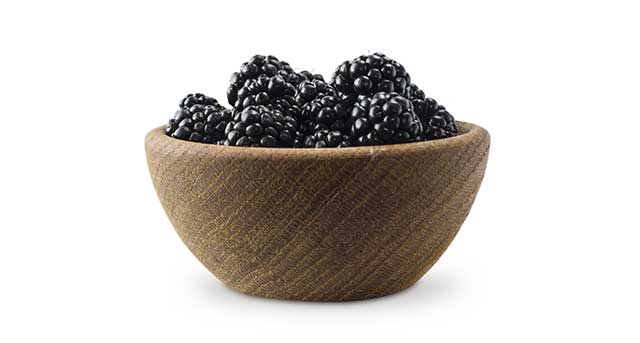
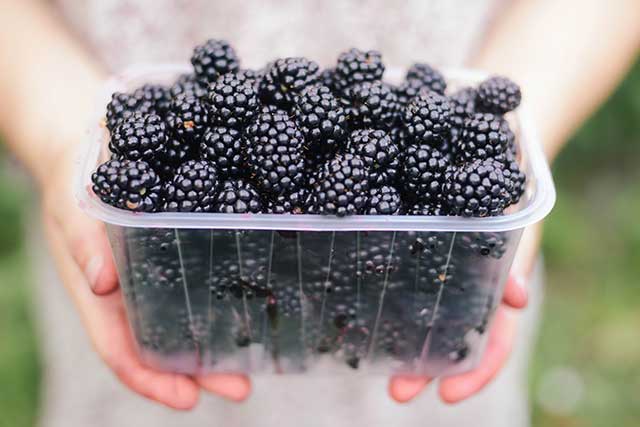
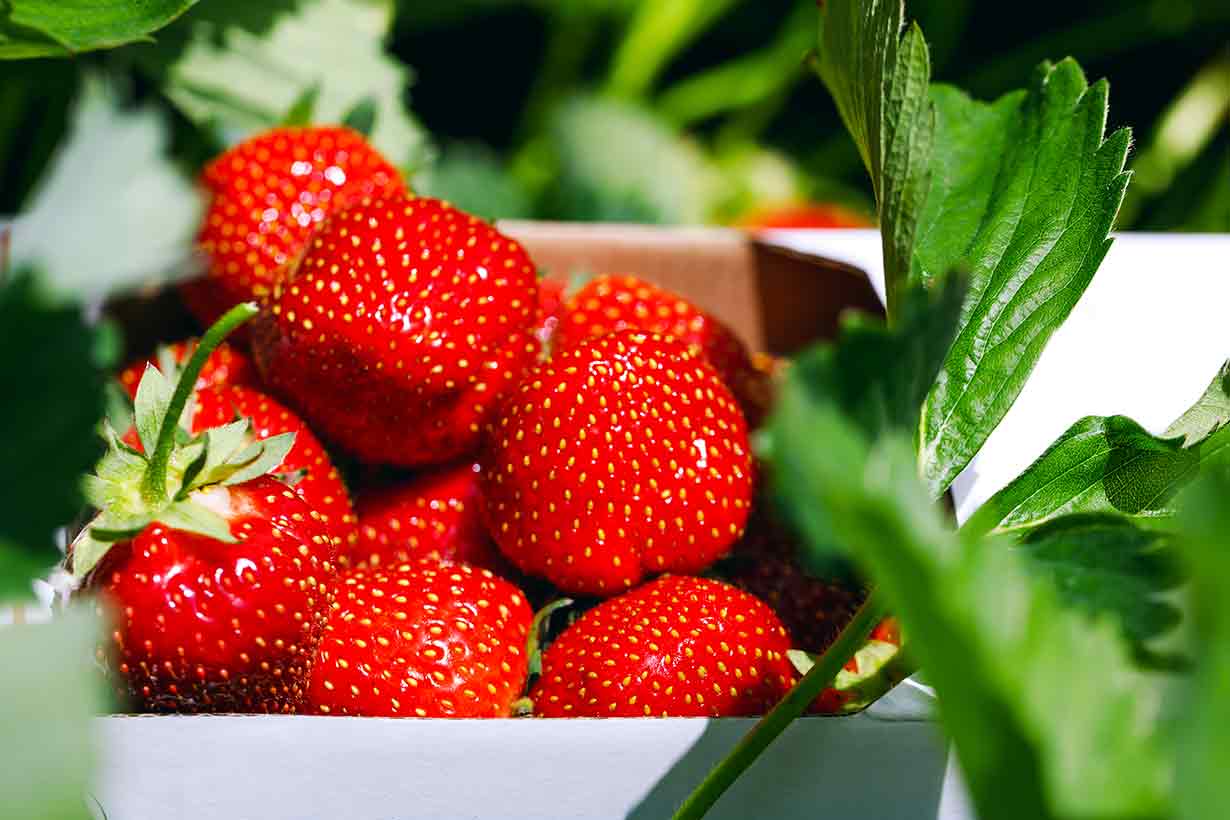
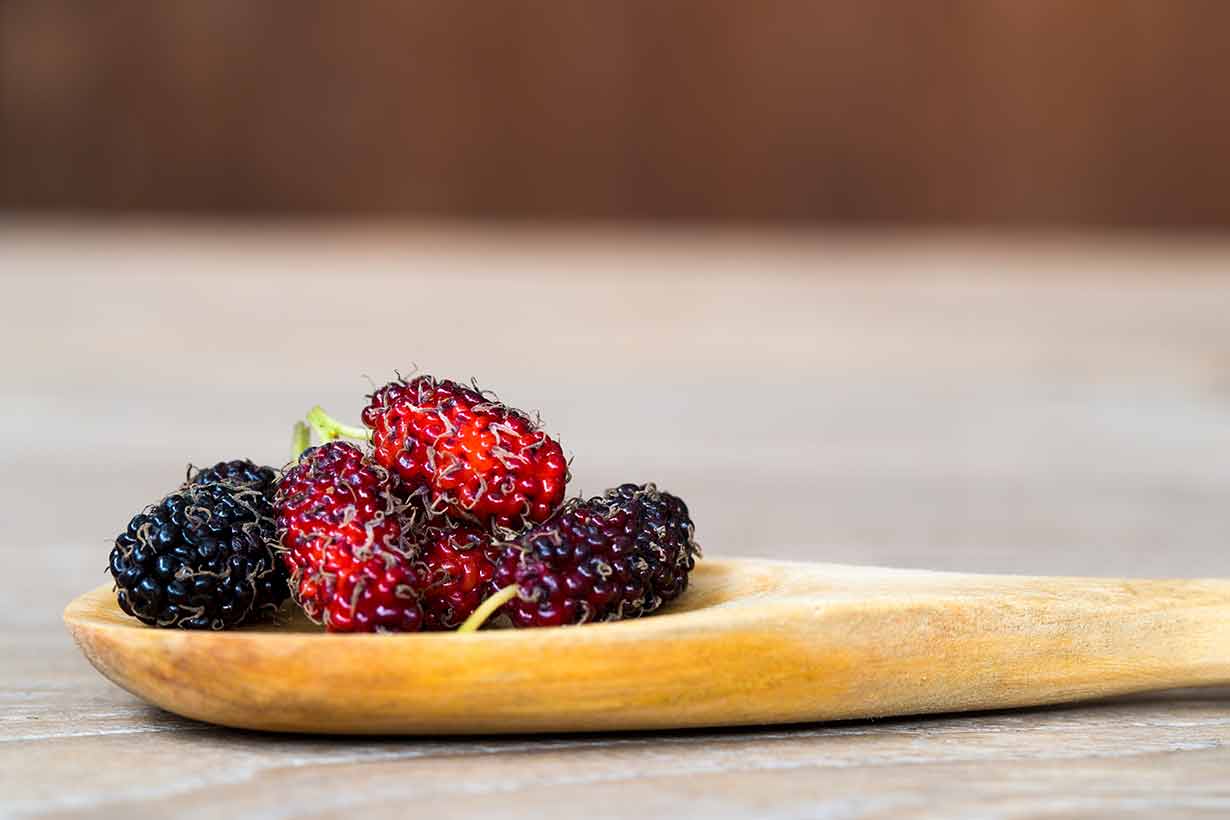
Blackberries are dark edible berries that grow throughout much of the world.
They provide high amounts of vitamin C, fiber, and are a rich source of polyphenols like anthocyanins, which may offer health benefits. The amount of fiber blackberries offer is particularly notable since the berries are quite low in calories, making them extremely fiber-dense.
Research into the potential health effects of blackberries has also found that they may improve insulin sensitivity.
In this article, we’ll present and explain the key nutritional data of blackberries and what recent research shows.
Most of the research around blackberries, and berries in general, focuses on their high concentrations of polyphenols.
However, here are some of their key potential benefits based on both their nutritional profile and scientific research.
1) Blackberries Contain Beneficial Polyphenols
Polyphenols are bioactive compounds that are thought to have potential benefits on human health. The main types of polyphenols that blackberries contain are flavonoids, such as anthocyanins, and phenolic acids.
Anthocyanins are compounds with blue, red, purple, and black pigments, and they are responsible for the color of many purple color fruits.
According to Phenol-Explorer, samples of blackberries had an average total polyphenol content of 569 mg per 100 grams. This places them among the most polyphenol-rich foods.
Based on the findings of a 2025 large review study, anthocyanins have several potential benefits for human health. Among these, they have demonstrated an ability to lower inflammation and reduce several key markers of inflammation, such as C-reactive protein (CRP).
Long-term chronic inflammation is thought to play a role in the development of several chronic diseases.
2) High in Vitamin C
If you’re looking for a fruit high in vitamin C, it isn’t just oranges and citrus fruit that provide this essential nutrient.
In fact, several berries offer notable levels of vitamin C, and this includes blackberries. A 144g cup serving of blackberries contains around 30.2 mg, which is 34% of the Daily Value for vitamin C.
If you’re looking for the highest vitamin C levels, then there is an interesting study that tested the vitamin C content of blackberries at different stages of ripeness.
Lowest vitamin C levels: Blackberries contained the least vitamin C when they were over-ripe.
Over-ripe compounds: Despite containing slightly less vitamin C, over-ripe blackberries had significantly higher levels of polyphenols.
3) May Promote Fat Oxidation and Insulin Sensitivity
Some research suggests that blackberries may lead to benefits for insulin sensitivity and fat oxidation (fat burning):
In a small 2018 randomized crossover study, consuming 600 grams of blackberries per day for one week improved insulin sensitivity and fat oxidation in men with overweight or obesity who were following a high-fat diet. This was in comparison to a calorie- and carbohydrate-matched control food.
An earlier 2016 randomized crossover study investigated a ‘test diet’ made of green tea and dried apple peel, blackberries, blackcurrants, and strawberries. When consumed alongside bread the test diet lowered post-meal blood glucose and insulin compared to eating bread and a sugar-matched beverage.
Points to Note
Importance: Interventions that can potentially lower blood glucose and insulin post-meal may improve blood glucose regulation. Based on what we know, this may help reduce the long-term risk of chronic diseases like type 2 diabetes.
Evidence quality: We included the 2016 study above due to its relevance for blackberries. However, it wasn’t a blackberry-only intervention and it was a small study with only 16 participants. This makes it relatively weak evidence for commenting on the effects of blackberries alone.
4) Blackberries Are High in Fiber
Despite being among the lowest-carbohydrate fruits, blackberries contain high amounts of fiber. A 144g cup serving provides 13.8 grams of carbs, and 7.6 grams of these are fiber.
Whole grains and seeds are often mentioned for their fiber content, and these foods are significant sources of fiber.
However, blackberries are an excellent way to increase fiber intake if you want to do so while consuming fewer carbohydrates and total calories.
Calories are not inherently “bad” and it’s important not to fall into the trap of thinking low-calorie food is always the best. For example, including high-calorie foods can sometimes be beneficial if the extra energy is required for sports or exercise.
However, if you’re looking to add several essential nutrients to your diet without many additional calories, blackberries are a good choice.
As you’ll see in the nutrition facts section, blackberries are a particularly good source of fiber, vitamin C, copper, and manganese.
Fresh vs. Frozen and Canned Blackberries
When you’re considering what kind of blackberries to buy, it’s important to be aware of the differences between fresh, frozen, and canned blackberries.
Both fresh and frozen blackberries are 100% fruit with no additional ingredients. However, this typically isn’t the case for canned blackberries.
Some canned blackberry products come packed in syrup, which adds extra sugar and calories to the fruit. If you want just 100% blackberries, it is generally better to opt for fresh or frozen berries.
This may also be worth considering if you’re trying to limit your intake of added sugars. In this regard, the Dietary Guidelines for Americans 2025–2030 recommend frozen, dried, or canned fruits “with no or very limited added sugars.”
While fresh and frozen blackberries contain a minimal amount of natural fruit sugars, blackberries canned in heavy syrup can contain as much as 50.4 grams of sugar per cup.
Full Nutrition Facts
In the following tables, you can see the full macronutrient, vitamin, and mineral profile of blackberries.
The nutrition data is for raw blackberries per 100g and per 144g cup. For all nutrients, we have calculated the Percent Daily Value (% DV) to the nearest whole percentage.
Table 1: Calorie and macronutrient content of raw blackberries per 100g and per 144g cup
Vitamins
Vitamin
Per 100g (% DV)
Per 144g cup (% DV)
Vitamin A (RAE)
11 mcg (1%)
15.8 mcg (2%)
Vitamin C
21 mg (23%)
30.2 mg (34%)
Vitamin D
0 mcg (0%)
0 mcg (0%)
Vitamin E
1.17 mg (8%)
1.68 mg (11%)
Vitamin K
19.8 mcg (17%)
28.5 mcg (24%)
Thiamin (B1)
0.02 mg (2%)
0.03 mg (3%)
Riboflavin (B2)
0.03 mg (2%)
0.04 mg (3%)
Niacin (B3)
0.65 mg (4%)
0.93 mg (6%)
Pantothenic acid (B5)
0.28 mg (6%)
0.40 mg (8%)
Vitamin B6
0.03 mg (2%)
0.04 mg (2%)
Folate (B9)
25 mcg (6%)
36 mcg (9%)
Vitamin B12
0 mcg (0%)
0 mcg (0%)
Choline
8.5 mg (2%)
12.2 mg (2%)
Table 2: Vitamin content of raw blackberries per 100g and per 144g cup
As the table demonstrates, blackberries are a rich source of vitamins C and K.
Similar to other berries like strawberries, vitamin C is the standout vitamin in blackberries, with a 144g cup serving providing 34% of the Daily Value.
The rest of the available vitamins in blackberries are present in relatively low amounts.
Minerals
Mineral
Per 100g (% DV)
Per 144g cup (% DV)
Calcium
29 mg (2%)
41.8 mg (3%)
Iron
0.62 mg (3%)
0.89 mg (5%)
Magnesium
20 mg (5%)
28.8 mg (7%)
Phosphorus
22 mg (2%)
31.7 mg (3%)
Potassium
162 mg (3%)
233 mg (5%)
Sodium
1 mg (<1%)
1.44 mg (<1%)
Zinc
0.53 mg (5%)
0.76 mg (7%)
Copper
0.17 mg (19%)
0.24 mg (27%)
Manganese
0.65 mg (28%)
0.93 mg (40%)
Selenium
0.4 mcg (1%)
0.58 mcg (1%)
Table 3: Mineral content of raw blackberries per 100g and per 144g cup
A 144-gram cup serving of blackberries is high (≥20% DV) in copper and manganese.
What Blackberries Offer You
Blackberries provide a package of fiber, vitamin C, copper, manganese, and polyphenols in relatively high amounts. They also offer a broad range of vitamins and minerals in smaller amounts.
The amount of research on the health effects of actually consuming blackberries is relatively low.
Research involving human participants suggests they may improve insulin sensitivity, which may help support a lower risk of conditions like type 2 diabetes. However, larger studies are required to confirm these effects.
If you want to include blackberries in your diet, both fresh and frozen blackberries are great choices, though frozen blackberries tend to offer better value-for-money. Blackberries are enjoyable on their own, or you can add them to oatmeal, yogurts, fruit salads, and smoothies.
Overall, they offer good nutritional value for relatively few calories.
Phenol-Explorer. (n.d.). Showing all polyphenols found in Blackberry, raw. See polyphenol content
Xingyu Liu et al. (2025). Effects of anthocyanins on human health: an umbrella review of systematic reviews and meta-analyses. View study in Food and Function journal
Patrick M. Solverson. (2018). Blackberry feeding increases fat oxidation and improves insulin sensitivity in overweight and obese males. View study in Nutrients journal
H. Nyambe-Silavwe and G. Williamson. (2016). Polyphenol-and fibre-rich dried fruits with green tea attenuate starch-derived postprandial blood glucose and insulin: a randomised, controlled, single-blind, cross-over intervention. View study in the British Journal of Nutrition
American Diabetes Association Professional Practice Committee for Diabetes. (2026). 3. Prevention or delay of diabetes and associated comorbidities: Standards of care in diabetes—2026. See American Diabetes Association guidelines
Michael works as a nutritionist in a community setting and holds a Master's degree in Clinical Nutrition. He is a Registered Associate Nutritionist (ANutr) with the Association for Nutrition (AfN), and has published peer-reviewed research.