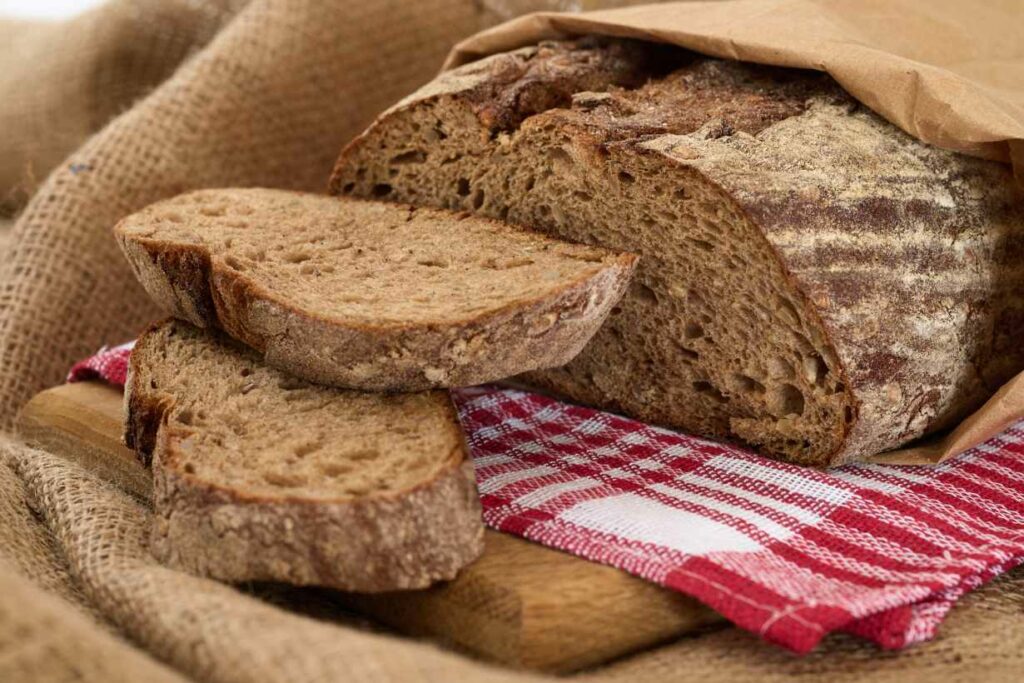
Rye bread is a whole grain bread that has become increasingly popular for its perceived health benefits.
These benefits include its high fiber content and its provision of key essential nutrients like folate and selenium.
In this article, we review what recent science says about rye bread, its potential benefits, and its full nutritional profile. We also provide a nutritional comparison to regular wheat bread so that you can see the key differences.
Higher fiber intakes are associated with improved gut health and a better microbiome composition (the “good” bacteria in the gut). In this regard, a systematic review of 64 randomized controlled trials indicated that dietary fiber significantly increased Bifidobacterium and Lactobacillus levels. These are bacteria species associated with health benefits.
Recent studies on rye bread also indicate that it may have benefits for:
Constipation: A high intake of rye bread (240g/day) relieved constipation more than white wheat bread and common laxatives in a randomized controlled trial involving fifty-one adult participants.
May provide further benefit combined with yogurt: In 59 women with self-reported constipation, a randomized controlled trial examined the effect of four dietary interventions. The results demonstrated the fewest constipation symptoms in the group consuming both rye bread and yogurt compared to groups consuming just one.
Microbiome: A 2022 randomized controlled trial found that a higher intake of rye foods led to positive changes in microbiome composition over 12 weeks. The microbiome is the network of bacteria that reside in the gut, with some strains of ‘beneficial bacteria’ thought to have health benefits. These changes were also associated with lower C-reactive protein (CRP) levels, a marker of inflammation.
Nutritionist’s Note
Note: 240 grams of rye bread doesn’t represent real-world usage: While it’s an encouraging finding, it is hard to say that consuming 240 grams of rye bread to alleviate constipation represents real-world usage. I’d say that 240 grams of rye bread is an excessive amount of bread for most people. This amount would provide approximately 620 calories and large amounts of sodium.
Rye Bread Has a Lower Glycemic Index Than White Wheat Bread
Refined carbohydrates such as white bread and white flour-based products have a high glycemic index. This means that consuming them can cause significant increases in blood sugar levels.
The glycemic index (scaled from 1 to 100) predicts how much a specific food will increase blood sugar levels. A rating of 100 would raise blood sugar similar to pure glucose, whereas a score of 1 would mean no noticeable impact on blood sugar.
The glycemic index for rye bread and white bread are as follows:
According to studies, the glycemic index for rye bread ranges from 45 to 72.
In contrast, the glycemic index of white bread can be over 80.
This variability in glycemic index values will depend on the specific rye bread and its ingredients. For example, some rye bread also contains wheat flour at percentages such as 25% or 50%.
However, a 100% whole-grain, rye-only bread would have a lower glycemic index value than these more refined products.
For people trying to manage their blood sugar levels, the glycemic index shows that rye bread has a smaller impact than regular white wheat bread. Important note: Anyone managing their blood sugar levels should always consult their healthcare provider when making dietary changes.
May Support Heart Health
Several studies indicate that rye bread may support heart health by improving markers of cardiovascular risk:
May lower cholesterol: A randomized controlled trial involving 40 adults had participants consume either rye or wheat bread as 20% of their daily energy for four weeks. In the rye group, there was a significant decrease in total cholesterol and “bad” LDL cholesterol in men (but not women). The researchers noted this was likely due to the men having a higher total dietary fiber intake. A further randomized study found that, based on markers of rye consumption in the blood, higher rye intakes were associated with lower LDL-C.
May lower LDL oxidation: A trial involving 63 healthy adults found that adding rye bread to their habitual diet significantly lowered rates of LDL oxidation. Higher oxidized LDL levels are thought to be a marker of increased cardiovascular risk.
May Support Weight Loss (Compared to White Bread)
Replacing refined wheat products (like white bread) in the diet with rye bread may help support weight loss:
In a 12-week randomized controlled study, 242 participants with overweight or obesity were assigned to consume either rye products or refined wheat products. This was as part of a low-calorie, hypocaloric (below energy needs) diet. After 12 weeks, the rye group participants had lost 1.08 kg more body weight than the wheat group. Additionally, the rye group had 28% lower levels of the inflammatory marker CRP.
A randomized controlled trial examined the effect of rye compared to wheat bread at breakfast and its impact on hunger and satiety (feeling full after eating). Rye suppressed appetite and decreased hunger more significantly until lunch. Furthermore, increased doses of added rye bran further increased satiety.
Nutritionist’s Note
Replace, not add: When looking at the weight loss-focused studies, it is important to interpret them properly. In other words, these studies found benefits from replacing refined bread with rye bread. Simply adding rye bread to your daily diet may not provide the same benefit, particularly if it increases daily calorie intake.
Overall diet matters: For individuals who already consume white bread, the scientific research indicates that rye products may help support appetite control and weight loss. This benefit may not be relevant for people who do not already consume refined breads and cereals, particularly if the overall dietary pattern is good.
Rye Bread vs. White Bread
Let’s now look at how rye bread compares to ‘white’ wheat bread nutritionally.
Since most people consume regular white bread, the comparison in the following tables highlights the potential benefits of opting for rye bread.
Since the slice sizes differ in the USDA database, we’ve compared the two per 100 grams to ensure a fair comparison. 100 grams of bread is approximately 3–4 regular slices.
For each bread, you can see their basic nutritional properties and the vitamins and minerals present in amounts higher than 10% of the daily value.
Nutritional data comes from the USDA entries for rye bread and fortified white bread.
Nutrient
100g Rye Bread (% DV)
100g White Bread (% DV)
Calories
259 kcal
267 kcal
Carbohydrates
48.3 g (18%)
49.2 g (18%)
Fiber
5.8 g (21%)
2.3 g (8%)
Sugars
3.85 g
5.34 g
Fat
3.3 g (4%)
3.59 g (5%)
Protein
8.5 g (17%)
9.43 g (19%)
Folate, DFE
151 mcg (38%)
171 mcg (43%)
Vitamin B1
0.43 mg (36%)
0.51 mg (43%)
Vitamin B2
0.34 mg (26%)
0.24 mg (18%)
Vitamin B3
3.8 mg (24%)
4.76 mg (30%)
Calcium
73 mg (6%)
211 mg (16%)
Copper
0.19 mg (21%)
0.12 mg (13%)
Iron
2.83 mg (16%)
3.4 mg (19%)
Magnesium
40 mg (10%)
27 mg (6%)
Phosphorus
125 mg (10%)
113 mg (9%)
Selenium
30.9 mcg (56%)
23.2 mcg (42%)
Sodium
603 mg (26%)
477 mg (21%)
Table 4: A nutritional comparison of rye bread and white bread per 100 grams
Key Differences Between Rye Bread and White bread
Calories and protein: Both rye and white wheat bread provide a moderate amount of protein and have a similar calorie content.
Fiber: One of the primary benefits of rye bread is the significantly (2.5x) more fiber it contains than white bread.
Micronutrients: Rye bread generally has a slightly higher amount of vitamins and minerals. However, white bread contains higher levels of nutrients like folate, vitamin B1, and iron. Due to the fortification process of white bread, the difference between the two isn’t as significant as some may presume.
Potential Downsides
Rye bread is suitable for most people. However, some people may not be able to consume it due to the presence of gluten and rye allergens.
Therefore, rye bread isn’t suitable for people with celiac disease or non-celiac sensitivity to gluten.
Rye allergy
Rye does contain allergens and is capable of causing allergic reactions. Anyone who suspects they have an allergy to rye should consult with their healthcare provider.
Anyone who suspects they may have gluten intolerance or rye allergy should consult a health professional to discuss the matter.
How To Use Rye Bread
The standard serving size for rye bread is one regular (32g) slice.
People typically use rye bread in the same way as any other bread:
Sandwiches
Toast
Toasted sandwiches
For making breadcrumbs or croutons
Make croutons
Pickled herring on rye bread (a traditional Scandinavian dish)
Summary
As this article shows, rye bread is a rich source fiber, and several essential vitamins and minerals.
Furthermore, findings from scientific studies indicate that it may support health benefits related to digestive health, heart health, blood sugar control, and weight loss. These benefits are primarily seen in the scientific literature when it replaces refined (white) wheat bread in the diet.
At recommended serving sizes, rye can be a nutritious addition to a healthy dietary pattern.
Michael works as a nutritionist in a community setting and holds a Master's degree in Clinical Nutrition. He is a Registered Associate Nutritionist (ANutr) with the Association for Nutrition (AfN), and has published peer-reviewed research.