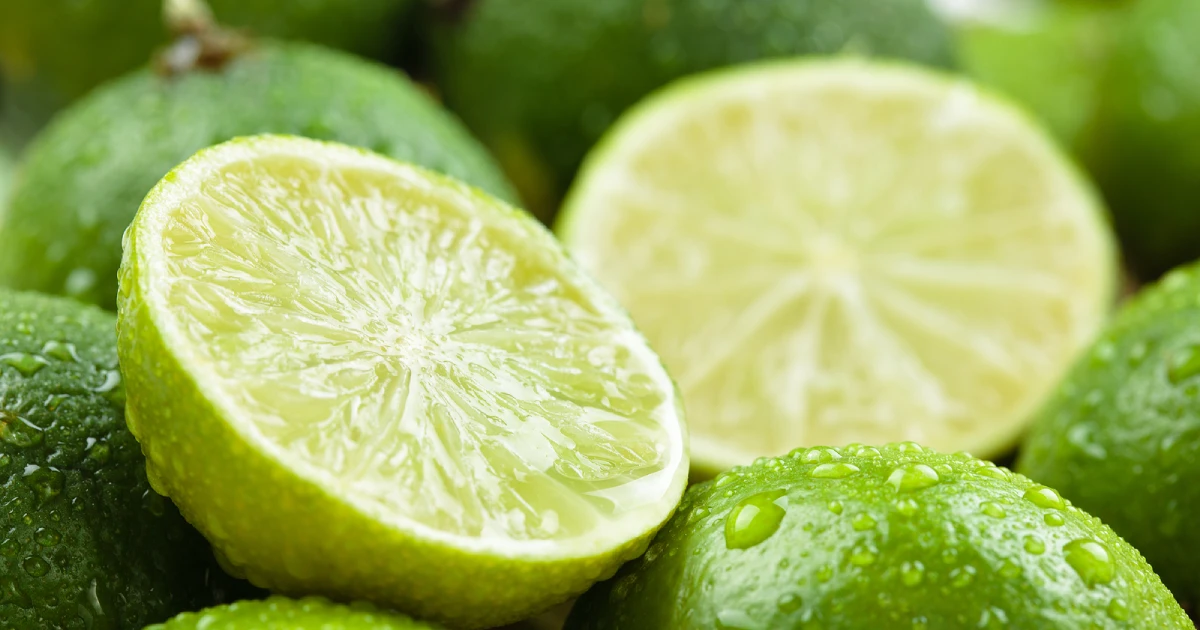
Limes are a popular small green fruit belonging to the citrus family. The most common variety is known as the Persian lime, which has the scientific name of Citrus × latifolia.
Limes offer some distinct nutritional benefits, particularly their rich vitamin C content and provision of bioactive compounds like hesperidin, which research suggests may have cardiovascular benefits in high doses.
In this article, we examine the full nutritional properties of limes, their benefits, and what the evidence from recent studies indicates about their potential health effects.
Potential Benefits
Most of the health benefits limes may offer revolve around their vitamin C, citric acid, and polyphenol content.
1) Source of Polyphenols Like Hesperidin
Limes are a source of several polyphenols, including flavonoids like hesperidin and eriocitrin.
Among these, hesperidin has been the subject of research attention for its proposed antioxidant and anti-inflammatory effects.
Notably, a 2023 systematic review involving 705 participants indicated that hesperidin may:
- Reduce cardiovascular risk markers: The review found that high-dose hesperidin supplementation lowered triglycerides, systolic blood pressure, and LDL cholesterol, which is sometimes referred to as “bad cholesterol.”
- Require a high effective dose: The study’s authors determined that the data indicates an effective dose of 1,000 mg for at least eight weeks.
Based on these findings, high doses of hesperidin may support cardiovascular health.
Nutritionist’s Note
To understand the above research findings, we need to consider how much hesperidin a lime provides.
According to Phenol-Explorer, a respected database of polyphenols found in food, lime juice contains 13.41 mg of hesperidin per 100 ml.
As this is approximately 75 times less than the effective dose, we can’t claim that simply eating a lime would have the same beneficial effect. We can state that limes contain a compound called hesperidin that is thought to be beneficial, but the effects from simply eating a daily lime or two are unclear.
2) Citric Acid and Kidney Stones
Kidney stones are a painful condition with a high recurrence rate. They are most commonly formed when oxalate, a compound found in certain plant foods and also produced by the body, binds with calcium in the body.
However, citrate (citric acid) can also bind with calcium, which may help to reduce the risk of kidney stones forming in individuals prone to them. Limes are a rich source of citric acid, providing approximately 1.38 grams per ounce (28.35g) serving. This is the acid responsible for their sour, tart flavor.
Notably, a 2017 systematic review found that citrus fruits, such as limes and lemons, increase urinary citrate levels – the amount of citrate in urine. Limes contain a similar amount of citric acid to lemons, and 4 ounces (113g) of lemon juice has been shown to raise citrate levels.
This is because dietary citrate converts to bicarbonate in the body, which makes the blood more alkaline. As a result of the higher alkaline levels, the kidney allows citrate to pass into the urine.
It is thought that this may help protect against kidney stone formation, with data indicating that 20–60% of individuals with kidney stones may have low urinary citrate levels.
Nutritionist’s Note
If you are wondering more about how citrate may block kidney stone formation, it’s because oxalate can no longer bind with calcium once citrate has already done so.
However, it is worth noting that the effective dose in the study (4 oz per day of lemon juice, which is similar to lime juice) is approximately equal to four whole limes. This is a serving on the high side that likely doesn’t represent typical intake levels.
Also, always ensure to consult with a healthcare provider for any medical issues like kidney stones rather than trying to self-manage.
3) High in Vitamin C
In addition to citric acid, limes are an excellent source of another acid called ascorbic acid, which is otherwise known as vitamin C.
A single 67g lime typically contains 19.5 mg of vitamin C, which is equal to 22% of the daily value.
Vitamin C plays numerous important roles in the body, and maintaining sufficient levels is vital for its supportive role in the immune system and its ability to help fight oxidative stress.
4) May Enhance Polyphenol Absorption
Another interesting research finding about lime is that, in addition to containing polyphenols of its own, it may increase the absorption of polyphenols in grains.
For example, a 2016 study demonstrated that adding lime juice to roasted millet increased the bioaccessibility of flavonoids by 25%. This suggests a higher amount of flavonoids may be absorbed from the millet.
Flavonoids are a type of polyphenol (plant chemical) thought to offer potential health benefits. For example, a large 2025 observational study involving 124,804 participants found a link between individuals with the most diverse flavonoid intake and a 6–20% lower risk of all-cause mortality.
5) May Increase Iron Absorption
Another potential benefit of lime is its ability to increase non-heme iron absorption. Non-heme iron is the type of iron found in plant-based foods, and it has a lower absorption rate than heme iron, which is found in animal foods.
Notably, research indicates that consuming vitamin C alongside a source of non-heme iron increases the iron absorption rate.
While the exact increase depends on the context of the meal, the dose of iron, and the amount of vitamin C, studies show consistent increases. For instance, one study found that increasing vitamin C intake from 50 mg to 250 mg increased iron absorption from a meal by 100%.
This benefit is not distinct to lime, and any source of vitamin C, whether an orange or a potato, may have the same effect. However, lime is relatively unique in the sense that it’s easy to add to foods. For example, it is easy to squeeze some fresh lime juice on top of a meal containing plant-based iron sources.
Research has also indicated that citric acid, which is also present in limes, helps to increase iron absorption. In one study, a small amount of citric acid (60 mg) significantly boosted iron absorption from an oat-based drink.
As a rich dietary source of both citric acid and vitamin C, limes are well placed for their potential ability to increase iron absorption.
Potential Drawbacks
While relatively uncommon, research has uncovered some potential downsides from using limes.
Skin Reactions (Phytophotodermatitis)
Limes have been linked to skin reactions and rashes, more specifically phytophotodermatitis.
Phytophotodermatitis is a condition characterized by painful rashes and blisters. It can occur due to a reaction between UV light and certain plant chemicals; compounds found in plant-based foods.
In the case of limes, they contain compounds called furanocoumarins, like bergamottin and dihydroxybergamottin, that can cause this reaction.
Several case studies have reported on painful reactions from lime-related phytophotodermatitis. While uncommon, these cases have occurred in contexts such as:
- Long exposure: One case came from squeezing limes for one hour before attending a pool party.
- Cooking class: Another case happened after one patient handled and squeezed limes during a holiday cooking class while spending lots of time in the sun.
Unless you are spending time in the sun with lime juice on your hands, phytophotodermatitis is relatively rare and not something to overly worry about.
Overconsumption and Dental Erosion
One notable case study found that a 49-year-old woman likely suffered dental erosion from “inappropriate use of lime juice.” It is thought that she had over-consumed lime juice as she had mistakenly believed it to be a slimming aid.
While lime juice is acidic, this case study relates to extreme use of lime rather than typical dietary intake.
Nutrition Facts
Let’s now examine the full nutritional values of limes. The data below shows the macronutrient, vitamin, and mineral content of limes per 100g and per 67-gram lime.
Data source: USDA – Limes, raw
Calories and Macronutrients
| Nutrient | Per 100g (% DV) | Per 67g lime (% DV) |
|---|---|---|
| Calories | 30 kcal | 20 kcal |
| Carbohydrates | 10.5g (4%) | 7.04g (3%) |
| Fiber | 2.8g (10%) | 1.88g (7%) |
| Sugars | 1.69g | 1.13g |
| Fat | 0.2g (<1%) | 0.13g (<1%) |
| Saturated fat | 0.02g (<1%) | 0.02g (<1%) |
| Monounsaturated fat | 0.02g | 0.01g |
| Polyunsaturated fat | 0.06g | 0.04g |
| Omega-3 | 0.02g | 0.01g |
| Omega-6 | 0.04g | 0.02g |
| Protein | 0.7g (1%) | 0.47g (1%) |
| Cholesterol | 0 mg (0%) | 0 mg (0%) |
As the data shows, limes are low in calories and provide a small amount of carbohydrates.
Vitamins
| Vitamin | Per 100g (% DV) | Per 67g lime (% DV) |
|---|---|---|
| Vitamin A (RAE) | 2 mcg (<1%) | 1.34 mcg (<1%) |
| Vitamin C | 29.1 mg (32%) | 19.5 mg (22%) |
| Vitamin D | 0 mcg (0%) | 0 mcg (0%) |
| Vitamin E | 0.22 mg (1%) | 0.15 mg (1%) |
| Vitamin K | 0.6 mcg (<1%) | 0.4 mcg (<1%) |
| Thiamin (B1) | 0.03 mg (3%) | 0.02 mg (2%) |
| Riboflavin (B2) | 0.02 mg (2%) | 0.01 mg (1%) |
| Niacin (B3) | 0.2 mg (1%) | 0.13 mg (1%) |
| Pantothenic acid (B5) | 0.22 mg (4%) | 0.15 mg (3%) |
| Vitamin B6 | 0.04 mg (2%) | 0.03 mg (2%) |
| Folate (B9) | 8 mcg (2%) | 5.36 mcg (1%) |
| Vitamin B12 | 0 mcg (0%) | 0 mcg (0%) |
| Choline | 5.1 mg (1%) | 3.4 mg (1%) |
Limes contain high (>20% DV) levels of vitamin C and a broader range of vitamins in smaller amounts.
Minerals
| Mineral | Per 100g (% DV) | Per 67g lime (% DV) |
|---|---|---|
| Calcium | 33 mg (3%) | 22.1 mg (2%) |
| Iron | 0.6 mg (3%) | 0.4 mg (2%) |
| Magnesium | 6 mg (1%) | 4.02 mg (1%) |
| Phosphorus | 18 mg (1%) | 12.1 mg (1%) |
| Potassium | 102 mg (2%) | 68.3 mg (1%) |
| Sodium | 2 mg (<1%) | 1.34 mg (<1%) |
| Zinc | 0.11 mg (1%) | 0.07 mg (1%) |
| Copper | 0.07 mg (8%) | 0.04 mg (4%) |
| Manganese | 0.01 mg (<1%) | 0.01 mg (<1%) |
| Selenium | 0.4 mcg (1%) | 0.27 mcg (<1%) |
Limes provide a moderate amount of copper and low amounts of the other essential minerals.
How To Use Limes
Since limes can be quite sour, you may wonder how to use them. Here are some ideas that are quick and simple:
- Make lime tea: Squeeze a lime into a cup of hot water for a quick and refreshing fruity tea.
- Guacamole: Lime juice is a key ingredient in the Mexican condiment, guacamole. Combine mashed avocado and a squeeze of fresh lime juice, then add your choice of ingredients like chopped onion, cilantro, and salt to taste.
- Eat them whole: While most people are unlikely to enjoy eating a lime as they would an apple, it is an option for those that enjoy sour foods.
- Lime and pancakes: Lemon juice is a traditional pancake topping, and lime juice can work just as well.
- Lime water: Similar to lime tea; just add freshly squeezed lime juice to a glass of water for a fruity flavored water.
- Squeeze into your favorite dish: You can also add lime juice to salads, pasta dishes, and even curries as a flavor enhancer.
Summary
The key benefits of limes are that they add vitamin C, small amounts of fiber, and polyphenols such as hesperidin to the diet.
While research has shown that some of the compounds in limes, such as hesperidin and citric acid, may have benefits, it is unclear how much effect simply eating a lime would have.
However, people don’t eat just one food, and small wins across the total diet can all add up, which is why most dietary advice encourages a balanced diet.
References
Full List of Scientific References
(Click to Expand)
All citations used within this article are listed below, with full details for each scientific source.
- Phenol-Explorer (n.d.). All polyphenols found in lime, pure juice. View data on Phenol-Explorer
- Amjad Khan et al. (2020). Antioxidant and anti-inflammatory effects of citrus flavonoid hesperetin: Special focus on neurological disorders. View study in Antioxidants journal
- Atie Sadat Khorasanian et al. (2023). The effects of hesperidin supplementation on cardiovascular risk factors in adults: A systematic review and dose-response meta-analysis. View study in Frontiers in Nutrition journal
- Jianfeng Zeng et al. (2019). A retrospective study of kidney stone recurrence in adults. View study in the Journal of Clinical Medicine Research
- Nancy S. Krieger et al. (2015). Effect of potassium citrate on calcium phosphate stones in a model of hypercalcuria. View study in the Journal of the American Society of Nephrology
- Kristina L. Penniston et al. (2008). Quantitative assessment of citric acid in lemon juice, lime juice, and commercially-available fruit juice products. View study in the Journal of Endourology
- Fakhri Rahman et al. (2017). Effect of citrus-based products on urine profile: A systematic review and meta-analysis. View study in F1000Research journal
- Zeynep Gul and Manoj Monga. (2014). Medical and Dietary Therapy for Kidney Stone Prevention. View study in the Korean Journal of Urology
- Jack M. Zuckerman and Dean G. Assimos. (2009). Hypocitraturia: Pathiophysiology and Medical Management. View study in Reviews in Urology journal
- USDA. (2019). Limes, raw. View USDA data
- Martyna Mochol et al. (2025). The role of vitamin C in selected autoimmune and immune-mediated diseases: Exploring potential therapeutic benefits. View study in the International Journal of Molecular Sciences
- Gavirangappa Hithamani and Krishnapura Srinivasan. (2017). Bioaccessibility of polyphenols from selected cereal grains and legumes as influenced by food acidulants. View study in the Journal of the Science of Food and Agriculture
- Benjamin H. Parmenter et al. (2025). High diversity of dietary flavonoid intake is associated with a lower risk of all-cause mortality and major chronic diseases. View study in Nature Food journal
- Elif Piskin et al. (2022). Iron absorption: Factors, limitations, and improvement methods. View study in ACS Omega journal
- James D. Cook and Manju B. Reddy. (2001). Effect of ascorbic acid intake on nonheme-iron absorption from a complete diet. View study in the American Journal of Clinical Nutrition
- Huanmei Zhang et al. (2007). Improved iron bioavailability in an oat-based beverage: the combined effect of citric acid addition, dephytinization and iron supplementation. View study in the European Journal of Nutrition
- Jihane Belcadi et al. (2024). Lime dermatitis. View study in Dermatitis journal
- M. Masuda et al. (2017). Screening of furanocoumarin derivatives as cytochrome P450 3A4 inhibitors in citrus. View study in the Journal of Clinical Pharmacy and Therapeutics
- Shirley Yunqi Jiang et al. (2024). Lime-induced phytophotodermatitis: A rash that requires explicit questioning. View study in the Journal of Allergy and Clinical Immunology
- Ji Young Choi et al. (2018). Asymptomatic hyperpigmentation without preceding inflammation as a clinical feature of citrus fruits-induced phytophotodermatitis. View study in Annals of Dermatology journal
- C. T. Bamise et al. (2009). Dental erosion due to lime consumption; review of literature and case report. View study in the East African Journal of Public Health