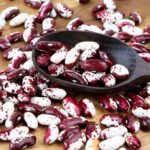
Red kidney beans are little burgundy-colored legumes that are among the most popular beans.
Nutritionally, they are an excellent source of fiber, protein, and key vitamins and minerals including folate, copper, iron, and manganese. Recent scientific research also suggests they may support heart health, blood sugar control, and satiety.
However, it is important to cook them thoroughly, as raw red kidney beans contain high levels of phytohemagglutinin, a toxic lectin.
In this article, we explain what the science says about red kidney beans in plain English, present their full nutritional profile, and discuss their potential benefits and safety precautions.
Table of contents
Key Nutrients in Red Kidney Beans
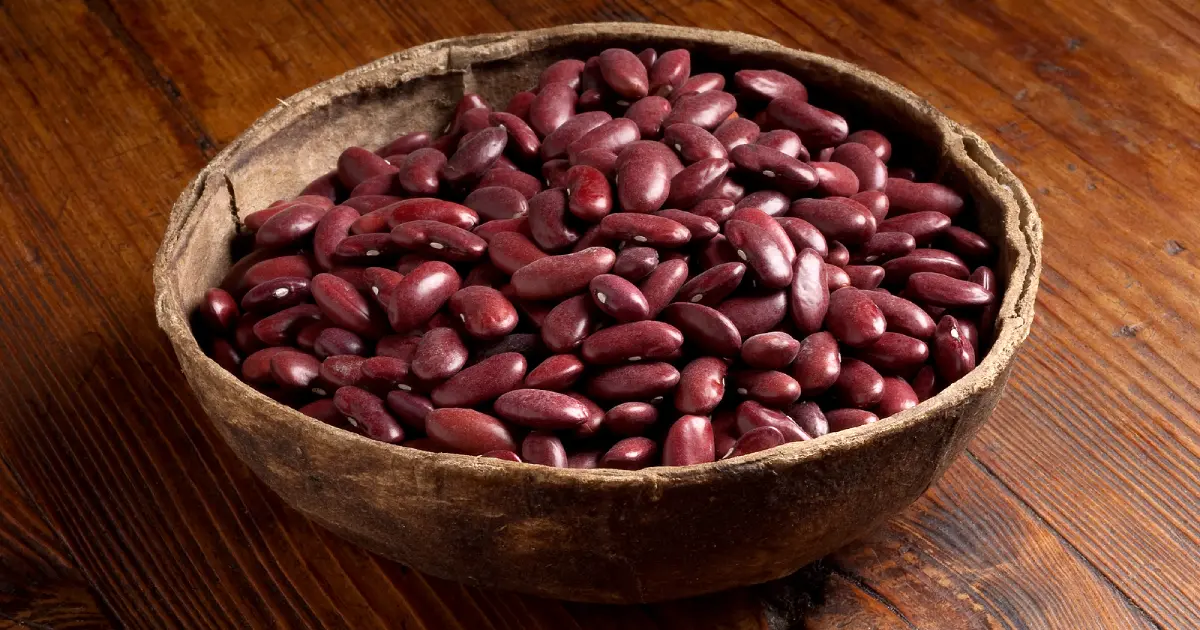
First, let’s look at the most notable nutrients a serving of red kidney beans provides.
A 177-gram cup serving of cooked red kidney beans provides:
- Calories: 225 kcal
- Carbs: 40.4g
- Fiber: 13.1g
- Fat: 0.89g
- Protein: 15.3g
- Folate: 58% of the Daily Value
- Copper: 48% DV
- Manganese: 37% DV
- Thiamin (B1): 23% DV
- Phosphorus: 20% DV
- Magnesium: 19% DV
Source: USDA – Beans, kidney, red, mature seeds, cooked
Fiber Content
Fiber is a key nutrient in red kidney beans, with a cup of cooked beans providing 13.1 grams, which is nearly half of the Daily Value.
High in Folate
Among the essential vitamins and minerals they contain, red kidney beans supply a particularly notable amount of folate. With 230 mcg per cup, they provide 58% of the Daily Value.
Folate plays a key role in supporting healthy pregnancies, helping to prevent birth complications like neural tube defects. This is why public health guidelines recommend folic acid supplementation during pregnancy, which is a highly bioavailable form of folate.
Potential Health Benefits
In this section, you’ll find information on what scientific research indicates about the potential health benefits of red kidney beans.
Red Kidney Beans and Blood Sugar
Red kidney beans have a relatively low glycemic index, with one test showing their glycemic index was 36. This means that when consumed in typical servings, they will have a relatively small impact on blood sugar levels rather than causing a big spike in blood sugar.
Studies also show that red kidney bean consumption may support improvements in blood sugar control:
- A 2025 randomized controlled trial fed 127 participants with prediabetes a legume-enriched diet which included red kidney beans. This led to improvements in blood sugar control, which included a reduction in HbA1c (average blood sugar levels over a long period) compared to a control diet. However, while the diets were matched for calories, there were other differences between them, so it is difficult to say with certainty whether the effect was solely due to legumes.
- An earlier 2012 randomized controlled trial found that adding red kidney beans to rice lowered the post-meal blood sugar response compared to rice alone in adults with type 2 diabetes.
Mechanisms: How Might Red Kidney Beans Impact Blood Sugar?
Looking at the existing evidence, there are several potential explanations as to why red kidney beans may support blood sugar levels.
One key factor is the high fiber content of red kidney beans; a 2025 systematic review of controlled trials demonstrated that fiber interventions consistently improve blood sugar control. The review stated that there is also some evidence of beneficial changes in gut microbiota correlating with improvements in blood sugar levels. Fiber is key here since it helps feed the colonies of bacteria in the gut.
Red kidney beans are also rich in magnesium, which may play a role in blood sugar control. For example, a 2025 systematic review found that increasing magnesium status through supplementation lowered fasting blood sugar levels in people with type 2 diabetes.
While the study did not find significant improvements in HbA1c, the results suggested that magnesium intake for longer durations may lead to more visible improvements.
Red Kidney Beans and Heart Health
Red kidney bean intake may also improve some markers of heart health:
- Blood pressure: In a small pilot randomized crossover trial, blood pressure levels were lower two hours after eating red kidney beans compared with rice. Several markers of blood-vessel function also saw post-meal improvements over a six-hour period.
- Cholesterol levels: A small crossover study found that daily intake of red kidney beans over 14 days lowered LDL cholesterol (LDL-C) by 9% in adults with moderately high cholesterol levels.
LDL-C is sometimes referred to as “bad cholesterol” if that term is more familiar, and it is considered to be a causal risk factor in the development of cardiovascular disease.
While these two specific studies were only small in nature, they are partially supported by the wider research on legumes as a whole. For example, a 2025 systematic review of 31 randomized controlled trials found that non-soy legumes significantly lowered LDL-C levels.
However, a 2023 systematic review found that data on the impact of legumes on blood pressure and cardiovascular disease was limited.
Red kidney beans contain several nutrients and compounds with potential benefits for heart health, with two of the most notable being fiber and potassium.
May Improve Satiety
Some research suggests that red kidney beans may help to improve satiety, which refers to the feeling of fullness after eating. If you feel full without a desire to eat more food, then this can help to support weight management.
A 2025 randomized crossover trial tested the comparative impact of black beans, red kidney beans, and beef on satiety in 35 older adults:
- Improved satiety: The study found that all test meals, whether beef, red kidney beans, or black beans, increased post-meal fullness and satisfaction.
- Decreased appetite: Following these test meals, there was a significant decrease in the desire to eat more food.
- Red kidney beans vs. beef: Red kidney beans had a similar effect on satiety to beef.
While protein is thought to be important for satiety, the same is true for dietary fiber. The authors suggested that the high fiber content of red kidney beans balanced out their lower protein content compared to beef.
These findings support earlier wider research on legumes and satiety, with a 2014 systematic review of feeding trials finding that beans and other pulses like chickpeas significantly increase satiety.
Potential Downsides
The main potential drawback of red kidney beans revolves around their lectin content. However, as with many foods, potential allergies should be taken into account.
Lectin Content and Safety
Raw red kidney beans contain high concentrations of a lectin called phytohemagglutinin.
This is a problem because it acts as a toxin and can have effects such as:
- Reducing nutrient absorption: Animal studies show that phytohemagglutinin binds to the small intestine where it can interfere with nutrient absorption, thereby reducing essential nutrient intake.
- Sickness: Consuming raw kidney beans can lead to severe symptoms including vomiting and abdominal pain.
There have been multiple cases of people being poisoned by raw and undercooked red kidney bean consumption.
Cooking Red Kidney Beans Safely
While many people might think they wouldn’t eat red kidney beans raw anyway, it is their undercooking that tends to make most people sick.
The European Food Safety Authority (EFSA) published a report on their findings on the risks to human health from plant lectins in food in early 2026.
This report noted that soaked and cooked red kidney beans have resulted in poisoning, and that even deactivating 50% of phytohemagglutinin still leaves a significant food safety risk.
It is important to ensure red kidney beans are cooked thoroughly to completely destroy their phytohemagglutinin content. Here are two important things to keep in mind for this purpose:
- Canned red kidney beans: Canned beans have already been pressure cooked at high heat, which deactivates most of their hemagglutinin content. However, heat them thoroughly as per label instructions.
- Cooking dried red kidney beans: Research shows that phytohemagglutinin can be destroyed by heating presoaked beans at a temperature of at least 100°C (212°F) for a minimum of 15 minutes. However, the FDA recommends soaking the beans for 5 hours and then boiling for at least 30 minutes to ensure the beans reach a sufficient temperature for long enough.
Note: Many commercial slow cookers do not reach the necessary temperatures to destroy phytohemagglutinin; research has shown that heating at 80°C (176°F) doesn’t reduce phytohemagglutinin content, even when heated for five hours.
Complete Nutrition Facts
In the tables below, you’ll find the complete nutritional profile of red kidney beans.
Data is presented for red kidney beans both per 100g and per 177g cup. Nutrient values are sourced from the USDA and we have calculated Percent Daily Values (% DV) where applicable.
| Nutrient | Per 100g (% DV) | Per 177g cup (% DV) |
|---|---|---|
| Calories | 127 kcal | 225 kcal |
| Carbohydrates | 22.8g (8%) | 40.4g (15%) |
| Fiber | 7.4g (26%) | 13.1g (47%) |
| Sugars | 0.32g | 0.57g |
| Fat | 0.5g (1%) | 0.89g (1%) |
| Saturated fat | 0.07g (<1%) | 0.12g (1%) |
| Monounsaturated fat | 0.04g | 0.07g |
| Polyunsaturated fat | 0.28g | 0.50g |
| Omega-3 | 0.17g | 0.30g |
| Omega-6 | 0.11g | 0.19g |
| Protein | 8.67g (17%) | 15.3g (31%) |
| Cholesterol | 0 mg (0%) | 0 mg (0%) |
| Vitamin | Per 100g (% DV) | Per 177g cup (% DV) |
|---|---|---|
| Vitamin A (RAE) | 0 mcg (0%) | 0 mcg (0%) |
| Vitamin C | 1.2 mg (1%) | 2.12 mg (2%) |
| Vitamin D | 0 mcg (0%) | 0 mcg (0%) |
| Vitamin E | 0.03 mg (<1%) | 0.05 mg (<1%) |
| Vitamin K | 8.4 mcg (7%) | 14.9 mcg (12%) |
| Thiamin (B1) | 0.16 mg (13%) | 0.28 mg (23%) |
| Riboflavin (B2) | 0.06 mg (5%) | 0.10 mg (8%) |
| Niacin (B3) | 0.58 mg (4%) | 1.02 mg (6%) |
| Pantothenic acid (B5) | 0.22 mg (4%) | 0.39 mg (8%) |
| Vitamin B6 | 0.12 mg (1%) | 0.21 mg (12%) |
| Folate (B9) | 130 mcg (33%) | 230 mcg (58%) |
| Vitamin B12 | 0 mcg (0%) | 0 mcg (0%) |
| Choline | 30.5 mg (6%) | 54 mg (10%) |
With more than 20% of the Daily Value, a cup of cooked red kidney beans provides high amounts of folate and thiamin.
| Mineral | Per 100g (% DV) | Per 177g cup (% DV) |
|---|---|---|
| Calcium | 28 mg (2%) | 49.6 mg (4%) |
| Iron | 2.94 mg (16%) | 5.2 mg (29%) |
| Magnesium | 45 mg (11%) | 79.6 mg (19%) |
| Phosphorus | 142 mg (11%) | 251 mg (20%) |
| Potassium | 403 mg (9%) | 713 mg (15%) |
| Sodium | 2 mg (<1%) | 3.54 mg (<1%) |
| Zinc | 1.07 mg (10%) | 1.89 mg (17%) |
| Copper | 0.24 mg (27%) | 0.43 mg (48%) |
| Manganese | 0.48 mg (21%) | 0.84 mg (37%) |
| Selenium | 1.2 mcg (2%) | 2.12 mcg (4%) |
A cup serving provides high amounts (over 20% of the Daily Value) of iron, phosphorus, copper, and manganese.
Are Red Kidney Beans a Healthy Choice?
Red kidney beans provide a moderate amount of protein coupled with high fiber content and high levels of several vitamins and minerals.
While the available research specifically focused on red kidney beans is relatively small, it fits in with the existing wider research on legumes as a food category. This research suggests that red kidney beans may offer benefits for supporting heart health, satiety, and improved blood sugar levels.
Overall, red kidney beans are likely a good addition to the diet for most people, especially those with low intakes of fiber and folate.
However, they can only be a healthy choice if they are properly cooked to deactivate the high levels of the lectin phytohemagglutinin present in raw red kidney beans.