This article lists 30 common foods high in dietary cholesterol, letting you know how much they contain per 100g and per typical serving.
We’ll also explain what dietary cholesterol is and the key facts you need to know.
Table of contents
What Is Dietary Cholesterol?
Dietary cholesterol is sometimes referred to as a fat-like substance because it’s a type of lipid. But to be more precise, cholesterol is scientifically a sterol rather than a type of dietary fat.
Only animal-based foods contain cholesterol, and it is not present in plant-based foods.
For a long time, dietary cholesterol was thought to raise blood cholesterol (like LDL-C) levels. However, recent research suggests this effect is relatively mild for most people, with saturated fat (as found in butter, palm oil, and fatty meat) having a more significant impact.
That said, recent large scientific reviews have shown that dietary cholesterol can still raise blood cholesterol levels. While the effect is small for most people, a 2019 analysis of over 55 studies demonstrated that higher dietary cholesterol intake leads to slight dose-response increases in “bad” LDL cholesterol.
The human body uses cholesterol to make various compounds, including hormones such as testosterone and estrogen. However, these processes do not rely on dietary cholesterol as the body can produce sufficient cholesterol to meet essential needs.
Public Health Guidance on Dietary Cholesterol Intake
Advice from public health organizations on dietary cholesterol has changed over the years. Here are the current recommendations from the Dietary Guidelines for Americans and American Heart Association:
- Dietary Guidelines for Americans: The Dietary Guidelines for Americans (DGAs) have shifted from advising a set limit on cholesterol intake. In previous editions, an upper intake level was set at 300 mg per day, but the most recent 2025–2030 guidelines focus on limiting saturated fat.
- American Heart Association: The American Heart Association (AHA) has also adjusted its messaging on dietary cholesterol intake. In a 2026 dietary guidance scientific statement, the AHA noted that “dietary cholesterol is no longer a primary target” for cardiovascular risk reduction for most people. However, this same guidance also stated that heart-healthy diets are typically low in cholesterol.
Nutritionist’s Note
As the above guidance from prominent public health organizations shows, upper intake limits of 300 mg on dietary cholesterol are typically no longer set.
However, you may have noticed the specific wording about dietary cholesterol typically having a modest impact on blood cholesterol “for most people,” which is important.
This wording is because scientific research has shown that some people hyperrespond to dietary cholesterol. Dietary cholesterol can have a larger effect on blood cholesterol levels in these individuals than it does for most people.
Additionally, as the large 2019 meta-regression study showed, dietary cholesterol intake can still lead to small increases in LDL cholesterol.
For these reasons, it is important to follow any personalized guidance on dietary cholesterol you may have from a healthcare provider. Anyone with concerns or questions surrounding dietary cholesterol intake should consult their healthcare provider.
Foods High in Dietary Cholesterol
We will now look at 30 common foods high in dietary cholesterol. In the following table, you’ll see how much dietary cholesterol each food contains per 100 grams, allowing for an easy comparison.
After the table, we’ll examine each food in further detail, presenting their cholesterol both per 100g and per typical serving as per USDA data, alongside any key points of note.
All nutritional data represents typical preparation (e.g. cooked weight where applicable) and has been sourced from the USDA’s FoodData Central database.
| Rank | Food name | Cholesterol per 100g | Data source |
|---|---|---|---|
| 1 | Duck eggs | 828 mg | USDA |
| 2 | Cod liver oil | 570 mg | USDA |
| 3 | Liver (chicken) | 563 mg | USDA |
| 4 | Kidney (pork) | 480 mg | USDA |
| 5 | Fish roe | 479 mg | USDA |
| 6 | Pate (chicken liver) | 391 mg | USDA |
| 7 | Eggs (regular) | 373 mg | USDA |
| 8 | Squid | 260 mg | USDA |
| 9 | Ghee | 256 mg | USDA |
| 10 | Butter | 215 mg | USDA |
| 11 | Shrimp | 189 mg | USDA |
| 12 | Calamari | 183 mg | USDA |
| 13 | Eel | 161 mg | USDA |
| 14 | Liverwurst sausage | 158 mg | USDA |
| 15 | Turkey bacon | 153 mg | USDA |
| 16 | Lobster | 146 mg | USDA |
| 17 | Chicken wings | 141 mg | USDA |
| 18 | Crayfish | 137 mg | USDA |
| 19 | Chicken thigh | 133 mg | USDA |
| 20 | Chicken drumstick | 130 mg | USDA |
| 21 | Blood sausage | 120 mg | USDA |
| 22 | Tallow | 109 mg | USDA |
| 23 | Bacon (pork) | 107 mg | USDA |
| 24 | Chicken breast | 104 mg | USDA |
| 25 | Cheddar cheese | 99 mg | USDA |
| 26 | Crab (blue) | 97 mg | USDA |
| 27 | Lamb chop | 95 mg | USDA |
| 28 | Lard | 95 mg | USDA |
| 29 | Ground beef (20% fat) | 88 mg | USDA |
| 30 | Canned anchovies | 85 mg | USDA |
1) Duck Eggs
- 828 mg cholesterol per 100g
- 580 mg cholesterol per 70g egg
- Note: Duck eggs contain more cholesterol than regular (chicken) eggs for two reasons. They have a larger yolk-to-white ratio and also contain more cholesterol per gram of egg yolk.
Source: USDA – Duck egg, cooked
2) Cod Liver Oil
- 570 mg cholesterol per 100g
- 77.5 mg cholesterol per 13.5g tablespoon
Source: USDA – Fish oil, cod liver oil
3) Chicken Liver
- 563 mg cholesterol per 100g
- 479 mg cholesterol per 3 oz (85g) serving
- Note: While chicken liver contains the most cholesterol according to USDA data, pork, beef, and other types of liver are high in cholesterol.
Source: USDA – Chicken, liver, cooked, simmered
4) Pork Kidney
- 480 mg cholesterol per 100g
- 408 mg cholesterol per 3 oz (85g) serving
- Note: As with liver, all types of kidney will contain significant amounts of dietary cholesterol.
Source: USDA – Pork, fresh, kidneys, braised
5) Fish Roe
- 479 mg cholesterol per 100g
- 136 mg cholesterol per oz (28.35g) serving
- Roe is the name for fish eggs, and like other eggs they are a significant cholesterol source.
Source: USDA – Fish, roe, mixed species, cooked
6) Pate (Chicken Liver)
- 391 mg cholesterol per 100g
- 51 mg cholesterol per 13g tablespoon
- Note: There are many varieties of pate, and since most contain ingredients like liver or butter, most will be high in cholesterol. The exception would be plant-based pate products.
Source: USDA – Pate, chicken liver, canned
7) Eggs (regular)
- 373 mg cholesterol per 100g
- 186 mg cholesterol per 50g large egg
Source: USDA – Egg, whole, cooked, hard-boiled
8) Squid
- 260 mg cholesterol per 100g
- 221 mg cholesterol per 3 oz (85g) serving
Source: USDA – Mollusks, squid, fried
9) Ghee
- 256 mg cholesterol per 100g
- 36 mg cholesterol per 14g tablespoon
- Note: Ghee is a significant source of saturated fat, which has a stronger effect on increasing blood cholesterol levels than dietary cholesterol.
Source: USDA – Ghee
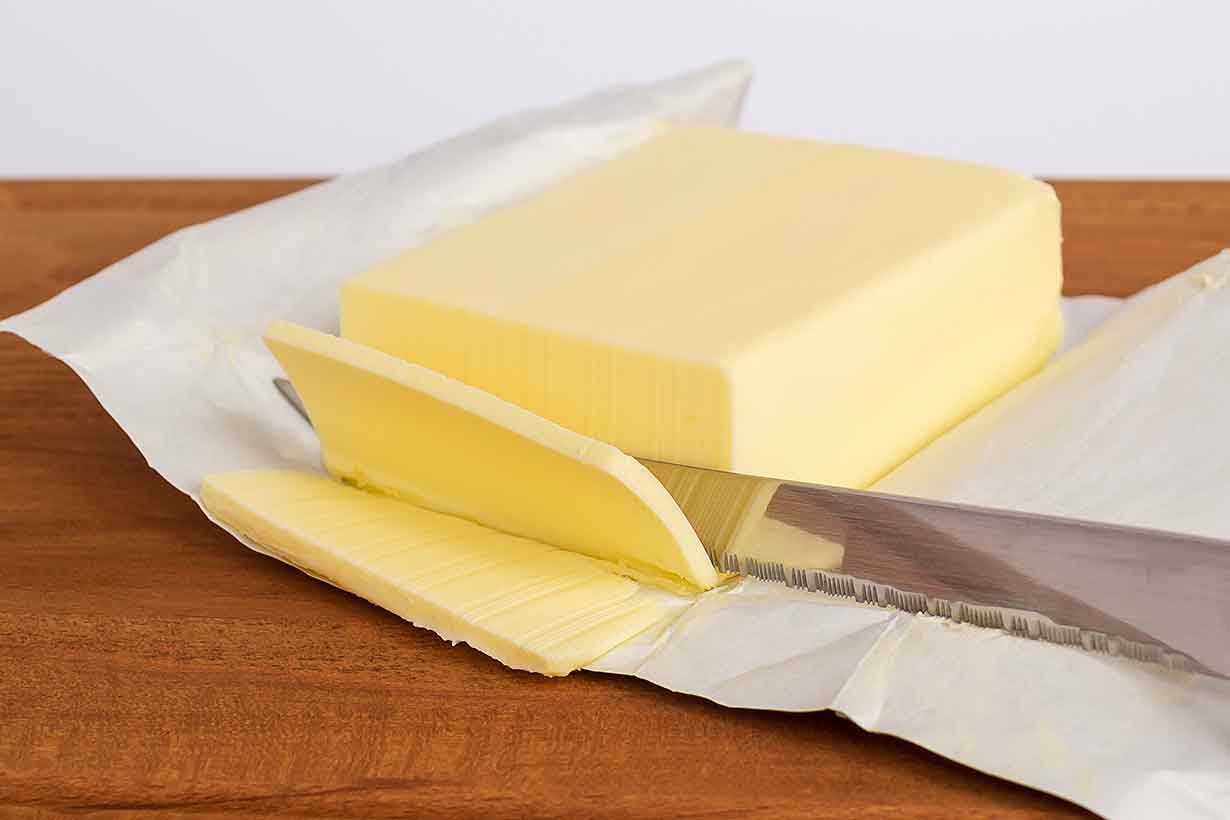
10) Butter
- 215 mg cholesterol per 100g
- 31 mg cholesterol per 14g tablespoon
- Note: Butter has a higher water content than ghee, which is a more concentrated source of butterfat. This is why it contains less cholesterol than ghee.
Source: USDA – Butter, salted
11) Shrimp
- 189 mg cholesterol per 100g
- 161 mg cholesterol per 3 oz (85g) serving
- Note: Shrimp are high in cholesterol but contain very low levels of fat. The point here is that the cholesterol content of food isn’t directly related to its fat content.
Source: USDA – Crustaceans, shrimp, cooked
12) Calamari
- 183 mg cholesterol per 100g
- 156 mg cholesterol per 3 oz (85g) serving
Source: USDA – Calamari, fried
13) Eel
- 161 mg cholesterol per 100g
- 256 mg cholesterol per 159g fillet
Source: USDA – Fish, eel, mixed species, cooked
14) Liver Sausage (Liverwurst)
- 158 mg cholesterol per 100g
- 28 mg cholesterol per 18g slice
Source: USDA – Liver sausage, liverwurst, pork
15) Turkey Bacon
- 153 mg cholesterol per 100g
- 21 mg cholesterol per thick slice (14g)
Source: USDA – Turkey bacon, cooked
16) Lobster
- 146 mg cholesterol per 100g
- 124 mg cholesterol per 3 oz (85g) serving
Source: USDA – Crustaceans, lobster, Northern, cooked
17) Chicken Wings
- 141 mg cholesterol per 100g
- 120 mg cholesterol per 85g serving
- Note: An 85g serving is approximately 2–3 chicken wings, excluding the bone.
Source: USDA – Chicken, wing, meat and skin, roasted
18) Crayfish
- 137 mg cholesterol per 100g
- 116 mg cholesterol per 3 oz (85g) serving
Source: USDA – Crustaceans, crayfish, farmed, cooked
19) Chicken Thigh
- 133 mg cholesterol per 100g
- 182 mg cholesterol per 137g thigh with skin
Source: USDA – Chicken, thigh, meat and skin, roasted
20) Chicken Drumstick
- 130 mg cholesterol per 100g
- 136 mg cholesterol per 105g drumstick with skin
Source: USDA – Chicken, drumstick, meat and skin, roasted
21) Blood Sausage
- 120 mg cholesterol per 100g
- 30 mg cholesterol per 25g slice
Source: USDA – Blood sausage
22) Tallow
- 109 mg cholesterol per 100g
- 14 mg cholesterol per 12.8g tablespoon
Source: USDA – Fat, beef tallow
23) Bacon (pork)
- 107 mg cholesterol per 100g
- 9 mg cholesterol per 8g slice
Source: USDA – Pork, cured, bacon, baked
24) Chicken Breast
- 104 mg cholesterol per 100g
- 88 mg cholesterol per 3 oz (85g) serving
Source: USDA – Chicken, breast, skinless, boneless, grilled
25) Cheddar Cheese
- 99 mg cholesterol per 100g
- 28 mg cholesterol per 28g slice
Source: USDA – Cheese, Cheddar, sharp
26) Crab
- 97 mg cholesterol per 100g
- 82 mg cholesterol per 3 oz (85g) serving
Source: USDA – Crustaceans, crab, blue, cooked
27) Lamb Chop
- 95 mg cholesterol per 100g
- 81 mg cholesterol per 3 oz (85g) serving
Source: USDA – Lamb, square-cut shoulder chops, lean and fat, braised
28) Lard
- 95 mg cholesterol per 100g
- 12 mg cholesterol per 12.8g tablespoon
Source: USDA – Lard
29) Ground Beef
- 88 mg cholesterol per 100g
- 75 mg cholesterol per 3 oz (85g) serving
Source: USDA – Beef, ground, 80% lean meat, baked
30) Canned Anchovies
- 85 mg cholesterol per 100g
- 38 mg cholesterol per 45g can
Source: USDA – Fish, anchovy, European, canned in oil, drained
Summary and Points To Note
As you can see from the list of foods high in dietary cholesterol, the main types of food with the most significant cholesterol content includes:
- Dairy fats
- Eggs
- Fish
- Meats and poultry
- Organ meats (offal)
- Shellfish
Bear this in mind with other foods that aren’t featured in this guide. For instance, while chicken liver may contain more cholesterol than pork liver, both will contain high amounts. The same is true for products made from either, such as various types of pate.
It is also worth noting that the cholesterol content of food is distinct and not directly related to how much fat a specific food contains.
A good example of this is that shrimp, which are relatively low in fat, contain significantly more cholesterol than pure fats like lard and tallow. In this context, shrimp contains 189 mg of cholesterol per 100 grams while lard has only 85 mg.
Lastly, it is worth remembering once again that saturated fat has a more profound impact on blood cholesterol levels than dietary cholesterol for most people.
This list of foods high in saturated fat can help you learn more about how much saturated fat is in specific foods.