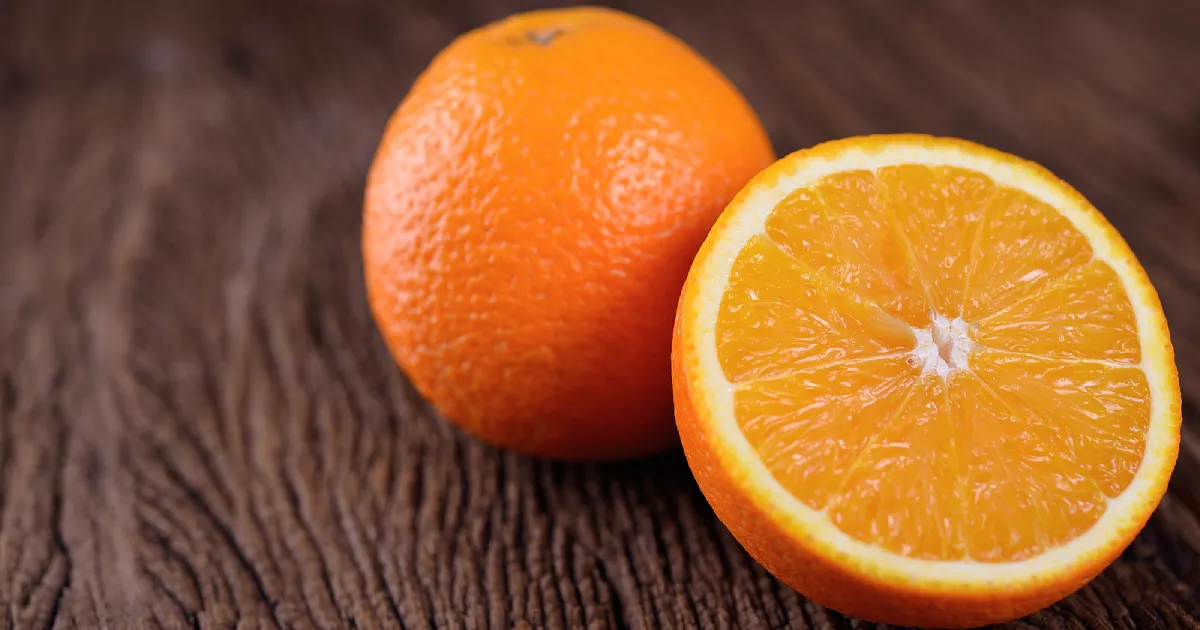
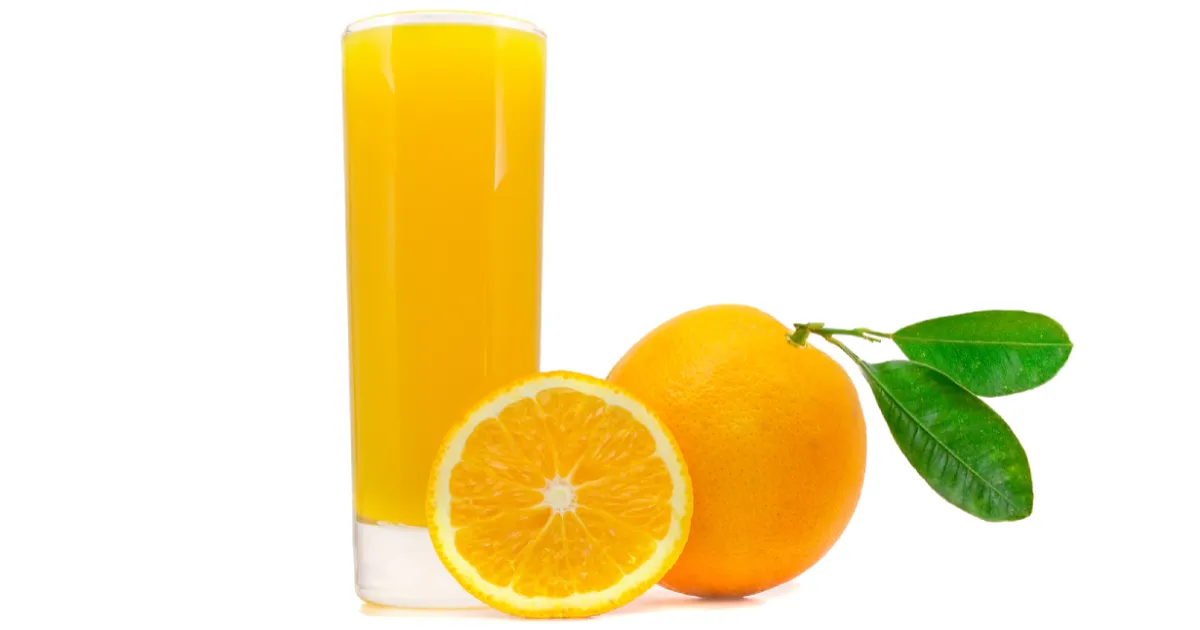
Oranges are among the most common fruits globally, and they are particularly renowned for their vitamin C content.
However, oranges contain a wide variety of nutrients and bioactive compounds, so are there any key benefits other than vitamin C that you should know about?
In this article, we explore the full nutritional profile of oranges, their key benefits, and what recent findings from scientific research show.
Some of the main nutritional benefits of oranges include:
High vitamin C content: A typical 140g navel orange contains 82.7 mg of vitamin C, which is 92% of the daily value. Vitamin C is important for its ability to help protect the body against damage from unstable cells called free radicals.
Good folate source: A 140g orange typically contains 47.6 mcg of folate, equal to 12% of the daily value. Folate’s key functions include producing new cells and DNA and helping to protect against birth defects.
Contains hesperidin: Oranges contain a range of bioactive compounds. The most concentrated of these is called hesperidin, a type of flavanone. Flavanones are a form of flavonoid polyphenol. Research has suggested that hesperidin may support cardiovascular health due to its impact on several markers of cardiovascular risk, particularly at doses higher than 500 mg. We will examine how this interacts with the amount of hesperidin in oranges in the potential benefits section.
Potential Benefits and Scientific Research
While much of the existing scientific research focuses specifically on orange juice, some studies have been undertaken on whole oranges.
We’ll now examine these findings and assess their relevance compared to typical orange consumption patterns.
Please note: While there are numerous studies available on orange juice, this doesn’t necessarily apply to whole orange intake. For this reason, we have focused specifically on studies that involve whole orange consumption.
Impact on Blood Sugar Levels
A 2019 randomized crossover trial assessed the impact of three orange products on blood sugar and insulin levels: two raw oranges, fresh orange juice, and sweetened orange juice.
Notably, all three “meals” had no significant impact on blood sugar levels, and insulin levels slightly dropped over two hours.
It should be noted that this study involved healthy participants. Therefore, its results may not necessarily apply to individuals with health conditions who are monitoring their blood sugar. As always, individuals with dietary questions concerning their own health should consult with their healthcare provider for individualized care.
However, a more recent 2025 randomized crossover trial did investigate the intake of whole orange pieces and orange juice on blood sugar in individuals with type 2 diabetes. In this study, there was no significant difference in blood sugar levels after consuming whole orange or orange drinks when consumed alongside a meal containing 80 grams of carbohydrates.
These results should be taken with caution because:
The study was relatively small, including only fifteen participants
Due to the study’s design, it is difficult to say if there would have been a difference from consuming whole orange pieces or orange juice on their own. Since the meals they were each consumed alongside contained 80 grams of carbohydrate, the meal itself may have had the biggest impact on the results.
May Support Liver Health
A 2024 randomized clinical trial investigated the impact of daily intake of 400 grams of whole orange for 4 weeks. The study involved 62 adults with metabolic dysfunction-associated steatotic liver disease (MASLD).
Notably, after 4 weeks, liver steatosis (fatty liver disease) prevalence had fallen to 70.9% of participants following the daily 400 grams of orange supplementation.
In the control group, who consumed non-citrus fruits for the duration of the four weeks, fatty liver prevalence was still 100% after four weeks. This was despite overall calorie intake being equal between the groups.
Larger, rigorous research is required to confirm and better understand these results. However, the study does suggest that consuming whole oranges as part of a healthy overall diet may potentially benefit metabolic health.
Nutritionist’s Note
Terminology explainer: Metabolic Dysfunction-Associated Steatotic Liver Disease (MASLD) is a relatively new term so you may not recognize it. It is still commonly known as the previous clinical term, which was Nonalcoholic Fatty Liver Disease (NAFLD).
If you didn’t notice the spelling difference, hesperetin is not hesperidin:
Hesperidin: This is the compound that we find in whole foods, composed of hesperetin connected to a simple sugar.
Hesperetin: This is the form of hesperidin without an attached sugar molecule.
The molecular weight of hesperidin is roughly double that of hesperetin. Based on these molecular weight differences, oranges may contain approximately 54.5 mg of hesperidin per 100 grams.
This means a 140g orange may contain around 76 mg of hesperidin.
As this shows, based on the systematic review and USDA data, you would need to eat around fourteen 140-gram oranges to get an ‘effective’ dose of hesperidin.
However, it’s still possible that a smaller intake of hesperidin found in oranges may have some degree of benefit, particularly when combined with intakes of other compounds found in a healthy, nutrient-rich diet.
Orange Nutritional Profile
The following tables present the full nutritional values of a typical navel orange.
The data is presented per 100g and per 140-gram navel orange and has been sourced from the USDA’s FoodData Central database (source: USDA – oranges, raw, navels).
We have calculated percent daily values (% DV) based on the FDA’s daily values, which are based on a 2,000 calorie diet.
Calories and Macronutrients
Nutrient
Per 100g (% DV)
Per 140g orange (% DV)
Calories
49 kcal
69 kcal
Carbohydrates
12.5g (5%)
17.5g (6%)
Fiber
2.2g (8%)
3.08g (11%)
Sugars
8.5g
11.9g
Fat
0.15g (<1%)
0.21g (<1%)
Saturated fat
0.02g (<1%)
0.02g (<1%)
Monounsaturated fat
0.03g
0.04g
Polyunsaturated fat
0.03g
0.04g
Omega-3
0.01g
0.01g
Omega-6
0.02g
0.03g
Protein
0.91g (2%)
1.27g (3%)
Cholesterol
0 mg (0%)
0 mg (0%)
Table 1: Calorie and macronutrient content of raw navel oranges per 100g and per 140g orange
Vitamins
As the table shows, oranges are primarily a source of carbohydrates – around 15% of this carbohydrate comes from fiber.
Vitamin
Per 100g (% DV)
Per 140g orange (% DV)
Vitamin A (RAE)
12 mcg (1%)
16.8 mcg (2%)
Vitamin C
59.1 mg (66%)
82.7 mg (92%)
Vitamin D
0 mcg (0%)
0 mcg (0%)
Vitamin E
0.15 mg (1%)
0.21 mg (1%)
Vitamin K
0 mcg (0%)
0 mcg (0%)
Thiamin (B1)
0.07 mg (6%)
0.10 mg (8%)
Riboflavin (B2)
0.05 mg (4%)
0.08 mg (6%)
Niacin (B3)
0.43 mg (3%)
0.60 mg (4%)
Pantothenic acid (B5)
0.26 mg (5%)
0.37 mg (7%)
Vitamin B6
0.08 mg (5%)
0.11 mg (6%)
Folate (B9)
34 mcg (9%)
47.6 mcg (12%)
Vitamin B12
0 mcg (0%)
0 mcg (0%)
Choline
8.4 mg (2%)
11.8 mg (2%)
Table 2: Vitamin content of raw navel oranges per 100g and per 140g orange
Minerals
Oranges provide significant amounts of vitamin C, and they are also relatively high in folate.
Mineral
Per 100g (% DV)
Per 140g orange (% DV)
Calcium
43 mg (3%)
60.2 mg (5%)
Iron
0.13 mg (1%)
0.18 mg (1%)
Magnesium
11 mg (3%)
15.4 mg (4%)
Phosphorus
23 mg (2%)
32.2 mg (3%)
Potassium
166 mg (4%)
232 mg (5%)
Sodium
1 mg (<1%)
1.4 mg (<1%)
Zinc
0.08 mg (1%)
0.11 mg (1%)
Copper
0.04 mg (4%)
0.06 mg (7%)
Manganese
0.03 mg (1%)
0.04 mg (2%)
Selenium
0 mcg (0%)
0 mcg (0%)
Table 3: Mineral content of raw navel oranges per 100g and per 140g orange
While oranges do not provide high amounts of a specific mineral, they contain small to moderate amounts of several essential minerals.
These minerals include copper, potassium, calcium, magnesium, and phosphorus. Although they are not present in significant amounts, the calcium (4% DV) and potassium (5% DV) content is important.
This is because calcium and potassium are two of the nutrients (alongside fiber and vitamin D) that have been identified as nutrients of public health concern.
Whole Oranges vs. 100% Orange Juice
When comparing whole oranges with 100% orange juice, there are several nutritional and economic differences to consider.
The table below may help with this by showing how the key nutrient content of whole, raw oranges (source: USDA navel orange) contrasts with 100% orange juice (source: USDA freshly squeezed orange juice) per 100g.
Nutrient
Whole raw orange (per 100g)
100% Orange juice (per 100g)
Calories
49 kcal
47 kcal
Carbohydrates
12.5g
10.01g
Fiber
2.2g
0.3g
Sugars
8.5g
8.08g
Vitamin C
59.1 mg
30.5 mg
Folate
34 mcg
29 mcg
Potassium
166 mg
183 mg
Table 4: A nutritional comparison of whole raw oranges and 100% orange juice per 100g, based on USDA data
Based on this USDA data, the main observable differences are:
Fiber: Whole oranges have more fiber than orange juice, unless it is an orange juice that has specifically retained the pulp.
Vitamin C: Orange juice typically has lower vitamin C content than fresh oranges. This is likely because vitamin C is degradable and starts to deplete once an orange has been processed. This is due to oxidation, when the vitamin C is exposed to oxygen, light, and potentially heat during processing.
Are Oranges a Healthy Choice?
An orange contains a broad range of essential nutrients. These include its substantial provision of vitamin C and its smaller, yet still important, amounts of calcium, folate, and potassium.
While its hesperidin content may not be significant compared to the amounts used in clinical studies, it may also help support overall health.
A whole orange also provides fiber and is great for hydration due to its high water content – oranges are 86% water by weight.
As part of a nutrient-rich, varied diet, oranges can help contribute to a healthy dietary pattern.
Lastly, all the nutritional values presented in this article were for raw navel oranges – the most common orange variety. However, there are several different types of orange all with slightly different nutritional values.
Full List of Scientific References
(Click to Expand)
All citations used within this article are listed below, with full details for each scientific source.
Atie Sadat Khorasanian et al (2023). The effects of hesperidin supplementation on cardiovascular risk factors in adults: a systematic review and dose-response meta-analysis View study in Frontiers journal
Dimitrios Papandreou et al. (2019). Consumption of raw orange, 100% fresh orange juice, and nectar-sweetened orange juice – effects on blood glucose and insulin levels on healthy subjects. View study in Nutrients journal
Kenneth Verboven et al. (2025). Acute glycaemic response of orange juice consumption with breakfast in individuals with type 2 diabetes: a randomized crossover trial. View study in Nutrition & Diabetes journal
Maria Notarnicola et al. (2024). Daily orange consumption reduces hepatic steatosis prevalence in patients with metabolic dysfunction-associated steatotic liver disease: Exploratory outcomes of a randomized clinical trial. View study in Nutrients journal
Dalia M. Miller et al. (2025). Metabolic dysfunction-associated steatotic liver disease (MASLD): Mechanisms, clinical implications and therapeutic advances. View study in Endocrinology, Diabetes & Metabolism
USDA. (2014). USDA Database for the flavonoid content of selected foods: Release 3.1. View USDA report
National Center for Biotechnology Information. (2026). PubChem compound summary for CID 10621, Hesperidin. View PubChem compound summary
National Center for Biotechnology Information. (2026). PubChem compound summary for CID 72281, Hesperetin. View PubChem compound summary
USDA FoodData Central. (2019). Oranges, raw, navels. View USDA data
U.S. Food & Drug Administration (FDA). (2024). Daily value on the nutrition and supplement facts labels. View at the FDA website
Office of Disease Prevention and Health Promotion (OASH). (2024). New resources identify where to find key nutrients. View OASH information
Michael works as a nutritionist in a community setting and holds a Master's degree in Clinical Nutrition. He is a Registered Associate Nutritionist (ANutr) with the Association for Nutrition (AfN), and has published peer-reviewed research.