Palm oil is an edible fat that is primarily a source of saturated fat. Globally, more palm oil is produced than any other vegetable oil.
While you can buy pure palm oil, it is also a common ingredient in a wide range of processed packaged foods. Since most people consume palm oil as part of their diet, it is important to understand its nutritional profile and potential health effects.
In this article, we examine palm oil’s nutritional values, fatty acid profile, and what recent science shows about its impact on cholesterol, insulin, and other health markers. We also examine how refined palm oil compares to red palm oil.
Table of contents
What Nutrients Does Palm Oil Contain?
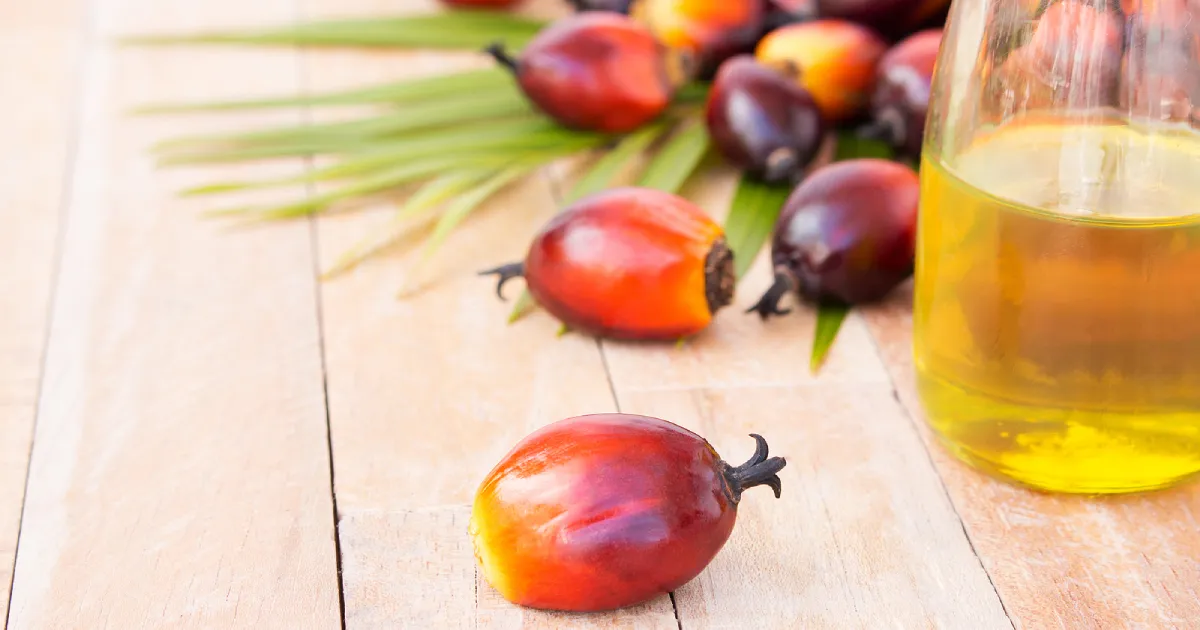
The table below shows you the nutrients you’ll find in a typical 13.6g tablespoon serving of refined palm oil.
The USDA’s FoodData Central is the source of nutritional data on palm oil and we have calculated % daily values (% DV) using the FDA’s recommended values, which are based on a 2000-calorie diet.
| Nutrient | Amount per 13.6g tablespoon of palm oil | % Daily value |
|---|---|---|
| Calories | 120 kcal | |
| Carbohydrates | 0g | 0% |
| Fiber | 0g | 0% |
| Sugars | 0g | |
| Fat | 13.6g | 17% |
| Saturated fat | 6.7g | 34% |
| Monounsaturated fat | 5.03g | |
| Polyunsaturated fat | 1.26g | |
| Omega-3 | 0.03g | |
| Omega-6 | 1.24g | |
| Protein | 0g | 0% |
| Cholesterol | 0 mg | 0% |
| Vitamin E | 2.16 mg | 14% |
| Vitamin K | 1.09 mcg | 1% |
As the table shows, palm oil is:
- Calorie-dense: Like all pure fats, it contains a relatively high amount of calories per tablespoon.
- Rich in saturated fat: Palm oil contains more saturated fat than its combined monounsaturated and polyunsaturated fat content. 52% of its total fat content comes from saturated fat.
- Low in vitamins and minerals: Besides providing a reasonably good amount of vitamin E, palm oil is not a significant source of vitamins and minerals.
Nutritionist’s Note
For clarity, it is important to understand the above nutritional values relate to refined palm oil, which makes up the vast majority of global palm oil production. It is used extensively by the food industry due to its low cost.
While another form of palm oil, known as red palm oil, is less extensively processed and contains more nutrients, it represents only a small fraction of global palm oil production.
Palm Oil May Raise LDL Cholesterol Levels
Some research indicates that palm oil consumption may raise “bad” LDL cholesterol (LDL-C) levels, but this depends on what it substitutes in the diet:
- Palm oil vs. unsaturated oils: A 2021 umbrella review of systematic reviews found that replacing either polyunsaturated fats or monounsaturated fats with palm oil “significantly” increased LDL-C. Soybean oil is a common polyunsaturated fat, whereas olive oil is among the widest used monounsaturated fats.
- Palm oil vs. polyunsaturated fats: An earlier 2020 systematic review and meta-analysis had similar findings, showing that palm oil increased LDL-C, particularly compared to polyunsaturated fats.
- Palm oil vs. butter: The research shows that butter raises LDL-C compared to most oils and fats, including palm oil. Therefore, while palm oil may raise LDL-C compared to unsaturated fats, it may not have this effect if butter is the comparator.
The existing evidence suggests that consuming palm oil rather than monounsaturated and polyunsaturated fats would increase LDL-C. In real-world terms, this means that using palm oil at home instead of extra virgin olive oil or canola oil may raise LDL-C.
However, it may have a smaller impact on raising LDL-C compared to butter. This is because butter contains more saturated fat than palm oil, and particularly high amounts of myristic and palmitic acid, saturated fatty acids which have been shown to consistently raise LDL-C.
Due to palm oil’s impact on LDL cholesterol, research has looked into the potential health impacts of lowering its consumption. For example, one modelling study published in the BMJ found that reducing palm oil intake through taxation may reduce deaths from cardiovascular disease.
Palm Oil and Insulin Sensitivity
Palm oil may also have an impact on blood sugar and insulin sensitivity, but the data here is very mixed.
Firstly, insulin sensitivity refers to how well the human body uses insulin to regulate blood sugar levels. When insulin sensitivity is low, the pancreas has to work harder and make higher amounts of insulin to achieve the same effect.
As you may imagine, high insulin sensitivity helps to maintain lower blood sugar levels and is associated with better health outcomes.
Research on Palm Oil and Glucose Metabolism
In terms of palm oil’s impact on insulin sensitivity and blood sugar levels, a 2019 systematic review investigated this and found:
- Poor evidence quality: The available evidence on the subject of palm oil and insulin sensitivity and blood sugar regulation was rated as “poor”.
- Insignificant effects: In their conclusion, the researchers stated that they anticipated “little or no” benefit for glucose regulation from replacing palm oil with unsaturated oils.
However, two small studies since then have suggested that other oils may potentially improve insulin sensitivity compared to palm oil:
- A 2021 randomized controlled trial fed 20 healthy participants a 570-calorie chocolate spread snack containing either palm oil or extra virgin olive oil. The results found that the extra virgin olive oil snacks led to lower insulin levels and higher insulin sensitivity compared to those containing palm oil.
- In a 2021 randomized crossover trial involving 16 healthy participants, a single meal containing palm oil led to significantly lower insulin sensitivity and glucose uptake than a meal containing safflower oil.
Nutritionist’s Note
While a large 2019 systematic review of the evidence found palm oil had little effect on insulin sensitivity, two smaller controlled studies subsequently found that it may lower insulin sensitivity compared to unsaturated oils.
These studies should be interpreted carefully due to their small size and short-term nature, with the authors themselves noting that further investigation in larger, well-designed trials is necessary.
Palm Oil and Body Weight
The main determinant of body weight is energy balance: the amount of energy consumed from food compared to energy burned through daily activity.
However, food intake and energy balance can also be influenced by different factors, including habitual dietary patterns.
In this regard, a 2024 systematic review of randomized controlled trials assessed the effect that different oils had on body weight. Findings from this study included:
Based on six studies involving it, palm oil was significantly associated with weight gain compared to oils like canola and sesame oil. However, the study had significant limitations, including:
- Evidence quality: The evidence level for palm oil being associated with weight gain was only rated as low-to-moderate certainty.
- Lack of controls: Total calorie and macronutrient intake (carbohydrate/fat/protein) levels were not controlled, making it difficult to know what led to the weight gain.
- No dose data: There was no data on the amounts of palm oil consumed, making the study’s findings hard to interpret in real-world terms.
While it is difficult to have confidence in the study’s results due to these limitations, it is plausible that typical diets rich in palm oil could be associated with weight gain.
However, this may reflect typical dietary composition rather than strictly palm fat consumption. This is because foods such as cakes and cookies, pastries, and crackers are also associated with weight gain, and these are the foods that typically contain palm oil.
Which Foods Contain Palm Oil?
Palm oil was frequently the fat of choice for replacing trans fats in industrially processed foods. There were several reasons for this:
- Cost: Palm oil is heavily produced and is cheap for food manufacturers to use.
- Textural properties: A lot of the palm oil used in the food industry is partly solid at room temperature. This allows it to replicate the effects of trans fats or solid animal fats, making food crispy or crunchy instead of soft and oily.
- Perceived health benefits: Palm oil was widely seen as a healthier alternative for industrial trans fats (partially hydrogenated vegetable oils).
Due to this, palm oil is widely used in processed foods, frequently appearing in foods like:
- Cakes and cookies
- Crackers
- Dips
- Instant noodles
- Margarine
- Spreads
Some of the most famous products that contain palm fat include the chocolate spread Nutella and Oreo cookies.
If you wish to limit palm oil intake, limiting intake of these heavily processed foods is the best way.
Red Palm Oil vs. Refined Palm Oil
Now that we’ve looked at the nutritional properties of palm oil and the available research on it, we should look at how it differs from red palm oil.
Red palm oil is less processed than refined palm oil and is closer to a “whole food” form of the fat. It is:
- Semi-solid to solid: At typical room temperature, red palm oil is a hard, red-pigmented fat.
- Expensive: It’s a niche product that commands a premium price.
- Uncommon: Red palm oil is rarely used within the food industry due to its prohibitive cost. It is mostly sold direct to consumer and marketed for its carotenoid content.
- Strongly flavored: While refined palm oil has a bland and neutral taste, red palm oil has a strong earthy flavor. As well as imparting strong red pigment to food it’s used in, it also imparts its own flavor.
Nutritional Comparison and Vitamin A
The main difference between red palm oil and refined palm oil is the former’s carotenoid content.
Since palm oil is heavily refined, it has most of its nutrients stripped from it to ensure a uniform appearance and neutral taste.
Carotenoids are orange-pigmented compounds that give red palm oil its color, and they can convert to vitamin A within the body.
Notably, research has suggested that red palm oil may help to improve vitamin A-related health outcomes:
- Xerophthalmia risk: A 2025 randomized controlled trial involving 504 vitamin A deficient schoolchildren found that red palm oil-enriched biscuits significantly reduced the risk of xerophthalmia, a dry eye disease linked to vitamin A deficiency. Children consuming red palm oil had a 4.8 times lower risk of developing the condition.
- Vitamin A status: A 2006 study in Burkina Faso found that red palm oil intake in school meals reduced the frequency of vitamin A deficiency.
Is Palm Oil a Good Choice?
Whether palm oil is a good choice depends on the metric we’re using to judge it. If you wish to impart a texture to foods that is similar to that given by trans fats and animal fats like butter and tallow, then you may value palm oil.
However, for health outcomes, it is likely that oils like extra virgin olive oil would have a more healthful impact on cholesterol levels. If palm oil only plays a small role in your diet, then this issue may be less relevant.
Overall, it is the typical dietary pattern and what palm oil may replace in the diet that matter most.
As always, anyone with questions about palm oil’s impact on their own health should discuss with their healthcare provider.
References
Full List of Scientific References
(Click to Expand)
All citations used within this article are listed below, with full details for each scientific source.
- USDA. (2019). Oil, palm. View USDA data
- Chanita Unhapipatpong et al. (2021). Tropical oil consumption and cardiovascular disease: An umbrella review of systematic reviews and meta analyses. View study in Nutrients journal
- Muhammad Danish Badrul Hisham et al. (2020). The effects of palm oil on serum lipid profiles: A systematic review and meta-analysis. View study in the Asia Pacific Journal of Clinical Nutrition
- Fredrik Rosqvist et al. (2024). Fats and oils – a scoping review for Nordic nutrition recommendations 2023. View study in Food & Nutrition Research journal
- Sanjay Basu et al. (2013). Palm oil taxes and cardiovascular disease mortality in India: Economic-epidemiologic model. View study in the BMJ
- Fahrul Nurkolis et al. (2025). New insight on dietary strategies to increase insulin sensitivity and reduce diabetes prevalence: An expert perspective and recommendation. View study in Discover Food journal
- Siti Hafizah Zulkiply et al. (2019). Effects of palm oil consumption on biomarkers of glucose metabolism: A systematic review. View study in PLOS One journal
- Dario Tuccinardi et al. (2021). An extra virgin olive oil-enriched chocolate spread positively modulates insulin-resistance markers compared with a palm oil-enriched one in healthy young adults: A double-blind, cross-over, randomised controlled trial. View study in Diabetes Metabolism Research and Reviews
- Theresia Sarabhai et al. (2021). Dietary palmitate and oleate differently modulate insulin sensitivity in human skeletal muscle. View study in Diabetologia journal
- Shima Abdollahi et al. (2024). The effect of different edible oils on body weight: A systematic review and network meta-analysis of randomized controlled trials. View study in BMC Nutrition Journal
- Carlton B. Cooke et al. (2024). The effect of discretionary snack consumption on overall energy intake, weight status, and diet quality: A systematic review. View study in Obesity Reviews journal
- Pei Yee Tan et al. (2025). Red palm olein supplementation as a potential preventive solution for xerophthalmia among vitamin A-deficient primary schoolchildren: A cluster randomized controlled trial. View study in the European Journal of Clinical Nutrition
- Augustin N Zeba et al. (2006). The positive impact of red palm oil in school meals on vitamin A status: Study in Burkina Faso. View study in BMC Nutrition Journal