With all the hype about zero carb and carnivorous diets in recent times, this article takes a look at a diet from the 1950’s.
Dubbed the ‘steak and eggs diet,’ this particular eating plan was the creation of a bodybuilder named Vince Gironda.
Many people assert that this diet leads to easy weight loss and that it is effortless to follow.
But is this true?
And more to the point, is a diet full of red meat and eggs healthy? Or is it better to avoid?
This article will explain what the diet is, how it works, the purported benefits, and the concerns.
Note: this article is for informational purposes, and it is not a recommendation for the diet.
What is the Steak and Eggs Diet?
The steak and eggs diet was created by a bodybuilder named Vince Gironda in the 1950’s.
It is a virtually zero carb, carnivorous diet that features only two foods; steak and eggs.
The diet is a kind of old-school bodybuilding plan which is very high in protein, moderate to high fat, and low in carbohydrate,
However, unlike pure zero carb diets, this one emphasizes a “cheat day” every sixth day to re-feed on carbohydrates.
As a result, the diet is basically 5 days on and then 1 day off.
Some people refer to the steak and eggs diet as a kind of ketogenic—or cyclical ketogenic—diet (CKD).
However, this is not entirely accurate since ketogenic diets are intended to be high in fat and to only contain moderate amounts of protein.
The Cheat Day
The steak and eggs diet encourages a “cheat day” every sixth day.
This “cheat” is likely intended as a way to refill muscle glycogen stores. This is probably in the belief that doing so helps to boost performance levels.
While this carb re-feed could technically include any food, focusing on healthier carbs like fruit, sweet potatoes and yams would be optimal.
Of course, this so-called cheat day isn’t necessary – it was just how the diet was originally devised.
Who Was Vince Gironda?
Vince Gironda was an American competitive bodybuilder who competed from the late 1940’s until the early 60’s.
He was also a trainer to stars such as Arnold Schwarzenegger, Cher, Clint Eastwood, and Denzil Washington.
Notably, he was a proponent of the benefits of low carb diets and he was behind the rise of the ‘old school’ bodybuilding diet of steak and eggs.
Principles of the Steak and Eggs Diet
The following list shows how the steak and eggs diet works;
Every meal should contain between 4 and 6 eggs, and 0.75 to 1.5 lbs (340 – 680 grams) of steak.
Two meals per day; for example, breakfast and dinner or lunch and dinner.
Every 6th day is a day for re-feeding with carbohydrate.
Condiments such as salt, pepper and butter are allowed.
No other foods should be eaten.
You can stay on the diet until you achieve the results you want.
As we can see, the diet is very restrictive and it doesn’t allow much room for modification.
On the positive side, both steak and eggs are fairly nutrient-dense foods, and you could experiment with different types of steak for a bit of variety.
Key Point: The steak and eggs diet is restrictive, and allows only two meals of steak and eggs for five days. These five days are followed by a day intended for a carbohydrate re-feed, during which you can eat anything you want.
A Typical Meal Plan For One Week
Based on the steak and eggs diet principles, a meal plan for one week might look something like this.
Monday
Lunch: 1 lb steak and 4 eggs
Dinner: 1 lb steak and 4 eggs
Tuesday
Lunch: 1 lb steak and 4 eggs
Dinner: 1 lb steak and 4 eggs
Wednesday
Lunch: 1 lb steak and 4 eggs
Dinner: 1 lb steak and 4 eggs
Thursday
Lunch: 1 lb steak and 4 eggs
Dinner: 1 lb steak and 4 eggs
Friday
Lunch: 1 lb steak and 4 eggs
Dinner: 1 lb steak and 4 eggs
Saturday
Lunch: Salmon fillet, veggies, sweet potatoes, followed by dark chocolate.
Dinner: Spicy chicken and tomato stew with potatoes and veggies, followed by fruit.
Sunday
Lunch: 1 lb steak and 4 eggs
Dinner: 1 lb steak and 4 eggs
To put it differently, this is one diet where you really don’t need to spend time on recipe preparation.
Purely regarding taste, you’d be forgiven for thinking eating the exact same meal 12 times per week might get boring.
Personally, I enjoy various plant foods (especially dark chocolate, olives, and various fruits) and I don’t like the idea of giving them up.
Key Point: The steak and eggs diet is incredibly simple to follow; for six days of the week, you only eat these two ingredients.
Are Steak and Eggs Good For Weight Loss?
People have been using the steak and eggs diet for weight loss for decades now, so you would imagine there must be something behind it.
Looking at the science, there is reason to believe that such a diet could be supportive of losing weight too.
For example;
In a systematic review of 20 randomized controlled trials, adults retained more lean mass and lost more fat when they consumed higher amounts of dietary protein (1).
A systematic review looked at the long-term efficacy of high-protein diets. In particular, the study found that higher protein levels lead to a corresponding higher level of satiety and fat loss. Across all studies, the average weight loss with a high protein diet was 6.3kg, which was 1.3kg more than control diets (2).
A further systematic review demonstrates that low carb, high protein diets are more effective than low-fat diets for weight loss over six months. At the 12 month mark, they are either equal to—or slightly more effective than—low-fat plans (3).
How Does the Diet Help You Lose Weight?
First of all, there are several ways in which the steak and eggs diet could assist with weight loss.
Satiety
It is fairly well accepted that protein is the most satiating out of all macronutrients and numerous studies demonstrate this point. Additionally, long-term adherence to a high protein diet reduces food intake (4, 5, 6).
Since the steak and eggs diet is extremely high in dietary protein, it should encourage satiety and thereby reduce food cravings.
As a result, people may naturally eat less, which leads to weight loss.
Water Weight
Consuming a high level of dietary carbohydrate fills the human body’s glycogen stores.
Glycogen is a stored version of glucose for energy purposes, and our body stores it in our liver and muscles.
However, for every one gram of glycogen we store, our body needs to retain approximately three grams of water—a 3:1 ratio (7).
In other words, if we retain 350g of glycogen we will also be carrying around 1kg of extra water weight.
A diet that restricts dietary carbohydrate—such as the steak and eggs diet—will deplete our glycogen storage and this results in our body losing water weight.
This is one reason why low carb diets have a dramatic effect on weight loss in the first week or two: it is mainly water loss rather than fat loss.
Ketosis and Weight Loss
Although the steak and eggs plan isn’t technically a ketogenic diet, it does share some of the same properties.
As a natural consequence of zero carbohydrate consumption, there will be times when the body is in a state of ketosis.
Ketosis refers to the period during which the body uses fat (ketones) for energy rather than dietary carbohydrate. There is some evidence that ketosis may lead to reductions in appetite, which could potentially increase the rate of weight loss (8, 9).
Key Point: A steak and eggs diet mainly assists with fat loss through a combined effect on satiety and appetite regulation. Additionally, initial loss of water weight and being in ketosis may play a part.
Potential Benefits of the Steak and Eggs Diet
In terms of high-level evidence, there isn’t much to say about the steak and eggs diet.
In other words, there is no reliable evidence to support it and the studies do not exist.
On the other hand, nor is there high-quality evidence against it.
Since there is little in the way of studies to verify the purported benefits of the diet, let’s look at the positives and negatives that we do know.
Nutrient Density
This next point may come as a surprise if you’re used to the idea of fruit and vegetables being king for nutrients.
Fruit and vegetables are good for you, but they are not the only source of vitamins and minerals.
The following table shows the top ten vitamins and minerals in 100 grams of steak (10);
Vitamins and Minerals in 100g Steak (% DV)
Vitamin B12: 63%
Zinc: 50%
Selenium: 28%
Phosphorus: 24%
Niacin: 19%
Iron: 16%
Vitamin B6: 16%
Vitamin B2: 11%
Potassium: 8%
Vitamin B1: 6%
Magnesium: 6%
As shown above, steak contains several important nutrients – especially vitamin B12, zinc, and selenium.
Now that we have looked at steak let’s look at the nutrient profile of eggs.
The following table shows the top ten vitamins and minerals in a serving of three eggs (11);
Vitamins and Minerals in Three Eggs (% DV)
Selenium: 66%
Vitamin B2: 42%
Vitamin B12: 33%
Phosphorus: 30%
Vitamin A: 21%
Folate: 18%
Iron: 15%
Zinc: 12%
Vitamin B6: 12%
Vitamin D: 12%
Calcium: 9%
Similar to steak, eggs are also a very nutrient-dense food and contain particularly high amounts of selenium and vitamins B2 and B12.
If we accept that beef and eggs are both nutritious foods, what kind of nutritional profile would a steak and eggs diet contain?
Based on the typical daily meal plan we discussed earlier, here is how the diet stacks up nutritionally;
Daily Micronutrient Profile For the Steak and Eggs Diet (% RDA)
Based on an intake of 2 lbs of steak and 8 eggs, the vitamin and mineral profile looks like this;
Vitamin B12: 660%
Zinc: 479%
Selenium: 438%
Phosphorus: 291%
Vitamin B2: 216%
Iron: 183%
Vitamin B6: 177%
Niacin: 175%
Potassium: 92%
Vitamin B1: 74%
Magnesium: 66%
Copper: 64%
Folate: 63%
Vitamin B5: 57%
Vitamin A: 54%
Vitamin D: 34%
Calcium: 32%
Vitamin E: 27%
Manganese: 8%
Vitamin C: Trace
As we can see, the steak and eggs diet is very rich in numerous vitamins and minerals.
However, it is also relatively low in several key nutrients.
We’ll look at this point more later.
Key Point: The steak and eggs diet is very high in some vitamins and minerals, but a little low in others.
Protein Intake
By its very nature, the steak and eggs diet is very high in protein.
On this note, consuming adequate levels of protein is vital for our overall health and has several key benefits;
Higher protein consumption leads to higher levels of satiety and better appetite regulation. As a result, it may help regulate body weight (12, 13).
Dietary protein helps prevent bone loss (osteoporosis) and leads to a higher amount of lean body mass. Since the rate of muscle-protein synthesis rapidly drops as we age, higher protein levels would help many elderly people (14, 15).
Protein is an essential ‘building block’ for our body. Not only is it involved in creating hormones and enzymes, but it also aids the growth and repair of everything from our muscles to our bones and even skin (16, 17).
Key Point: The steak and eggs diet provides protein in abundance, and a higher protein intake may help many people – especially athletes and the elderly.
Negatives, Side Effects, and Potential Risks
Like with most things, there are pros and cons of a steak and eggs diet.
Saturated Fat Intake
First of all, both steak and eggs contain a relatively large amount of saturated fatty acids.
If we imagine someone is consuming 2 lbs of steak and 8-12 eggs per day, then we may assume it is a lot of saturated fat.
The main reason why health authorities urge caution over saturated fat is that some saturated fatty acids—particularly lauric, palmitic, and myristic acid—can significantly raise LDL levels in some people. Further to this, high circulating levels of LDL are strongly associated with cardiovascular disease (18, 19).
It is possible to see disputes over LDL’s relationship with cardiovascular disease, and this is because some researchers feel there is a lack of evidence for it being causational (20).
However, at this time, the general consensus among cardiovascular scientists is that high levels of LDL are a significant risk factor for cardiovascular disease.
Despite this, a dose-response meta-analysis investigating the relationship between saturated fat intake and cardiovascular disease failed to find a link (21).
Furthermore, two recent systematic reviews from 2017 declared that there is “insufficient evidence” to recommend restricting it (22, 23).
It is also worth noting that the effects of saturated fat may potentially depend on the level of carbohydrate intake. For one thing, higher levels of carbohydrate—together with a high saturated fat consumption—increase circulating saturated fatty acids in our blood. On the other hand, in the context of an energy-restricted low carbohydrate diet, saturated fats don’t accumulate in our blood (24).
Key Point: The saturated fat content of a steak and eggs diet would be higher than the upper limit which dietary guidelines recommend.
Nutrient Deficiencies
A steak and eggs diet provides only minimal amounts of vitamin C.
As a result, a steak and eggs diet cannot—at least officially—meet the dietary requirements for vitamin C.
That said, some believe that the amount of vitamin C we need may correlate with our intake of carbohydrate.
Could our requirements for the vitamin drop if we reduce carb intake?
The Role of Vitamin C
Firstly, vitamin C and glucose are structurally similar and compete for uptake within our body (25).
Therefore, if glucose is very low, does that mean that we can afford a smaller vitamin C consumption?
Maybe, but this is just a popularized theory, and there is currently no evidence to support it.
However, there are thousands of people who have been consuming zero carb diets for many years without showing any adverse effects.
Does that prove such diets are healthy in the long-term?
No.
While it does show that an all meat diet may provide enough vitamin C to avoid scurvy, it is worth remembering that vitamin C plays an antioxidant role in the body, and it helps to fight oxidative stress (26).
Is having enough vitamin C to avoid scurvy the same as having enough to support optimal health? Maybe not.
There are really no significant, conclusive studies on this topic, so all anyone can do is theorize.
Key Point: At typical servings, a diet of steak and eggs is low in several nutrients, particularly vitamin C. This intake level is not optimal. However, this may not be as much of a concern when carbohydrate intake is very low.
What Kind of Results Do People Experience?
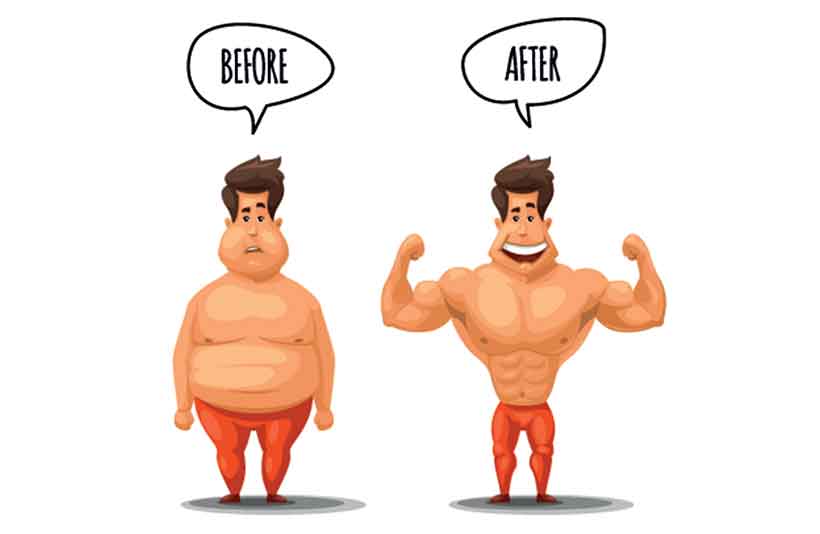
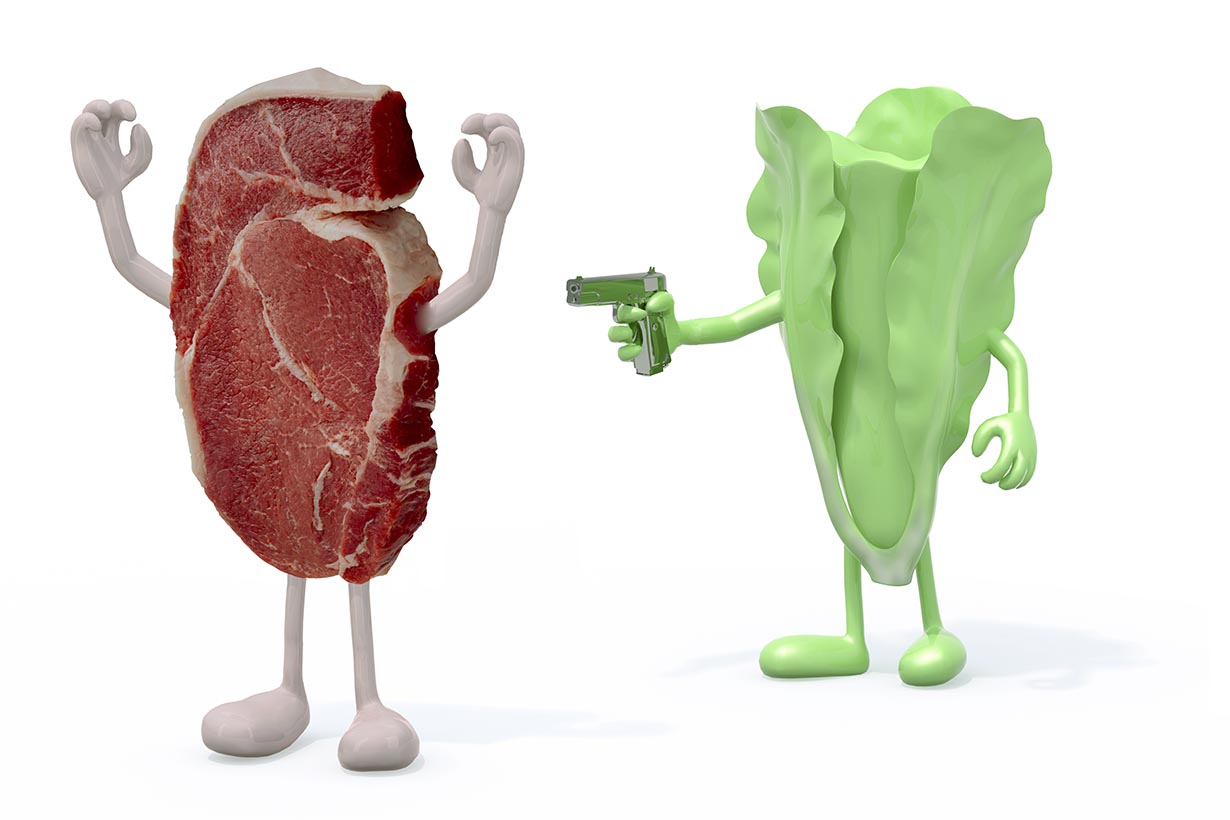
Okay, maybe this photo is exaggerating just a little.
However, you can find impressive ‘before and after’ pictures all over the Internet that show impressive weight loss results.
Since the steak and eggs diet is a high-protein, (kind of) ketogenic diet, dieters tend to lose initial water weight in the first few days.
People feel able to comply with the diet – at least in the short-term.
As many people doing the diet are coming from a high-carb, high-fat standard Western diet, most people achieve great results.
From personal experience, low-carb, high protein meals leave people feeling full and satisfied for hours.
This satiating effect also has the added benefit of helping people to cut out snacking.
All in all, a diet consisting of steak and eggs—in realistic amounts—should result in weight loss and lean muscle gain. This is especially the case if the diet is combined with a resistance training plan.
How Long Do People Stay on the Diet?
Some people stay on it for anything from a few weeks to a few months in order to achieve short-term body composition goals.
Others stay on it for months or even years.
Is the Diet Easy To Follow?
This likely depends on the person.
For those who love steak and eggs, and follow the diet passionately, then compliance to the diet is strong.
On the contrary, if someone attempts the diet as a quick-fix and they are constantly craving their preferred foods, sticking to the diet would be very difficult.
There is also the issue of fitting such a restrictive diet into ones social life. For example, only allowing yourself to eat steak and/or eggs rules out a large number of restaurant/pub/cafe foods.
Sure, it’s possible to find steak and eggs in many casual restaurants, but it’s not something you’re going to find everywhere you go.
Key Point: Compliance to the diet depends on motivation. While some people stay on the plan for the long-term, others do it for short-term improvements in body composition.
Is the Steak and Eggs Diet Healthy?
There isn’t really enough evidence to give a definite answer to this.
For one thing, there are no studies looking at the long-term effects, and the bulk of what we have is anecdotal evidence.
However, from an evolutionary perspective, steak and eggs are certainly foods that fit our biological requirements.
Additionally, it is probably arguable that the diet is healthier than the standard Western diet that most people are eating.
For instance, a diet consisting of steak and eggs might be more nutritious than one full of sugary cereals, processed fats and refined, packaged foods.
If we compare the diet to a well-designed eating plan that includes animal foods and plant foods?
Well, that’s a different question.
Is the Diet Optimal?
In my view, no – the diet is not optimal.
Although we may hear the occasional story about “anti-nutrients” in fruit and vegetables, the vast majority of studies—including dozens of well-designed, systematic reviews and randomized controlled trials—find benefits from these foods.
Steak and eggs are a good source of protein, and they provide a wide range of vitamins and minerals. However, combining them with nutrient-rich plant foods would offer more nutritionally.
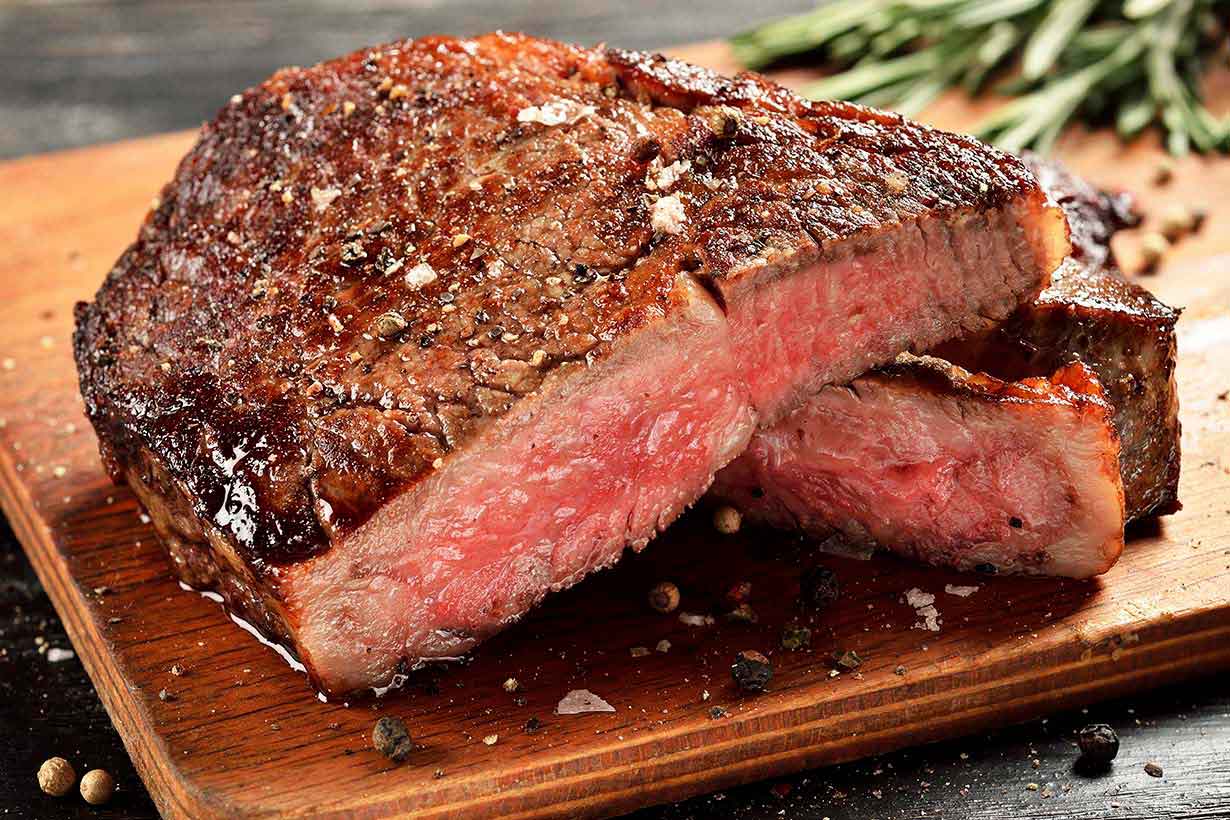
Lastly, if anyone is going to be eating so much steak, it’s a great idea to learn how to cook it for optimum taste.
Michael works as a nutritionist in a community setting and holds a Master's degree in Clinical Nutrition. He is a Registered Associate Nutritionist (ANutr) with the Association for Nutrition (AfN), and has published peer-reviewed research.