You may have heard monounsaturated fats referred to as “heart healthy” in the media, with stories often using olive oil as the standout example.
However, did you know that monounsaturated fatty acids are present in many foods, with a wide range of options providing them?
This article presents 20 foods high in monounsaturated fat, listing how much each one provides per serving and per 100g.
Methodology: How We Chose the Included Foods
For transparency, I thought it would be a good idea to explain why we included the foods in this guide yet excluded others.
See these examples of foods which contain monounsaturated fat:
- Soybean oil: Oil from soybeans is naturally rich in monounsaturated fat, but it contains significantly more polyunsaturated fat.
- Lard: This animal fat is high in monounsaturated fat, but it is also a significant source of saturated fat.
If the focus is monounsaturated fat, it doesn’t make sense to double your saturated fat intake to get a bit more monounsaturated fat.
So, all the foods in this guide fit two key criteria:
- They contain high levels of monounsaturated fat.
- Monounsaturated fat is their predominant fat, present at significantly higher levels than saturated or polyunsaturated fat.
For every food, we’ll calculate and present its monounsaturated fat content as a proportion (%) of total fat.
Foods High in Monounsaturated Fat
For each of the following foods, the table displays the amount of monounsaturated fat they contain per typical serving and per 100 grams.
All nutritional data is based on raw weight and has been sourced from the USDA’s FoodData Central database.
While the FDA has set a ‘daily value’ for total fat intake (78g per day based on a 2,000 calorie diet), there is no specific value for monounsaturated fat.
However, dietary guidelines recommend that most fat should come from unsaturated fats, advising a limit on saturated fat to 10% of daily energy intake. Based on a 2,000-calorie diet, 10% of energy would be 200 calories, which is approximately 22 grams of saturated fat.
| Food | Typical serving size | Monounsaturated fat per serving | Monounsaturated fat per 100g |
|---|---|---|---|
| High OLEIC sunflower oil | 1 tbsp (14g) | 11.7g | 83.7g |
| Macadamia nut oil | 1 tbsp (15 ml) | 11.0g | 73.3g |
| Olive oil | 1 tbsp (13.5g) | 9.86g | 73.0g |
| High OLEIC canola oil | 1 tbsp (14g) | 10.2g | 72.7g |
| Avocado oil | 1 tbsp (14g) | 9.88g | 70.6g |
| Macadamia nuts | 1 oz (28.35g) | 16.7g | 58.9g |
| Hazelnuts | 1 oz (28.35g) | 13.0g | 45.7g |
| Pecans | 1 oz (28.35g) | 11.6g | 40.8g |
| Almond butter | 1 tbsp (16g) | 5.52g | 34.49g |
| Hickory nuts | 1 oz (28.35g) | 9.24g | 32.6g |
| Almonds | 1 oz (28.35g) | 8.96g | 31.6g |
| Peanuts | 1 oz (28.35g) | 6.92g | 24.4g |
| Cashew nuts | 1 oz (28.35g) | 6.75g | 23.8g |
| Pistachio nuts | 1 oz (28.35g) | 6.61g | 23.3g |
| Peanut butter (chunk) | 2 tbsp (32g) | 7.39g | 23.1g |
| Pesto | 1/4 cup (61g) | 11.8g | 19.4g |
| Avocado | 1 fruit (201g) | 19.7g | 9.8g |
| Guacamole | 60g | 5.69g | 9.48g |
| Eel | 1 fillet (204g) | 14.7g | 7.19g |
| Herring (Atlantic) | 1 fillet (184g) | 6.88g | 3.74g |
1. High OLEIC Sunflower Oil
To avoid confusion: Regular sunflower oil is mainly a source of polyunsaturated fatty acids rather than monounsaturated fat.
However, a high OLEIC version has been developed that offers better stability and a longer shelf life. The ‘OLEIC’ in the name refers to its high content of oleic acid, which is the main monounsaturated fat found in avocados and olives.
High OLEIC sunflower oil contains:
- 83.7g monounsaturated fat per 100g
- 84% monounsaturated fat as a proportion of total fat
Source: Oil, sunflower, high oleic
2. Macadamia Nut Oil
Macadamia nut oil provides:
- 73.3g monounsaturated fat per 100g
- 73% monounsaturated fat as a proportion of total fat
Source: Macadamia nut oil
3. Olive oil
Olive oil contains:
- 73.0g monounsaturated fat per 100g
- 73% monounsaturated fat as a proportion of total fat
Source: Oil, olive, salad or cooking
Note: If olive oil is a good source of monounsaturated fat, you may wonder if regular olives should be on this list too? Since whole olives are quite salty, a serving size is typically only several olives, which limits the amount of monounsaturated fat they provide.
4. High OLEIC Canola Oil
High OLEIC canola oil contains:
- 72.7g monounsaturated fat per 100g
- 73% monounsaturated fat as a proportion of total fat
Source: Oil, industrial, canola, high oleic
5. Avocado Oil
Avocado oil provides:
- 70.6g monounsaturated fat per 100g
- 71% monounsaturated fat as a proportion of total fat
Source: Oil, avocado
6. Macadamia Nuts
Macadamia nuts are the most concentrated source of monounsaturated fat among nuts, offering:
- 58.9g monounsaturated fat per 100g
- 78% monounsaturated fat as a proportion of total fat
Source: Nuts, macadamia nuts, raw
7. Hazelnuts
Hazelnuts contain:
- 45.7g monounsaturated fat per 100g
- 75% monounsaturated fat as a proportion of total fat
8. Pecans
Pecans provide:
- 40.8g monounsaturated fat per 100g
- 57% monounsaturated fat as a proportion of total fat
Source: Nuts, pecans
9. Almond Butter
Almond butter has:
- 34.49g monounsaturated fat per 100g
- 65% monounsaturated fat as a proportion of total fat
Source: Almond butter
10. Hickory Nuts
Hickory nuts contain:
- 32.6g monounsaturated fat per 100g
- 51% monounsaturated fat as a proportion of total fat
Source: Nuts, hickory nuts, dried
Note: Hickory nuts are also quite high in polyunsaturated fat (21.9g per 100g).
11. Almonds
Almonds contain:
- 31.6g monounsaturated fat per 100g
- 63% monounsaturated fat as a proportion of total fat
Source: Nuts, almonds
12. Peanuts
Peanuts provide:
- 24.4g monounsaturated fat per 100g
- 50% monounsaturated fat as a proportion of total fat
Source: Peanuts, all types, raw
13. Cashew Nuts
Cashews offer:
- 23.8g monounsaturated fat per 100g
- 54% monounsaturated fat as a proportion of total fat
Source: Nuts, cashew nuts, raw
14. Pistachio Nuts
Pistachio nuts provide:
- 23.3g monounsaturated fat per 100g
- 51% monounsaturated fat as a proportion of total fat
Source: Nuts, pistachio nuts, raw
15. Peanut Butter
Peanut butter contains:
- 23.1g monounsaturated fat per 100g
- 46% monounsaturated fat as a proportion of total fat
Source: Peanut butter, chunk style, with salt
Note: You may notice that peanut butter has a slightly different proportional amount of monounsaturated fat compared to peanuts. USDA data may have used peanut butter samples containing vegetable oils as ingredients, which would explain this slight discrepancy.
16. Pesto
Pesto is a condiment that features several ingredients rich in monounsaturated fat, including olive oil and pine nuts.
It contains:
- 19.4g monounsaturated fat per 100g
- 46% monounsaturated fat as a proportion of total fat
Source: Sauce, pesto, ready-to-serve
Note: Pesto is also relatively high in polyunsaturated fat (13.7g per 100g)
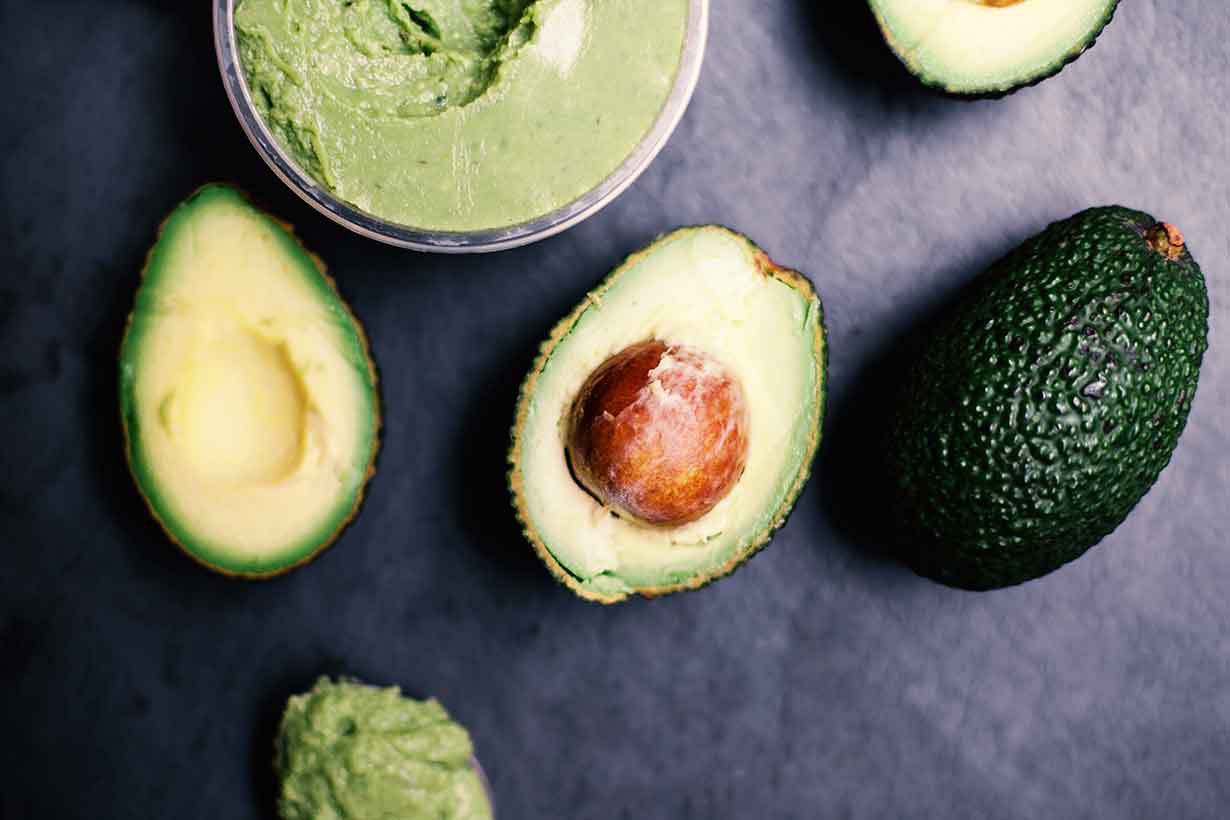
17. Avocado
Avocado provides:
- 9.8g monounsaturated fat per 100g
- 67% monounsaturated fat as a proportion of total fat
Source: Avocados, raw, all commercial varieties
18. Guacamole
This popular Mexican condiment is mostly avocado, making it a rich source of monounsaturated fatty acids.
It contains:
- 9.48g monounsaturated fat per 100g
- 67% monounsaturated fat as a proportion of total fat
Source: Guacamole, NFS
19. Eel
Most mentions of fish and seafood as a fat source focus on their omega-3 provision. However, some seafood options can also be high in monounsaturated fat.
For example, eel provides:
- 7.19g monounsaturated fat per 100g
- 61% monounsaturated fat as a proportion of total fat
Source: Fish, eel, mixed species, raw
20. Herring
Herring contains:
- 3.74g monounsaturated fat per 100g
- 41% monounsaturated fat as a proportion of total fat
Source: Fish, herring, Atlantic, raw
Note: Herring is also a rich source of omega-3 fatty acids.
Key Takeaways
As this guide shows, you can get high amounts of monounsaturated fat (MUFA) from several different food groups.
Some of the easiest ways to do this include:
- Cooking fats: Using options like olive, avocado, and high OLEIC oils for pan-frying
- Wraps, sandwiches, and salads: Add a bit of MUFA-rich avocado or guacamole
- Snacking: Including a handful of MUFA-rich nuts is a great way to increase intake
Related Reading
Learn more about monounsaturated fat:
What Is Monounsaturated Fat and Does It Have Benefits?
Learn more about the different types of fat: