While not as famous as grape-based wines, blueberry wine has been growing in popularity over recent years.
This article examines the nutritional properties of blueberry wine, its potential health effects, and the wider scientific evidence on the topic.
Table of contents
What is Blueberry Wine?
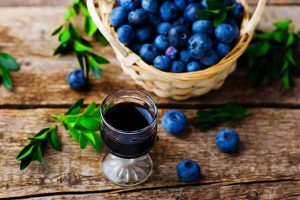
Blueberry wine is a drink made by crushing and fermenting blueberries in a process that closely mirrors the production of other wine varieties. As with other varieties of wine, dry, medium, and sweet varieties are available.
Blueberry wine is increasing in popularity, with projections indicating the market value may almost double in size between 2024 and 2035 (1).
North America is the primary producer of blueberry wines globally.
Key point: Blueberry wine is an increasingly popular wine variety made by fermenting crushed blueberries.
Does Blueberry Wine Have Benefits?
It is often possible to hear health claims about wine in the media. There has been interest in blueberry wine in this regard due to the high concentrations of polyphenols it contains.
First, it’s arguable that blueberries are among the healthiest fruit options due to their significant concentrations of flavonoid polyphenols (2, 3).
Polyphenols are a type of plant chemical (phytonutrient) that may have a beneficial effect in the body. In this regard, a 2019 systematic review found that habitual polyphenol intake may decrease the risk of some chronic diseases (4).
However, blueberry wine is a source of alcohol. While there are many different types of alcohol, all alcohol products have the potential to cause harm, with the World Health Organization stating that no intake levels can be deemed safe (5).
The Effects of Alcohol
A moderate amount of alcohol may have some positive effects, such as increasing “good” HDL cholesterol levels (6, 7).
Higher HDL cholesterol is linked to a reduced risk of cardiovascular disease (8).
However, studies also show that any level of alcohol intake can raise the risk of several types of cancer.
Research on Alcohol and Health Risks
A comprehensive 2023 systematic review found a dose-response relationship between alcohol intake and cancer risk, with progressively higher intakes having a corresponding increased risk (9).
The National Cancer Institute also note that there is strong evidence that drinking alcohol can cause cancer (10).
Furthermore, while moderate alcohol intake may potentially have some degree of cardiovascular benefit, heavy alcohol consumption is associated with an increased risk of cardiovascular disease (11).
For these reasons, recent scientific consensus surrounding alcohol has been that there is no safe intake level (5).
Key point: There is no safe level of alcohol intake from any drink, including blueberry wine.
Polyphenols In Blueberry Wine
Blueberries are an excellent source of anthocyanin flavonoids, a type of polyphenol with anti-inflammatory properties (12, 13).
A 2025 umbrella review of systematic reviews found that anthocyanins may have beneficial health effects for human health and disease prevention. However, the authors noted that the “limited” current evidence necessitates further research (14).
Since blueberry wine is a concentrated source of blueberries, it is fair to assume that it, also, has significant anthocyanin content.
Research appears to support this assertion, with studies showing that blueberry wine contains high levels of anthocyanins and total phenols (15, 16).
In fact, research comparing different types of wine indicates that blueberry wine contains higher levels of polyphenols than traditional “grape” red and white wines (17).
Key point: Blueberry wine is a rich source of anthocyanin flavonoids, compounds known as ‘polyphenols’ that may benefit human health.
Nutritional Values
The nutritional profile for blueberry wine is unfortunately unavailable in major nutrition databases like the USDA’s FoodData Central. However, we can make educated predictions on its approximate nutritional profile.
Firstly, the alcohol content:
- Alcohol contains 7 calories per gram (18).
- A typical bottle of blueberry wine is 750 ml and has an alcohol content of approximately 12% ABV.
To calculate the calories from alcohol in a bottle of blueberry wine, we need to follow three steps:
- Calculate total alcohol volume: 12% of 750 ml is 90 ml of alcohol.
- Work out the weight of alcohol: Since alcohol has a density of approximately 0.789 g per ml, 90 ml x 0.789 = 71 grams of alcohol.
- Calculate calories from alcohol: A 750 ml bottle of blueberry wine would provide approximately 71 grams of alcohol multiplied by 7 calories: 497 calories.
The wine may also contain carbohydrates, which provide approximately 4 calories per gram.
A sweet blueberry wine could contain high amounts of sugars, but a dry variety should have a similar carbohydrate content to dry red wine. Based on USDA data for red wine, this would be approximately 2.61 grams per 100 ml—or 19.6 grams per 750 ml bottle (19). 19.6 grams of carbohydrates is roughly 78 calories.
497 calories + 78 calories means dry blueberry wine provides around 575 calories per 750 ml bottle.
Based on these calculations, a 12% ABV bottle of dry blueberry wine would contain approximately:
| Nutrient | Per 100 ml | Per 5 fl oz (140 ml) |
|---|---|---|
| Calories | 77 kcal | 107 kcal |
| Carbohydrates | 2.61 g | 3.7 g |
Is Blueberry Wine Good For You?
For individuals who already drink alcohol, blueberry wine is an alternative option to the standard red or white wine, and it may provide a higher polyphenol content.
However, it is crucial to remember that the potential benefits from these compounds in blueberry wine do not outweigh the potential harms of alcohol.
While mixed research indicates that light alcohol use may have potential benefits for cardiovascular health, major public health bodies, including the World Health Organization and National Cancer Institute, state that there is no safe level of alcohol consumption (5, 10).
Lastly, we can easily get the same polyphenols from eating fresh blueberries without the negative harms of alcohol.
Related Articles
- Want to know which alcohol options are lowest in carbohydrate? Here’s a guide to which alcohol drinks best fit low-carb diets.
- A guide to low-carb beer options.
- The lowest-carbohydrate wine options