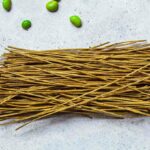
Black bean pasta is one of the new legume-based pasta options that have appeared on store shelves over recent years. These products claim to be a nutritional upgrade to traditional pasta due to their typically higher fiber and protein content.
But aside from protein and fiber, does black bean pasta offer any benefits worth knowing about? And what key nutrients does it provide?
This article explores black bean pasta’s nutritional profile, benefits, and potential downsides.
Black bean pasta may have several potential benefits due to its nutritional composition and how it compares to alternate choices.
In this section, we summarize these potential benefits while providing direct references to the scientific research.
Black Bean Pasta Has a Lower Glycemic Index Than Traditional Pasta
Foods with a lower glycemic index have a smaller impact on blood sugar levels (1, 2).
For example, a glycemic index value of 100 would substantially impact blood sugar, whereas a score of 1 would have little effect.
According to the International Tables of Glycemic Index, traditional wheat pasta has a glycemic index of 49 (3).
There is currently no research on black bean pasta’s glycemic index, but based on its nutritional composition, we can infer that it likely has a significantly lower glycemic index than traditional pasta. There are also several studies showing that whole black beans (used to make black bean pasta) have a glycemic index in the region of 20-31 (4, 5, 6).
As a legume-based product, black bean pasta likely has a glycemic index closer to other legume pasta products like chickpea (GI: 23) and red lentil pasta (GIU: 22). The net result: black bean pasta likely has a smaller impact on blood sugar levels than traditional pasta.
Scientific research directly supports this too, with a 2020 randomized controlled trial showing that (7):
Glycemic response: Black bean pasta meals led to significantly lower glycemic responses than a white bread control meal made with wheat flour.
Context: While white bread and pasta are slightly different in composition and effect, they are both made with a type of wheat flour. We’d expect pasta made with a more fiber-rich flour (black bean flour) to have a lower impact than one made with wheat flour.
Individuals with type 2 diabetes or otherwise trying to regulate their blood sugar better may benefit from a lower glycemic pasta choice (8). Note: Consult your healthcare provider before making any dietary changes in view of a health condition and medication.
Higher in Protein and Fiber Than Wheat Pasta
As previously mentioned, black bean pasta contains more dietary fiber and protein than wheat pasta:
Black bean pasta: Per 100 grams (dry weight), black bean pasta has 44.6 grams of protein and 21.4 grams of fiber (1).
Wheat pasta: In contrast, traditional wheat pasta only contains 13 grams of protein and 3.2 grams of fiber for the same 100 grams (9).
Nutritionist’s Note
Just to let you understand how significant this is, I’d like to note that black bean pasta has over 30g more protein and nearly 20g more fiber than wheat pasta per 100g (dried weight).
This is a really significant difference, and can be a great help to anyone striving to include more fiber or protein in their diets.
I realize that these legume pasta products tend to be more expensive, so it’s a dietary decision worth weighing up – but they are an excellent source of fiber and protein.
May Promote Satiety and Digestive Health
Another potential benefit of black bean pasta regarding its potential impact on satiety and digestive health relates to its fiber and protein content.
Satiety
Research indicates that fiber and protein may help to promote satiety. For those unaware, satiety refers to the feeling of being full after eating (10, 11, 12, 13).
With this in mind, it’s possible that switching to black bean pasta may have slight benefits for lowering appetite compared to regular wheat pasta.
Additionally, a randomized controlled trial published in 2022 found that black bean pasta meals “increased satiety and reduced appetite” compared to a white bread control meal (14).
Improved satiety and a subsequent lower appetite are two factors that are likely to support weight management goals (15).
Digestive Health
Getting a higher intake of fiber in the diet can also have a range of potential benefits for digestive health. For example, research has shown that higher intakes of dietary fiber increase the abundance of “good” bacteria (such as Bifidobacteria) residing in the gut (16).
Bifidobacteria are a type of microbe found in the gastrointestinal tract that is thought to confer benefits to their host (17).
Additionally, dietary fiber is capable of binding to and excreting potential carcinogens in the intestinal tract, which may potentially lower the risk of cancers of the digestive system (18).
May Have Benefits for Heart Health
Black bean pasta is a rich source of soluble fiber, which research has consistently indicated can lower “bad” LDL cholesterol (LDL-C) levels (19, 20, 21).
Higher levels of LDL-C (and a type of protein called apolipoprotein B that LDL-C carries in the blood) are a risk factor for developing cardiovascular disease (22, 23).
Based on our current understanding, replacing saturated fats or starchy carbohydrates with fiber-rich carbohydrates like black bean pasta would have an LDL-C lowering effect (24, 25).
Black Bean Pasta is a Gluten-free Pasta Option
Millions of people worldwide have celiac disease, a condition characterized by an inflammatory immune response to gluten, a type of protein found in wheat and several other grains. This immune response can progressively damage the small intestine (26).
It is also accepted that some people have non-celiac gluten sensitivity, in which consuming gluten can cause digestive issues such as bloating (27).
Since wheat is among the primary dietary sources of gluten, traditional wheat pasta is not suitable for anyone with celiac disease or gluten intolerance (28).
There are a vast number of people worldwide who are impacted by celiac disease or non-celiac gluten sensitivity. For these people, black bean pasta is a gluten-free alternative that still allows a pasta-like meal experience.
While black bean pasta can be an excellent choice for those who can’t consume gluten, this may depend on the specific product.
Let me explain: If you buy a product which is made from 100% black bean, it’s likely to be fine. However, it’s possible that some products may contain additional ingredients, which may include wheat flour.
As you have probably heard many times before, you should always check the ingredients list on nutrition labels to ensure the product is suitable.
A Nutritional Upgrade To Traditional Pasta
If we were going to compare black bean pasta to any food, we should compare it with the most popular pasta product; traditional “white” wheat pasta.
So, let’s look at how they compare.
The following table provides a comparison of the basic nutritional values for both products per 100 grams, dry weight (1, 9):
Nutrient
Black Bean Pasta
Wheat Pasta
Calories
321 kcal
371 kcal
Carbohydrates
30.4 g
74.7 g
Fiber
21.4 g
3.2 g
Sugars
8.93 g
2.67 g
Fat
3.57 g
1.51 g
Saturated
1.79 g
0.28 g
Protein
44.6 g
13.0 g
Table 1: A nutritional comparison of black bean pasta and “white” wheat pasta per 100g dry weight
The data shows that black bean pasta:
Has significantly fewer calories than wheat pasta.
Contains fewer carbohydrates but significantly more fiber.
Has a substantially higher protein content.
Black Bean Pasta Nutritional Profile
Now that we have examined some of its potential benefits, let’s take a more in-depth look at the nutritional profile of black bean pasta.
Unfortunately, the USDA does not have an entry showing black bean pasta’s complete nutritional profile (including vitamins and minerals).
However, the USDA database does provide an entry showing the basic nutritional values for ‘Black Bean Spaghetti’ by the brand Bellabondonza. This product is a pure black bean pasta, with the only ingredients being black bean flour and water.
The following table shows the basic nutritional profile of black bean pasta per 3.5 ounces (100 grams) dry weight (1).
Percent Daily Values (% DV) are based on a typical 2,000 calorie diet.
Name
Amount
% Daily Value
Calories
321 kcal
Carbohydrates
30.4 g
11.1%
Fiber
21.4 g
76.4%
Sugars
8.93 g
Fat
3.57 g
4.6%
Saturated
1.79 g
Protein
44.6 g
89.2%
Cholesterol
0 mg
0%
Sodium
4 mg
0.2%
Table 2: Basic nutritional values for black bean pasta per 3.5 oz (100g), dry weight
Vitamins and Minerals
While the vitamin and mineral content of black bean pasta is not listed in the USDA database, we can look at alternative data to help inform us of this composition. For example, the Canadian Nutrient File contains nutritional data for black bean flour (29).
Please note that these won’t be the exact amounts of nutrients found in black bean pasta, as dried pasta products are made by mixing black bean flour with water.
However, ‘Explore Cuisine’ state that their black bean pasta is made from 92% black bean flour and 8% water. This means that the nutrient content of black bean pasta is likely to be approximately 8% less than black bean flour, as shown below.
Here is the vitamin and mineral data for 100 grams of black bean flour (29):
Vitamins
Vitamin A, RAE: 0 mcg (0% DV)
Folic acid, DFE: 473 mcg (118% DV)
Vitamin B1 (thiamin): 0.96 mg (80% DV)
Vitamin B2 (riboflavin): 0.21 mg (16% DV)
Vitamin B3 (niacin): 2.08 mg (13% DV)
Vitamin B5 (pantothenic acid): 0.96 mg (19% DV)
Vitamin B6: 0.3 mg (18% DV)
Vitamin B12: 0 mcg (0% DV)
Vitamin C: 0 mg (0% DV)
Vitamin D: 0 mcg (0% DV)
Vitamin E: 0.23 mg (2% DV)
Vitamin K: 6.4 mcg (5% DV)
As shown above, black bean pasta is a significant source of folic acid and thiamin.
Minerals
Calcium: 131 mg (10% DV)
Copper: 0.9 mg (100% DV)
Iron: 5.34 mg (30% DV)
Magnesium: 182 mg (43% DV)
Manganese: 1.13 mg (49% DV)
Phosphorus: 375 mg (30% DV)
Potassium: 1578 mg (34% DV)
Selenium: 3.4 mcg (6% DV)
Sodium: 5 mg (<1% DV)
Zinc: 3.89 mg (35% DV)
As the mineral profile indicates, black bean pasta is a rich source of copper, magnesium, manganese, zinc, potassium, phosphorus, and iron.
Potential Drawbacks
As with all foods, black bean pasta has some potential, context-specific drawbacks.
Black Bean Allergy
Although not as common as allergies to legumes such as soybean and peanut, allergic reactions to other beans are possible, even if relatively rare (30).
Anyone who feels they may have an allergy to black beans or other beans should consult their healthcare provider.
Digestive Issues From Quickly Increasing Fiber Intake
As discussed earlier in this article, black bean pasta has a high fiber content.
In this context, rapidly increasing dietary fiber intake can occasionally lead to symptoms of digestive discomfort. These symptoms may include bloating, cramping, and gas (31).
Slowly and more gradually increasing fiber intake can help the digestive system to adapt and thus limit such digestive issues (32).
Tastes Different From Traditional Pasta
Taste and enjoyment of food are important; people don’t want to eat in a way they don’t enjoy.
One potential issue in this regard is that black bean pasta has a much earthier flavor than traditional pasta and a chewier texture.
It certainly doesn’t taste bad, but it does taste different from traditional pasta for those who may be used to it. The taste characteristics are somewhat similar to wholewheat pasta and chickpea pasta.
Interestingly, a 2019 study looked into bean pasta’s ‘consumer acceptability.’ The study found that participating consumers preferred the flavor and texture of wheat pasta. However, 8-14% said they would purchase bean pasta, while 42-43% said they would possibly purchase one (33).
Is Black Bean Pasta a Good Dietary Addition?
All in all, black bean pasta is an excellent pasta option for those looking for a pasta option with:
More protein and fiber
Suitability for celiac and non-celiac sensitivity
Fewer calories than traditional pasta
Potential benefits for promoting satiety
It is a simple like-for-like alternative to wheat pasta. While it tastes slightly different, it offers a more concentrated source of fiber, protein, and numerous essential vitamins and minerals.
Michael works as a nutritionist in a community setting and holds a Master's degree in Clinical Nutrition. He is a Registered Associate Nutritionist (ANutr) with the Association for Nutrition (AfN), and has published peer-reviewed research.