Disclosure: This post may contain affiliate links. This means if you click on one of these links and purchase an item, we will receive a small commission at no extra cost to you. All opinions are our own.
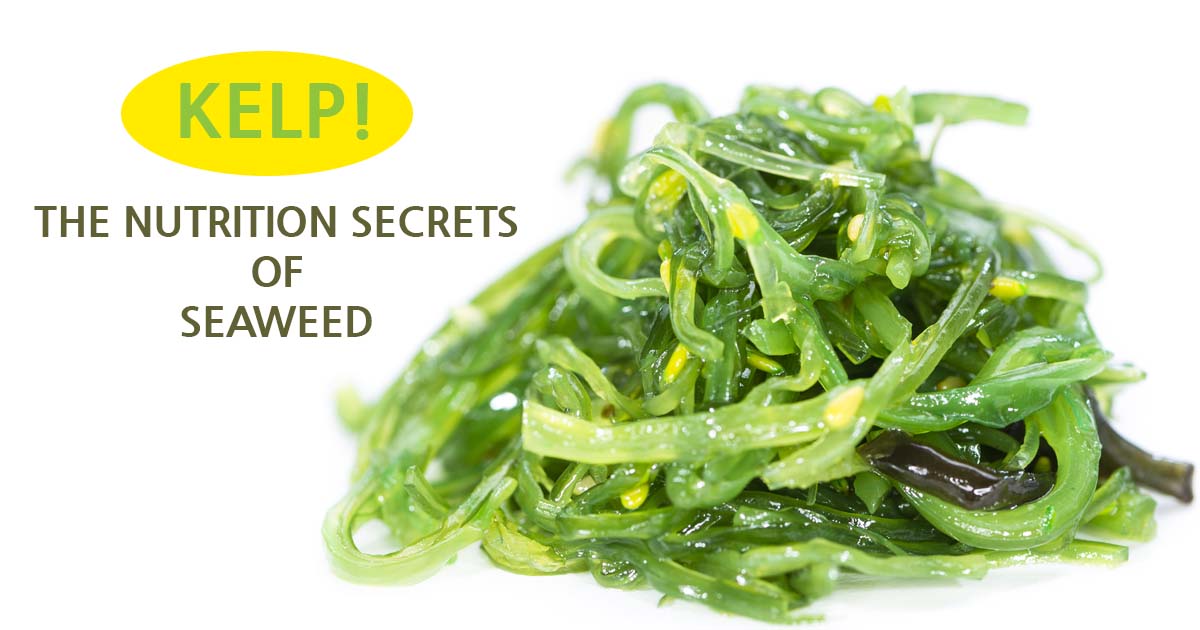
Seaweed is one of the most nutrient-rich foods typically used as a vegetable.
While most people consume a minimal amount of sea vegetables like kelp, including sea vegetables in our diet may have several benefits.
This article looks at the health benefits of kelp, an edible seaweed rich in several beneficial compounds.
Kelp is a a type of seaweed that belongs to the brown algae family, known scientifically as ‘Phaeophyceae.’ They are classed as microscopic, multicellular marine algae (1).
The brown color comes from the fucoxanthin content, which is a type of brown pigmented phytonutrient (2).
Kelp features heavily in Asian cuisine, and it is a dietary staple in countries such as Japan, where it is known as kombu, and Korea, where it has the name dasima.
Key point: Kelp is a type of brown algae. It is nutrient-rich and a staple in many traditional Asian diets.
Nutritional Profile
Before we look into the potential health benefits of kelp from the available scientific evidence, let’s first examine its full nutritional profile.
Based on USDA data, the following tables display the full nutritional values for raw kelp per 100g and per 2-tablespoon (10g) portion (3).
Percent daily values (% DV) are based on a 2,000 calorie diet.
Calories and Macronutrients
Nutrient
Per 100g (% DV)
Per 2-tbsp, 10g (% DV)
Calories
43 kcal
4 kcal
Carbohydrates
9.57g (3%)
0.96g (<1%)
Fiber
1.3g (5%)
0.13g (<1%)
Sugars
0.6g
0.06g
Fat
0.56g
0.06g
Saturated fat
0.25g (1%)
0.03g (<1%)
Monounsaturated fat
0.10g
0.01g
Polyunsaturated fat
0.05g
<0.01g
Omega-3
0.01g
<0.01g
Omega-6
0.03g
<0.01g
Protein
1.68g (3%)
0.17g (<1%)
Cholesterol
0 mg (0%)
0 mg (0%)
Table 1: Calorie and macronutrient content of kelp per 100g and per 2-tablespoon (10g) serving
As the table shows, kelp is low in calories and primarily a source of carbohydrates.
It provides a moderate amount of dietary fiber per 100 grams.
Vitamins
Vitamin
Per 100g (% DV)
Per 2-tbsp, 10g (% DV)
Vitamin A (RAE)
6 mcg (1%)
0.6 mcg (<1%)
Vitamin C
3 mg (3%)
0.3 mg (<1%)
Vitamin D
0 mcg (0%)
0 mcg (0%)
Vitamin E
0 mg (0%)
0 mg (0%)
Vitamin K
66 mcg (55%)
6.6 mcg (6%)
Thiamin (B1)
0.05 mg (4%)
<0.01 mg (<1%)
Riboflavin (B2)
0.15 mg (12%)
0.02 mg (1%)
Niacin (B3)
0.47 mg (3%)
0.05 mg (<1%)
Pantothenic acid (B5)
0.64 mg (13%)
0.06 mg (1%)
Vitamin B6
<0.01 mg (0%)
0 mg (0%)
Folate (B9)
180 mcg (45%)
18 mcg (5%)
Vitamin B12
0 mcg (0%)
0 mcg (0%)
Choline
12.8 mg (2%)
1.28 mg (<1%)
Table 2: Vitamin content of kelp seaweed per 100g and per 2-tablespoon (10g) serving
Per 100 grams, kelp is a significant source of folate and vitamin K.
However, per typical 10-gram serving, it only offers moderate amounts of these vitamins.
Mineral
Per 100g (% DV)
Per 2-tbsp, 10g (% DV)
Calcium
168 mg (13%)
16.8 mg (1%)
Iron
2.85 mg (16%)
0.29 mg (2%)
Magnesium
121 mg (29%)
12.1 mg (3%)
Phosphorus
42 mg (3%)
4.2 mg (<1%)
Potassium
89 mg (2%)
8.9 mg (<1%)
Sodium
233 mg (10%)
23.3 mg (1%)
Zinc
1.23 mg (11%)
0.12 mg (1%)
Copper
0.13 mg (14%)
0.01 mg (1%)
Manganese
0.2 mg (9%)
0.02 mg (1%)
Selenium
0.7 mcg (1%)
0.07 mcg (<1%)
Table 3: Mineral content of kelp seaweed per 100g and per 2-tablespoon (10g) serving
While kelp provides a broad range of minerals in high amounts per 100g, it only has smaller levels per typical 10-gram serving.
Phytonutrients in Kelp
Phytonutrients are potentially health-supportive plant chemicals found in food. They are frequently mentioned in discussions involving cocoa, green tea, and blueberries (4).
Interestingly, some of these compounds found in marine vegetation are unique and cannot be found in other foods.
Fucoidan and fucoxanthin are the most significant of these compounds.
Fucoidan
Fucoidan is a starch-like long-chain sugar, also known as a sulfated polysaccharide.
Early cell studies show that the compound has potent anti-cancer and anti-tumor properties, which are under investigation as a potential cancer treatment. However, evidence from human clinical trials is not currently available (5, 6, 7).
Fucoidan appears to be good for cardiovascular health. It is protective of endothelial function, can reduce blood pressure and prevents vascular dysfunction in rat studies (8, 9, 10).
Based on controlled clinical trials in humans, fucoidan also exerts an influence on insulin secretion and may reduce the risk of developing diabetes (11, 12, 13).
Fucoxanthin
Fucoxanthin is a xanthophyll which may hold promise for disease prevention and management.
Specifically:
Animal studies show that fucoxanthin can inhibit carcinogenesis in mice and induce apoptosis (cell death) in cancer cells (14, 15).
Fucoxanthin has beneficial effects on blood glucose levels and may help reduce the risk of metabolic syndrome (16, 17).
Other Compounds
There are a variety of other health-protective compounds in kelp, such as laminarin and neoxanthin.
Both of these phytonutrients also exhibit potentially health-protective properties (18, 19, 20).
Key point: The unique phytonutrients found in kelp include fucoidan and fucoxanthin, and they are under investigation for their potential benefits.
The Importance of Iodine
Notably, iodine is the most significant mineral in seaweeds. And just one gram of a seaweed sheet can contain up to 1900% of the RDA.
However, the amount of iodine varies a lot depending on the type of seaweed and the environment in which it grows (21).
Although there are other foods which are high in iodine, kelp is the most reliable source in the world.
And this mineral is crucial for our health.
Health Benefits
Regulates hormones and supports hormonal balance (22)
Exerts cancer-protective effects, particularly for cancers of the digestive tract (25)
Protects the thyroid and our body from radiation exposure (26)
Manages energy levels and has a strong influence on mood (27)
As can be seen, iodine plays a major role in the health of our whole body.
But another key point is that many people are deficient in iodine, and this deficiency can have serious adverse effects.
Harms of Iodine Deficiency
Unfortunately, iodine deficiency is increasingly common in modern society.
Iodine deficiency is the world’s most common, yet easily preventable, cause of brain damage.
– World Health Organization
In fact, the World Health Organization estimate that 2 billion people worldwide are at risk (28).
And iodine deficiency can be devastating:
Iodine deficiency has close links to an increased likelihood of depression and other mental health issues (29).
It can lead to hypothyroidism, a condition caused by an under-active thyroid that can cause fatigue, weight gain, and a slower heart rate. Adequate intake of iodine is necessary for optimal thyroid hormone production (30, 31).
Lower immunity: as iodine is necessary for immune health, a lack of the mineral can cause immune deficiencies (32).
In a worst-case scenario, severe prolonged iodine deficiency can lead to an enlarged heart, heart failure, and death (33).
Symptoms of Iodine Deficiency
Some of the symptoms to watch out for include (34):
Brain fog: difficulty with thinking, making decisions, and trouble with comprehension.
Cramps and muscular soreness
Dry skin and thinning hair
Fatigue
Goiter: an enlargement of the thyroid, causing a big round bulge in the neck
Physical weakness
Extreme sensitivities to cold
However, if you are reading these and think the symptoms sound familiar, then see a doctor and don’t try to self-diagnose.
Iodine deficiency is a complex condition that requires tests to check thyroid levels.
Key point: An adequate iodine intake is essential for our health, especially for thyroid function. Kelp is among the most iodine-rich foods.
Kelp Concerns and Potential Side Effects
Similar to many things in life, too much of a good thing is possible when it comes to kelp.
The majority of this ‘danger’ comes from the possibility of overdosing on iodine since it’s present in such high quantities (35, 36).
And while a low iodine diet can be harmful, the same is true for too much iodine.
Eating vast quantities of kelp on a regular basis can suppress thyroid function and has a range of symptoms.
Hypothyroidism – excessive amounts can cause this condition just the same as low iodine can. Signs of hypothyroidism include fatigue, weight gain, and a higher risk for several diseases
A severe iodine overdose can cause iodine poisoning, which is very dangerous and may lead to shortness of breath, shock and even seizures (38).
Key point: Due to its extremely high iodine content, regularly consuming large amounts of kelp may lead to excessive iodine intake, which can suppress thyroid function.
Is Kelp Good For Weight Loss?
Kelp has many health benefits, and there’s a mountain of information going around that kelp is good for weight loss too.
But is that true? Well, yes and no.
While kelp has no miraculous ability to cause you to lose weight spontaneously, it may potentially help with weight loss indirectly.
To put it another way; if someone has an underactive thyroid, then weight struggles are very likely.
This happens because people with a low output of thyroid hormone tend to have a lower basal metabolic rate, meaning they burn less energy (39, 40).
Therefore, a higher intake of iodine can have a positive influence on thyroid function, normalize the basal metabolic rate, and lead to better fat burning.
Once again, if you believe you have a thyroid problem then don’t self-diagnose. See a specialist because thyroid issues are very complex.
Key point: Kelp isn’t a magic weight loss pill. However, it may help support weight loss in some individuals by normalizing iodine levels where there is a pre-existing iodine deficiency.
Are Kelp Supplements a Good Choice?
If you find it difficult to buy kelp–or don’t like the taste–then kelp supplements can be useful.
But if you’re going to supplement, then there are a few things of which you need to be aware.
Issues to Consider
The first thing to remember is that supplements are concentrated sources of iodine, and so there’s a much greater possibility for consuming excessive amounts.
Another key point is that kelp is known to contain trace amounts of arsenic. This contamination has caused problems in people attempting to self-medicate their thyroid issues (41, 42).
And in one case, a senior woman supplementing with kelp capsules had toxic levels of arsenic in her blood.
After discontinuing supplementation, the arsenic levels reached an undetectable level within weeks (43).
Benefits of Kelp Supplementation
A convenient way to get the beneficial nutrients and health benefits of kelp
It’s a standardized dose of iodine – you know how much you are taking
Relatively cheap
Drawbacks/Side Effects
Kelp supplements are produced from real kelp, so there are no real “side effects” like there are with some synthetic drugs.
However, a couple of things to be aware of:
In contrast to fresh kelp, it’s very easy to overdose on iodine with supplements — stick to the recommended dose.
Some supplements have heavy metal contamination (such as arsenic). However, this is much the same as using fresh kelp or eating fish or rice. If you stick to the suggested dosage, then I wouldn’t worry too much.
Key point: Dried kelp offers the same nutrients and compounds as fresh kelp in a convenient form. It can be a whole-food alternative to iodine supplements where a precise dose isn’t required.
Dried Kelp
If you don’t have access to fresh kelp, and you don’t want to supplement–then dried kelp can be a great choice.
Dried kelp offers the same health benefits, and it looks like this:
It re-hydrates when you boil it, and you can use it as part of stock for soup.
Kelp also tastes great, and you can use it in a wide range of dishes.
Do you have a local Asian market near you?
As it’s a staple food in East Asia, buying it from one of these stores is much better value than buying from a specialist health store.
Japanese and Korean stores always carry it, and you can probably find it in any Chinese market too.
Key Point: If you decide to go the supplement route, then stick to the recommended dose.
Kelp Noodles
Another great, convenient way to consume kelp is through ‘kelp noodles,’ which you can use as a replacement for traditional wheat or rice noodles.
Note: Kelp noodles have a much lower calorie and carbohydrate content than most regular noodles.
You can either eat kelp noodles raw or cook them, and you can then use them alone or as part of a recipe.
You can buy kelp noodles from a range of places; Asian markets and health stores have them, and general grocery stores might stock them if you’re lucky.
Key Point: Kelp noodles are low in calories and high in nutrients, and they’re a great low carb replacement for traditional noodles.
Final Thoughts
Kelp is a nutrient-dense food that offers some unique compounds not available in any other food.
And as one of the most significant sources of iodine, it’s something that can benefit a lot of people.
While it’s not essential to be eating kelp (or other seaweeds), doing so is an excellent way to get lots of health-supportive nutrients into your diet.
Michael works as a nutritionist in a community setting and holds a Master's degree in Clinical Nutrition. He is a Registered Associate Nutritionist (ANutr) with the Association for Nutrition (AfN), and has published peer-reviewed research.