Many people now use liquid vegetable oils like olive oil and canola, which are perceived as healthier options to solid fats like lard.
But can lard be a healthy choice of cooking fat? The answer to this question largely depends on the comparator and what lard is being used instead of.
For example, while lard is high in saturated fat which can lead to elevations in cholesterol, it contains lower amounts than more concentrated sources of saturated fat like ghee and butter. However, it is also likely to raise cholesterol more than unsaturated oils like olive oil.
Nutritionally, lard provides essential nutrients like vitamin D and choline, but these are in very small quantities per typical serving. With a relatively low polyunsaturated fat content, lard is also relatively heat-stable, so it may generate lower amounts of oxidation products than some vegetable oils.
In this article, we’ll examine the research on lard, its nutritional profile, and what it all means to help you understand whether lard can be a healthy choice.
What Is Lard?
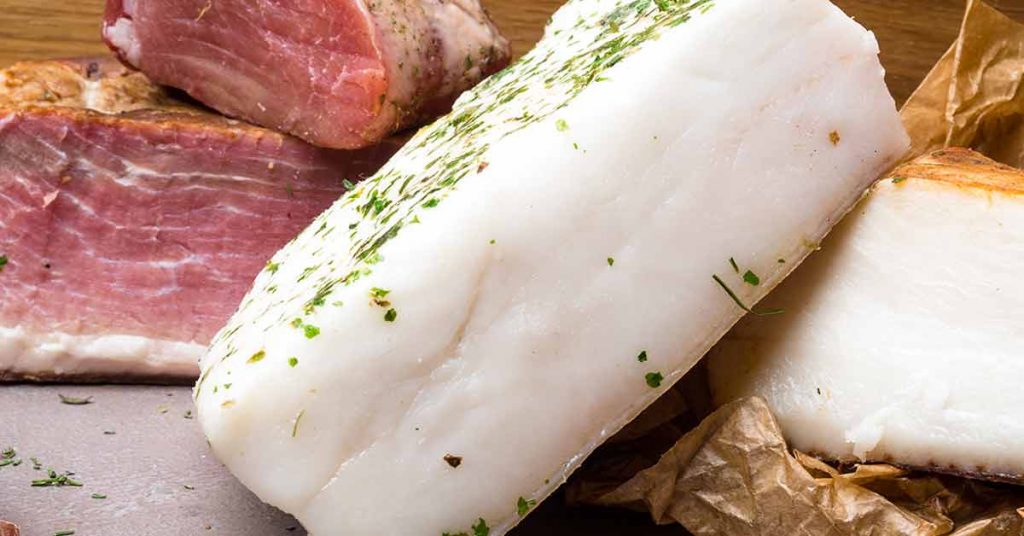
Lard is fat that comes from a pig. This fat is usually rendered to remove any impurities, which means that it is gently heated until it melts and can be separated from any solids that are present.
The finished lard product looks like a solid white brick, as you can see in the image above.
Lard is a versatile fat and its uses include stir-frying, deep-frying, and even as an ingredient for baking. It is generally thought to enhance the taste and mouthfeel of foods compared to liquid vegetable oils, though it is quite neutral in flavor.
This neutral flavor may appeal to some people. Although most people probably don’t give it too much thought, some people dislike the slight aftertaste that fats like extra virgin olive oil and coconut oil can give food.
In such cases, lard is widely considered to have a “neutral” flavor and doesn’t bring strong, overbearing flavor to food. That said, this isn’t a benefit unique to lard, and many refined oils also have a neutral taste.
Like other animal fats, lard is primarily a source of saturated and monounsaturated fat, with a smaller proportion of polyunsaturated fat.
What Nutrients Does Lard Contain?
Before we look at the research on lard, let’s first understand exactly what nutrients you’re getting when you consume it.
Nutrition Facts
The table below shows the basic nutritional profile of lard per 100g and per tablespoon serving.
We have calculated Percent Daily Values (% DV) where appropriate and have included vitamins and minerals that lard contains.
| Nutrient | Per 100g (% DV) | Per 12.8g tablespoon (% DV) |
|---|---|---|
| Calories | 902 kcal | 115 kcal |
| Carbohydrates | 0g (0%) | 0g (0%) |
| Fiber | 0g (0%) | 0g (0%) |
| Sugars | 0g | 0g |
| Fat | 100g (128%) | 12.8g (16%) |
| Saturated fat | 39.2g (196%) | 5.02g (25%) |
| Monounsaturated fat | 45.1g | 5.77g |
| Polyunsaturated fat | 11.2g | 1.43g |
| Omega-3 | 1.0g | 0.13g |
| Omega-6 | 10.2g | 1.31g |
| Protein | 0g (0%) | 0g (0%) |
| Cholesterol | 95 mg (32%) | 12.2 mg (4%) |
| Zinc | 0.11 mg (1%) | 0.01 mg (<1%) |
| Selenium | 0.2 mcg (<1%) | 0.03 mcg (<1%) |
| Choline | 49.7 mg (9%) | 6.36 mg (1%) |
| Vitamin D | 2.5 mcg (13%) | 0.32 mcg (2%) |
| Vitamin E | 0.6 mg (4%) | 0.08 mg (1%) |
Source: USDA – Lard
Fatty Acids
As the table shows, lard is slightly over 11% (11.2g) polyunsaturated fat and the rest is saturated and monounsaturated fat.
While there is proportionally more monounsaturated fat, lard is high in both these fats. A tablespoon serving contains a quarter of the Daily Value for saturated fat.
Vitamins and Minerals
Lard is not a significant source of vitamins and minerals.
While it does contain small amounts of zinc, selenium, choline, and vitamins D and E, these are present in small concentrations at 1–2% of the Daily Value per tablespoon.
Benefits of Lard
The potential benefits of using lard mainly come from its heat stability and affordability rather than any beneficial health effects.
Heat Stability for Cooking

Lard is primarily a source of saturated and monounsaturated fats, which have a higher degree of heat stability than polyunsaturated fats.
At approximately 11% polyunsaturated fat by weight, lard is likely to be more stable during cooking than highly polyunsaturated oils, which means it is less likely to produce oxidation products. Oxidation products can form by chemical reactions in fats when exposed to oxygen, heat, and light, and they have been linked to adverse health effects.
For these reasons, and specifically for reducing oxidation products, lard may be more resistant to oxidation than refined oils like soybean oil. For example, one study comparing lard, soybean oil, palm oil, and olive oil found that the highly-polyunsaturated soybean oil formed more oxidation products than lard at temperatures of 200°C (392°F).
However, greater heat stability in itself does not comment on which is the healthier option. In other words, food cooked with lard may potentially contain fewer oxidation products than foods cooked with polyunsaturated oils, but it will also contain more saturated fat.
It is also worth noting that cooking with lard can still form oxidation products. This is because the unsaturated fats it does contain can still oxidize, and lard doesn’t contain as many antioxidants, which help prevent oxidation, as oils like extra virgin olive oil.
For this reason, research has investigated how adding plant-based antioxidants such as burdock extract may improve lard’s stability.
Other animal fats, such as tallow (beef fat) and goose fat, can also be relatively heat-stable.
Nuances to Understand
If you’re confused about what all this means for you, then here are some considerations to help.
- You can’t avoid oxidation products: All foods and oils cooked at high heat will contain some oxidation products due to oxygen, heat, and light-related damage. The amount formed will depend on temperature, cooking length, degree of saturation (saturated vs polyunsaturated), antioxidant content, and more.
- Saturated fat vs oxidation products: In a choice between lard and highly polyunsaturated oils, the cholesterol-increasing impact of saturated fats should be weighed up.
- Another option: High-OLEIC oils: Oils high in the monounsaturated fat oleic acid have a higher degree of heat stability than polyunsaturated-rich oils. In addition, they are naturally lower in saturated fats. These high-oleic options include olive oil, avocado oil, and high-oleic varieties of sunflower and soybean oil. These oils do cost a bit more though.
Lard is Relatively Cheap
Standard plain lard from grocery stores tends to be a lot cheaper than many other cooking oils. This is particularly the case compared to premium options like extra virgin olive oil and avocado oils.
While some people base cooking fat decisions on taste and health, it is completely understandable why others may prioritize affordability.
Aside from bulk refined vegetable oil blends, lard is among the cheapest cooking oil options, and most people enjoy the taste of food cooked with it.
Lard is High in Saturated Fat
The main downside of lard is that, at approximately 40% saturated fat by weight, it provides large amounts of this fatty acid.
While it contains lower levels of saturated fat than butter, coconut oil, ghee, and palm oil, lard has significantly more than vegetable oils like canola, olive, and peanut oils.
Most public health organizations advise moderating saturated fat intake because it can raise LDL cholesterol (LDL-C) levels, which is often referred to as “bad cholesterol.” By extension, high LDL-C is widely recognized as a causal risk factor in the development of cardiovascular disease.
Notably, research has actually investigated the impact of consuming lard on LDL-C levels in human participants:
- Lard raises LDL-C compared to olive oil: A small randomized crossover trial published in 2024 compared two controlled diets which used either lard or olive oil as the main fat. Participants followed each diet for four weeks, and the results showed that LDL cholesterol was approximately 7.5% higher on the lard (3.15 mmol/L) diet than on the olive oil (2.93 mmol/L) diet.
- Lard vs monounsaturated and polyunsaturated fats: A large umbrella review of systematic reviews found that replacing monounsaturated-rich oils with lard increased LDL cholesterol by an average 8.39 mg/dL (0.22 mmol/L). As a replacement for polyunsaturated-rich oils, the increase was 9.85 mg/dL (0.26 mmol/L).
As this shows, using lard as a primary cooking fat will likely raise LDL-C compared to using something like olive oil.
Common Uses For Lard
If you decide to use lard, then here are some of the most common ways people use it.
- Deep frying: Due to lard’s oxidative stability and relative affordability, it is a common choice for deep frying.
- Stir-frying: Lard will quickly melt in a skillet and can then be used for stir-frying.
- Making pie crusts and other bakery products: Lard is renowned for giving pastry products a crisp, crumbly, and flaky texture.
- Seasoning cast iron skillets: If you have a cast iron pan, you can use a little bit of lard to season it.
Is Lard a Healthy Choice?
Lard is a traditional cooking fat that is relatively cheap and is likely more heat-stable than most refined, highly polyunsaturated oils. However, like most oils, it doesn’t have significant nutrient content and it is high in calories.
Since lard is also a rich source of saturated fat, its use should be considered in the context of the overall diet and its potential impact on cholesterol levels.
While lard can fit into a healthy diet when used in moderation, it is difficult to call it a healthy choice when oils like olive oil likely lead to better health outcomes. Unsaturated oils like olive oil would be the evidence-based choice if prioritizing cardiovascular health.
References
Full List of Scientific References (Select to Expand)
All citations used within this article are listed below, with full details for each scientific source.
- USDA. (2019). Lard. See USDA data on lard
- Magdalena Maszewska et al. (2018). Oxidative stability of selected edible oils. View study in Molecules journal
- Dan Wang et al. (2023). Lipid oxidation in food science and nutritional health: A comprehensive review. View study in Oil Crop Science journal
- Yuan Zhuang et al. (2022). Impact of heating temperature and fatty acid type on the formation of lipid oxidation products during thermal processing. View study in Frontiers in Nutrition journal
- Flavia Pop and Thomas Dippong. (2024). The antioxidant effect of burdock extract on the oxidative stability of lard and goose fat during heat treatment. View study in Foods journal
- Jan Boren et al. (2020). Low-density lipoproteins cause atherosclerotic cardiovascular disease: pathophysiological, genetic, and therapeutic insights: a consensus statement from the European Atherosclerosis Society Consensus Panel. View statement in the European Heart Journal
- Louis-Charles Desjardins et al. (2024). Substitution of dietary monounsaturated fatty acids from olive oil for saturated fatty acids from lard increases low-density lipoprotein apolipoprotein B–100 fractional catabolic rate in subjects with dyslipidemia associated with insulin resistance: a randomized controlled trial. View study in the American Journal of Clinical Nutrition
- Chanita Unhapipatpong. (2021). Tropical oil consumption and cardiovascular disease: An umbrella review of systematic reviews and meta analyses. View study in Nutrients journal