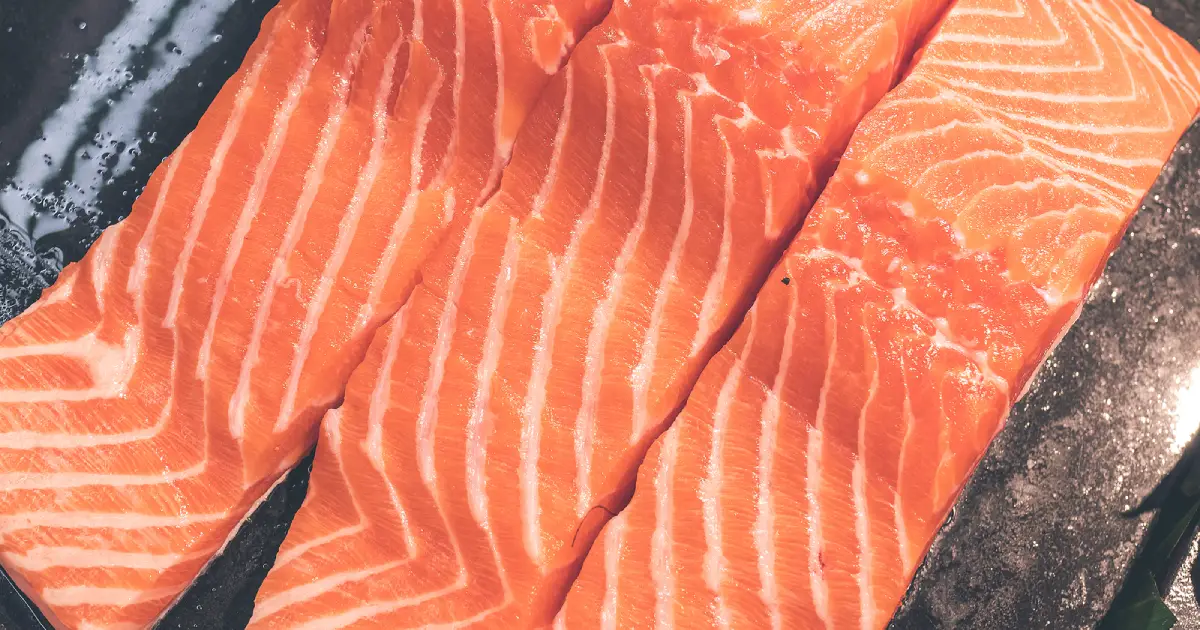
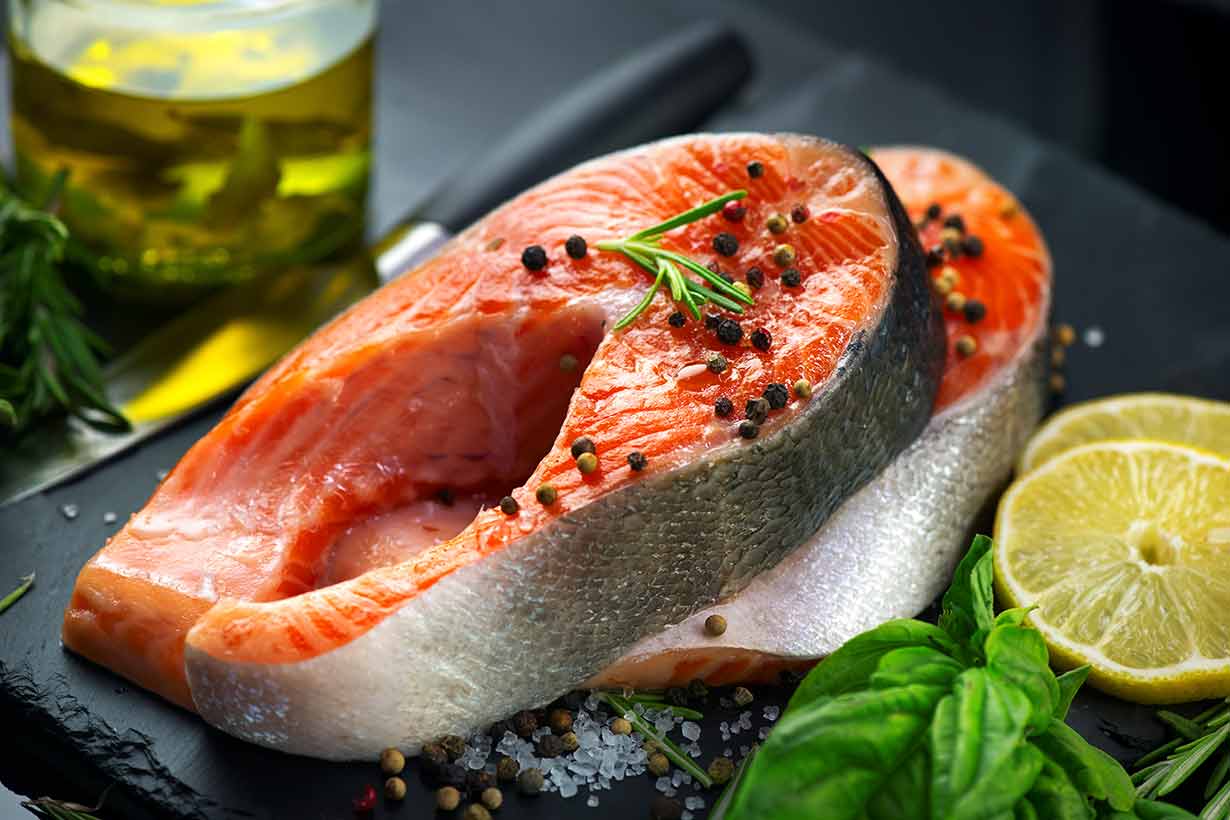
Here are five primary benefits of salmon, based on both its nutrient content and findings from scientific studies.
1) High in Vitamin D
Some foods naturally contain high levels of vitamin D, and salmon is among the best dietary sources.
USDA data shows that a 178-gram half-fillet of cooked salmon provides 23.3 mcg of vitamin D; approximately 117% of the daily value.
However, research suggests that whether salmon can help to meet vitamin D requirements is a complex topic:
2019 randomized trial: This study found that 750 grams of salmon per week helped to limit a seasonal decline in vitamin D levels in Norway during fall, a time characterized by limited sunlight. However, it did not completely stop the decline.
2024 randomized trial: Over a period of eight weeks, daily consumption of salmon products containing approximately 5 mcg vitamin D did not sufficiently maintain vitamin D levels of young women.
Nutritionist’s Note
While salmon is an excellent source of vitamin D, many states (New York) and countries (United Kingdom, Sweden) recommend supplementation during the winter months due to low sunlight levels.
While we can obtain vitamin D from food, daily supplementation is a more reliable method for maintaining vitamin D levels.
For this reason, check your local guidance on vitamin D intake, and consult with a healthcare provider if you need any guidance.
2) Omega-3 and Heart Health
Salmon is among the best dietary sources of omega-3, with a 178g half-fillet typically providing 1.23g of EPA and 0.30g of DHA — the two primary omega-3 fatty acids.
A 2023 analysis of 90 studies found an association between higher omega-3 intake and lowered cardiovascular risk markers, such as triglycerides and non-HDL-C (non-high-density lipoprotein). These effects were more pronounced in individuals with overweight and high cholesterol levels.
Research specifically on salmon intake has demonstrated that:
Blood levels: Consuming farmed Atlantic salmon leads to an increased accumulation of omega-3 in the blood.
Omega-3 and omega-6: An older 2013 study found that consuming a 180g serving of farmed Atlantic salmon twice weekly lowered blood omega-6 levels and increased omega-3 levels. The study noted that this changed blood levels to those associated with lower cardiovascular risk.
Salmon vs. fish oil: A 2021 study found that intact (whole) salmon increased blood levels more significantly than defatted fish consumed alongside fish oil. This suggests the whole food structure of oily fish may be better for increasing omega-3 levels than isolated fish oil.
Nutritionist’s Note
There are some nuances to understand about the salmon vs fish oil study.
The first of these is that it was a relatively small study (13 participants), so larger studies are necessary to confirm the finding.
Another key aspect to consider is the dose. While omega-3 in whole salmon may be easier to absorb than fish oil, this doesn’t automatically make it a better choice. For example, a fish oil supplement may provide significantly higher, reliable daily doses.
In other words, both salmon and fish oil supplements can have their place in omega-3 intake.
3) Antioxidant Content: Astaxanthin
Salmon contains a carotenoid called astaxanthin that has antioxidant properties. Just like carotenoids are responsible for the orange pigment of carrots, they also influence the orange-pink appearance of salmon.
Research on astaxanthin and its potential benefits is ongoing, with systematic reviews of clinical trials finding that astaxanthin may help support:
Lower inflammation: Over 12 trials involving 380 individuals, astaxanthin supplementation significantly reduced markers of inflammation like interleukin-6 (IL-6) and malondialdehyde in type 2 diabetes patients. Research has suggested that long-term, chronic inflammation may increase the risk for various chronic diseases.
If you’re wondering what this means for you, then we should look at whether salmon provides an effective dose of astaxanthin. Firstly, data indicates that farmed Atlantic salmon may only contain up to 1.1 mg astaxanthin per 4oz (113g) serving, while wild sockeye salmon can contain as much as 4.5 mg.
While these amounts are significantly lower than the 12 mg clinical dose mentioned above, a 2022 study involving 41 participants found that two servings of salmon per week over five weeks led to higher blood astaxanthin levels. However, wild-caught salmon was found to contain approximately four times as much astaxanthin as farmed salmon.
4) Rich in Selenium and B12
Another key benefit of salmon is that it’s an incredibly rich source of selenium and vitamin B12.
A 178g half-fillet of cooked salmon provides 73.7 mcg of selenium, which is 134% of the daily value, and 4.98 mcg of vitamin B12, equal to 208% of the daily value.
In other words, just a half-fillet of salmon likely provides more than 100% of daily needs, as the daily value is based on a typical 2,000-calorie diet.
A 2022 randomized trial also found that consuming salmon-based supplements was a reliable way to increase blood levels of vitamin B12 and selenium.
However, many of the differences were non-significant, so the low level of certainty means any effect is likely to be small.
Additionally, these findings are not unique to salmon, with a systematic review suggesting that oily fish may improve cognitive development – the way someone thinks and learns, in children.
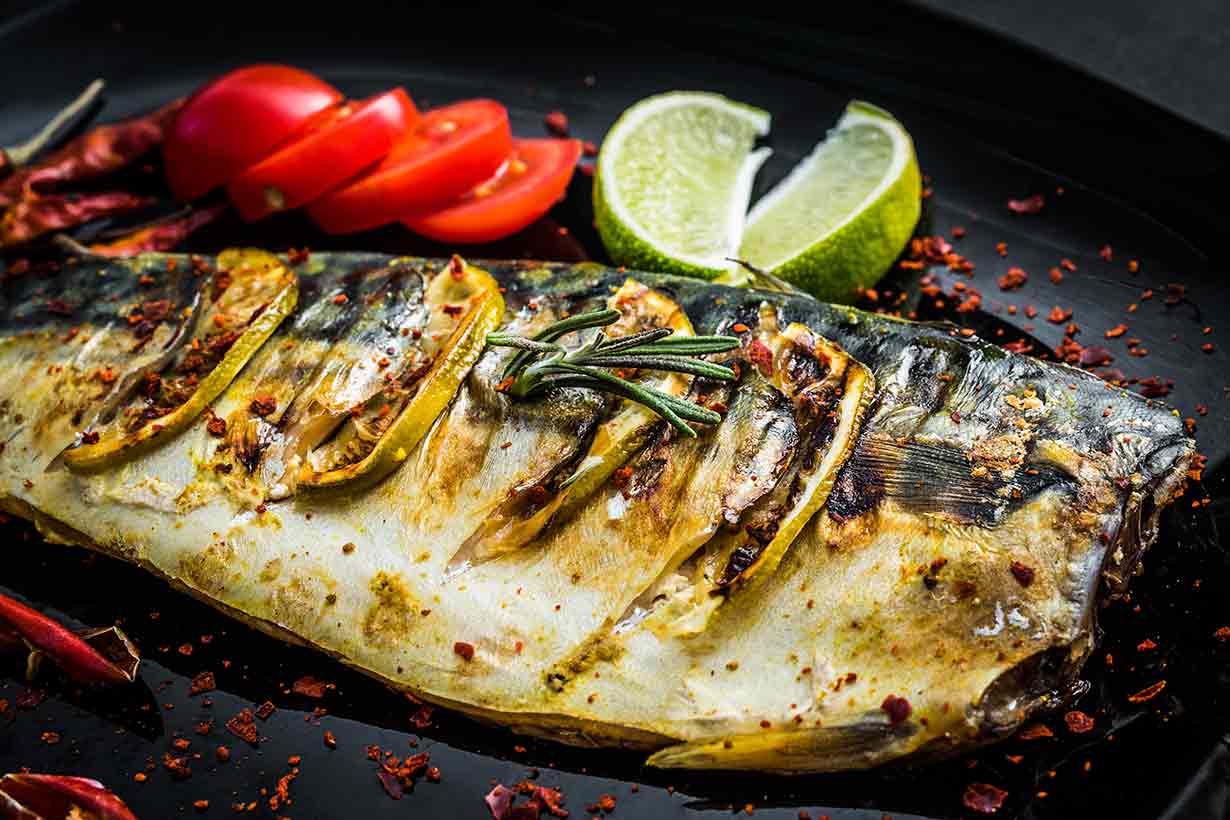
The potential cognitive benefits of other oily fish, such as mackerel, have also been the subject of research.
Does Salmon Have Any Drawbacks?
Some context-dependent downsides of salmon include its potential to be contaminated with pollutants and fish allergies, which are relatively uncommon.
Pollutants
Pollutants, such as dioxins and metals, have been found in both wild and farmed salmon. However, data shows that these pollutants tend to be higher in wild Atlantic salmon than farmed salmon.
Based on analyses of 2300 samples of farmed salmon between 1999 and 2011, contaminants like mercury, arsenic, and dioxins, decreased over this period.
Once again, pollution in commercial seafood isn’t a concern exclusive to salmon, and it affects larger fish (like tuna) that are higher on the food chain more significantly.
Somewhat reassuringly, short-term data from a 2020 randomized trial found that consuming oily fish (mostly farmed salmon) at 630g per week had no effect on blood levels of pollutants over six months.
Salmon’s Mercury Content
The FDA’s Monitoring Program (1990–2012) found that salmon had a mean mercury concentration of 0.022 PPM (0.02 mg of mercury per kg). This compares favorably to fish like cod, which had a mean mercury concentration of 0.11 PPM.
For this reason, joint advice from the FDA and EPA list canned, fresh, and frozen salmon among the “best choices” for children and pregnant women.
Nutritionist’s Note
It is entirely understandable that hearing about pollutants in food can be worrying. However, it is often best not to over-think this; remember that all foods have respective benefits and drawbacks.
In the case of salmon, I would personally say its overall package of key nutrients outweighs its (comparatively) low pollutant levels among seafood.
Like any other fish, it is possible for people to have an allergic reaction to salmon.
According to ThermoFisher Scientific, fish allergy has a global prevalence of 0.2%, with this figure sitting at 0.4% in the United States.
Individuals with any concerns over potential fish allergies should consult with their healthcare provider.
Salmon’s Nutrition Profile
For those wanting more in-depth information on salmon’s nutrient content, we’ll now present its complete nutritional profile.
These tables use data sourced from the USDA’s FoodData Central database for cooked, farmed Atlantic salmon per 100g and per 178g half-fillet. We opted for farmed Atlantic salmon as it’s the most commonly-consumed variety.
We have calculated percent daily values (% DV) for each nutrient using the most recently published daily values from the FDA.
Nutrient
Per 100g (% DV)
Per 178g 1/2 fillet (% DV)
Calories
206 kcal
367 kcal
Carbohydrates
0g (0%)
0g (0%)
Fiber
0g (0%)
0g (0%)
Sugars
0g
0g (0%)
Fat
12.4g (16%)
22.1g (28%)
Saturated fat
2.4g (12%)
4.27g (21%)
Monounsaturated fat
4.18g
7.44g
Polyunsaturated fat
4.55g
8.1g
Omega-3
2.62g
4.66g
Omega-6
1.94g
3.44g
Protein
22.1g (44%)
39.3g (79%)
Cholesterol
63 mg (21%)
112 mg (37%)
Table 1: Typical calorie and macronutrient content of cooked, farmed Atlantic salmon per 100g and per 178g half-fillet
Vitamins
Vitamin
Per 100g (% DV)
Per 178g 1/2 fillet (% DV)
Vitamin A (RAE)
69 mcg (8%)
123 mcg (14%)
Vitamin C
3.7 mg (4%)
6.59 mg (7%)
Vitamin D
13.1 mcg (66%)
23.3 mcg (117%)
Vitamin E
1.14 mg (8%)
2.03 mg (14%)
Vitamin K
0.1 mcg (<1%)
0.18 mcg (<1%)
Thiamin (B1)
0.34 mg (28%)
0.61 mg (51%)
Riboflavin (B2)
0.14 mg (11%)
0.24 mg (18%)
Niacin (B3)
8.04 mg (50%)
14.3 mg (89%)
Pantothenic acid (B5)
1.48 mg (30%)
2.63 mg (53%)
Vitamin B6
0.65 mg (38%)
1.15 mg (68%)
Folate (B9)
34 mcg (9%)
60.5 mcg (15%)
Vitamin B12
2.8 mcg (117%)
4.98 mcg (208%)
Choline
90.5 mg (16%)
161 mg (29%)
Table 2: Typical vitamin content of cooked, farmed Atlantic salmon per 100g and per 178g half-fillet
As the table shows, a half-fillet of cooked salmon provides high levels (>20% DV) of vitamins B1, B3, B5, B6, B12, vitamin D, and choline.
Minerals
Mineral
Per 100g
Per 178g half-fillet
Calcium
15 mg (1%)
26.7 mg (2%)
Iron
0.34 mg (2%)
0.61 mg (3%)
Magnesium
30 mg (7%)
53.4 mg (13%)
Phosphorus
252 mg (20%)
449 mg (36%)
Potassium
384 mg (8%)
684 mg (15%)
Sodium
61 mg (3%)
109 mg (5%)
Zinc
0.43 mg (4%)
0.77 mg (7%)
Copper
0.05 mg (6%)
0.09 mg (10%)
Manganese
0.02 mg (1%)
0.03 mg (1%)
Selenium
41.4 mcg (75%)
73.7 mcg (134%)
Table 3: Typical mineral content of cooked, farmed Atlantic salmon per 100g and per 178g half-fillet
A half-fillet of cooked salmon is high (>20% DV) in phosphorus and selenium.
Nutritionist’s Note
While the nutritional data above represents the most commonly-used type of salmon, there are several salmon varieties. These include sockeye, chum, and pink salmon, and they all have slightly different nutritional composition.
Salmon can be cooked in several ways, including baking, grilling, pan-frying, poaching, and steaming. If your focus is on taste, then of course go with the cooking method you prefer.
From a nutritional perspective, salmon is high in omega-3 fatty acids, which are relatively sensitive to high-heat cooking techniques.
While research indicates that most cooking techniques adequately preserve salmon’s omega-3 content, there may be a difference between ‘adequate’ and optimal.
Here’s what we can learn from the existing scientific studies:
Omega-3 preservation: A 2009 study prepared farmed King salmon in several different ways, including poaching steaming, microwave, pan-frying, baking, and deep-frying. Omega-3 was “well preserved” regardless of cooking method, but omega-3 concentrations were lowest after deep-frying.
Oxidation products: While steaming may sound like a gentler, healthier cooking method, this may not necessarily be the case. One study compared cooking salmon by steaming (12 mins) and moderate pan-frying (6 mins). Notably, steaming led to a higher level of cholesterol oxidation products, likely due to the longer cooking time.
Overall nutritional quality: A study investigated how different cooking methods impact salmon’s fatty acid profile and oxidized product content. Pan-frying at 200°C (392°F) led to the highest number of oxidation products, but no cooking method significantly impacted omega-3 content.
Nutritionist’s Note
As the above studies show, different cooking methods may slightly change the nutritional content of salmon.
Higher (or longer) heat exposure, which may visually appear as a crusty edge to the salmon, may make the salmon taste better, but it may negatively influence the concentration of oxidation products.
However, it is difficult to ascertain what health effects a slightly higher number of oxidation products in salmon would have. Therefore, it is probably best not to overly worry about the best way of cooking salmon and to do with your preferred method.
Is Salmon a Good Choice For You?
Salmon provides a beneficial package of omega-3, protein, vitamins B12 and D, and selenium.
Since it’s also among the lowest-mercury fish options, it is likely a beneficial dietary addition for people looking to increase their intake of these key nutrients.
Marianne Bratlie et al. (2019). Five salmon dinners per week were not sufficient to prevent the reduction in serum vitamin D in autumn at 60° north latitude: A randomised trial. View study in the British Journal of Nutrition
Noha Ahmed Nasef et al. (2021). Salmon food matrix influences digestion and bioavailability of long-chain omega-3 polyunsaturated fatty acids. View study in Food & Function journal
Elahe Mokhtari et al. (2021). Impact of astaxanthin supplementation on blood pressure: A systematic review and meta-analysis of randomized controlled trials. View study in the Journal of Functional Foods
Baolan Ma et al. (2022). Astaxanthin supplementation mildly reduced oxidative stress and inflammation biomarkers: A systematic review and meta-analysis of randomized controlled trials. View study in Nutrition Research journal
Ayadi Yacine. (2025). Chronic inflammation: A multidisciplinary analysis of shared pathways in autoimmune, infectious, and degenerative disease. View study in Cureus journal
Peiran Lu et al. (2022). Intake of salmon fillets elevates plasma astaxanthin levels in human subjects. View study on PubMed
Kristin S. Hustad et al. (2022). Salmon fish protein supplement increases serum B12 and selenium concentrations: Secondary analysis of a randomised controlled trial. View study in the European Journal of Nutrition
National Institutes of Health (NIH). (2023). Vitamin B12: Fact sheet for consumers. View NIH information
National Institutes of Health (NIH). (2025). Selenium: Fact sheet for consumers. View NIH information
Hans Demmelmair et al. (2018). The effect of Atlantic salmon consumption on the cognitive performance of preschool children – a randomized controlled trial. View study in Clinical Nutrition journal
Anne-Katrine Lundebye et al. (2017). Lower levels of persistent organic pollutants, metals and the marine omega-3 fatty acid DHA in farmed compared to wild Atlantic salmon (Salmo salar). View study in Environmental Research journal
Ole Jakob Nostbakken et al. (2015). Contaminant levels in Norwegian farmed Atlantic salmon (Salmo salar) in the 13-year period from 1999 to 2011. View study in Environment International journal
Michael works as a nutritionist in a community setting and holds a Master's degree in Clinical Nutrition. He is a Registered Associate Nutritionist (ANutr) with the Association for Nutrition (AfN), and has published peer-reviewed research.