Bacon is a popular meat product typically made from salt-cured pork. However, it comes in several different forms and can be made with different meats, such as turkey and beef.
There are also different types of bacon available, which include back bacon, reduced-fat and low-sodium varieties, and even meatless alternatives.
While the name “bacon” may be on each label, these different types of bacon can have significantly different nutritional values.
For those who like bacon, this article provides a comprehensive guide to 12 types of bacon and their nutritional profiles. After reading, you’ll know which bacon products are the best fit for different dietary goals.
Types of Bacon and Their Nutritional Values
In this article, you’ll find information on 12 different types of bacon with basic nutritional information for each one. This will include calories, carbohydrates, fat, protein, cholesterol, and sodium.
You’ll also be able to see the general reasons someone may wish to choose a specific type of bacon over another alongside comparative benefits and drawbacks.
All nutritional values are based on cooked weight and have been obtained from three trustworthy nutrition databases:
We have calculated percent daily values (% DV) for each nutrient using the above nutritional data and the FDA’s published daily values.
Pork Bacon Products
1) Pork Bacon (Belly)
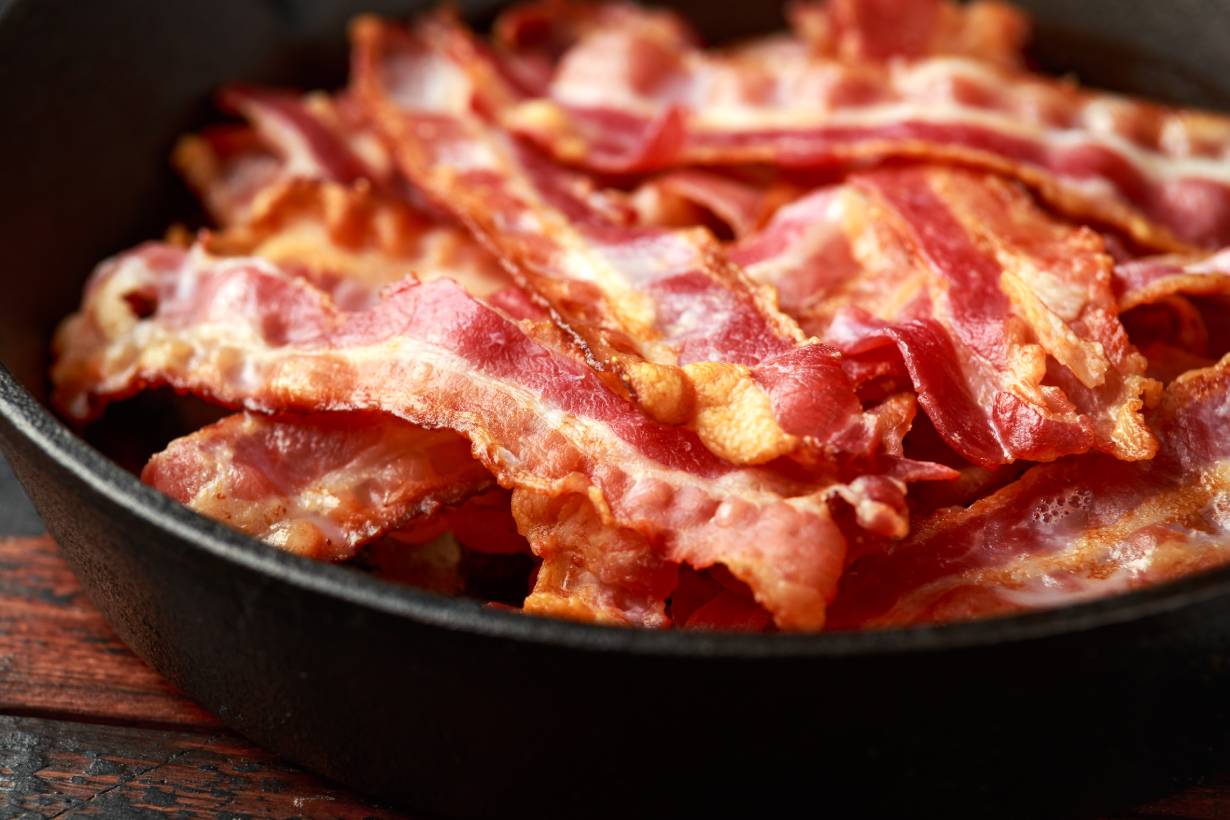
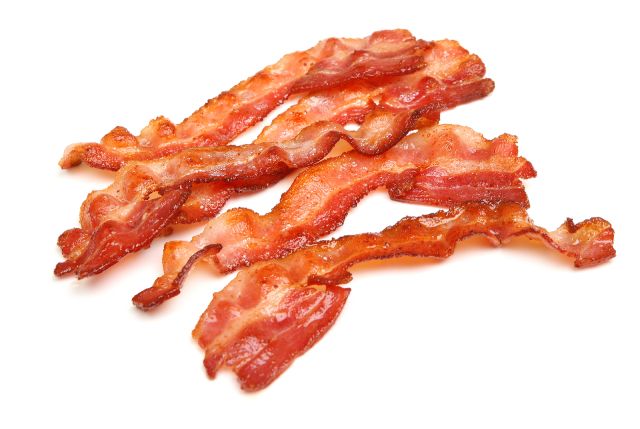
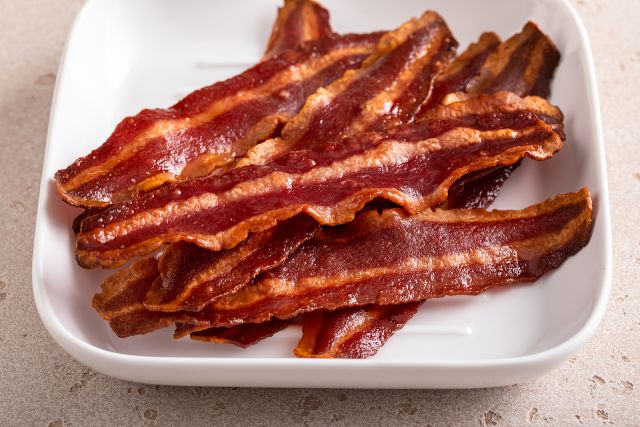
Bacon made from salt-cured pork belly is among the most popular bacon varieties and the main bacon product sold in the United States. It is also known as American bacon and streaky bacon.
Benefits: It is arguably the most popular type of bacon for its flavor.
Drawback: It has a significantly higher fat content than other bacon products because pork belly is a fattier cut of meat. This means it also has comparatively more calories.
Choose this bacon if: You enjoy the flavor of regular bacon.
Here are the nutritional values for cooked pork (belly) bacon:
Fresh bacon refers to thinly sliced pork belly without the additional preservatives like sodium nitrate and sodium nitrite. However, it may still be brined and have a high sodium content.
Benefits: No preservatives
Drawbacks: It will have a shorter shelf-life due to its lack of preservatives.
Choose this bacon if: You want to eat bacon without the potential health risks posed by preservatives like sodium nitrate.
Here’s the typical nutritional profile of cooked fresh bacon:
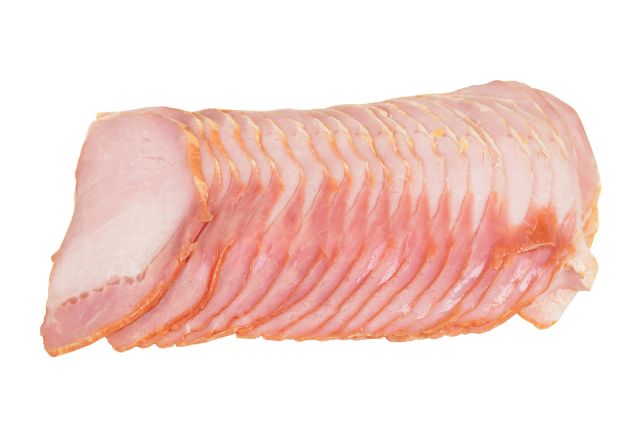
Despite being a salt-cured pork product, Canadian bacon, has some key differences. It is produced from pork loin rather than pork belly, and it is seasoned with salt and sometimes herbs and spices.
Benefits: It contains a significantly lower number of calories and grams of fat compared to traditional pork belly bacon.
Drawbacks: The lower fat level make the bacon less crispy, and it has a milder flavor.
Choose this bacon if: You are watching your fat intake and want a bacon that isn’t as high in calories.
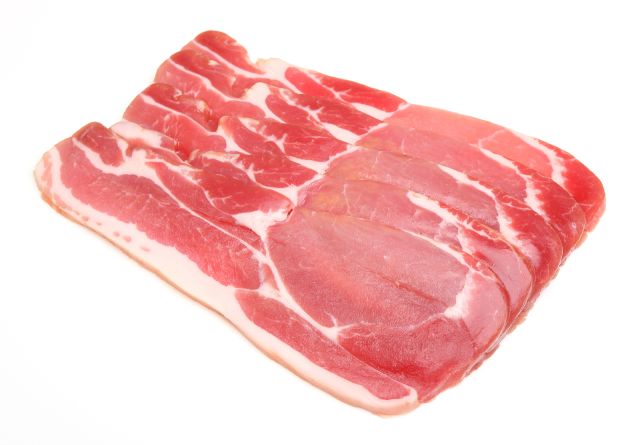
British bacon, sometimes known as back bacon, is a popular salt-cured bacon variety in the United Kingdom and parts of Europe. It is different from American-style bacon and Canadian bacon as it’s comprised from the loin and a smaller amount of pork belly.
Benefits: It has a flavorful bacon taste and is significantly leaner than American bacon, with a comparatively lower fat content.
Drawbacks: It still contains more saturated fat and overall calories than leaner options like turkey bacon. Also, back bacon is typically cut thicker and weighs more per slice, resulting in a higher calorie and fat content per slice.
Choose this bacon if: You enjoy the full flavor of pork bacon but want a leaner product with slightly less fat.
Here are the typical nutritional values of British-style back bacon:
Fat-trimmed bacon refers to leaner back bacon; the fatty pork belly portion has been trimmed, leaving the leaner loin part of the bacon.
Benefits: The trimming process significantly reduces the fat, saturated fat, and overall calorie content. However, note that back bacon slices are typically thicker, so these nutrients may not be significantly lower “per slice.”
Drawbacks: The bacon is slightly drier, which some may view as being negative for flavor.
Choose this bacon if: You want the leanest pork bacon or you are trying to limit either saturated fat, total fat, or overall calories.
Reduced-sodium pork (belly) bacon has the same characteristics as regular pork bacon aside from its lower sodium content. It is still salt-cured but the process uses smaller amounts of salt.
Benefits: It has a lower sodium content than regular pork bacon but retains a similar flavor.
Drawbacks: Low-sodium pork bacon is still just as high in calories, fat, and saturated fat.
Choose this bacon if: You want traditional pork bacon but are trying to reduce or manage sodium intake. Note: Despite being a “reduced-sodium” product, even reduced-sodium bacon is relatively high in sodium at 82.4 mg per 8g slice.
Here are the typical nutritional values for reduced-sodium pork bacon:
The reduced-sodium version of back bacon is made mainly from pork loin, making it a leaner bacon than the low-sodium version of pork belly bacon.
Benefits: British-style back bacon has lower amounts of fat and calories than bacon made from pork belly, and this variety has lower sodium levels too.
Drawbacks: It isn’t the crispy American-style bacon that some may prefer.
Choose this bacon if: You like the leaner back bacon and want a version of it that contains less salt.
Beef bacon comes from beef rather than pork, making it an ideal option for individuals who avoid pork for religious (or any other) reasons. As with traditional bacon, it goes through a salt-curing process where additional herbs and spices may be added.
Benefits: Beef bacon allows those who don’t eat pork to eat a bacon-like product with a similar nutritional profile.
Drawbacks: Those used to the taste of pork bacon may not like the slightly different flavor profile.
Choose this bacon if: You want to try something that is close in taste to traditional bacon but you don’t eat pork.
Turkey bacon is made from turkey meat instead of pork. It is far leaner than regular pork bacon.
Benefits: Turkey bacon is lower in calories and fat compared to pork bacon, and it also has a higher protein content. It is another option for individuals who avoid pork consumption.
Drawbacks: It has a much milder flavor than pork belly bacon, which some traditionalists may dislike. It also isn’t quite as lean as back bacon.
Choose this bacon if: You’re looking for a low-calorie bacon option with less fat and more protein.
The following table shows the nutritional values for turkey bacon:
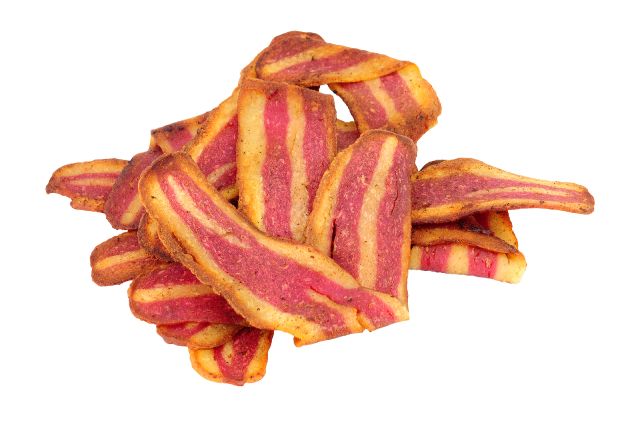
Plant-based bacon, which may also be named vegan bacon, or meatless bacon, is a plant-based alternative to traditional bacon. It is aimed at vegan and vegetarian dieters and is made solely from plant-based ingredients.
Benefits: It’s a form of bacon that’s suitable for vegetarians and vegans.
Drawbacks: Since plant-based bacon is designed to emulate the taste of traditional bacon, it is also high in calories, fat from oils, and salt.
Choose this bacon if: You want the closest bacon-like experience and don’t eat meat.
Nutritionist’s Note
Important: There are numerous branded plant-based bacon products, so the ingredients profile can significantly vary. For this reason, it is essential to check the product label for product-specific nutritional information and ingredients, particularly for those with food allergies.
Here are the nutritional values for a plant-based bacon named ‘Plant-Based Smart Bacon’ by Lightlife:
While certain bacon brands claim to be free of nitrates, the claim can be somewhat misleading. This is because many “no added nitrate” bacon products use alternate ingredients like celery powder, which is naturally high in nitrates.
Nitrates can convert to nitrites and potentially convert into nitrosamine, either during the cooking process or within the digestive system. Nitrosamine is considered to be a probable carcinogen, and processed meat has been classified as ‘carcinogenic to humans’ by the International Agency for Research on Cancer.
The chemical structure of nitrate is the same regardless of source, so the nitrate in celery concentrates is the same as synthetic nitrate. However, concentrated celery powders also contain phytonutrients like polyphenols. Research has shown that polyphenols may lower the formation of nitrosamines.
There are also some fresh bacon products available that do not use preservatives. These products are relatively less common, but you may be able to ask for them at a meat counter or butcher.
Which Bacon is Right For You?
As this article shows, there is a diverse range of bacon products, each with a distinct nutritional profile.
These range from traditional fatty cuts of pork to leaner, lower-sodium options, and even plant-based alternatives. While there are healthier choices than bacon, leaner options free of preservatives and with a lower sodium content may potentially better support a healthy diet.
Here are the options that are best-suited to different aims:
Lower fat, saturated fat, or calorie intake: Back bacon, Canadian bacon, turkey bacon, and plant-based bacon. Look for fat-trimmed varieties for the lowest levels of fat and calories.
Limiting sodium intake: Any kind of reduced-sodium bacon (Note: They are still relatively high in sodium compared to fresh meat products).
Not consuming pork: Any kind of turkey, beef, or plant-based bacon.
Michael works as a nutritionist in a community setting and holds a Master's degree in Clinical Nutrition. He is a Registered Associate Nutritionist (ANutr) with the Association for Nutrition (AfN), and has published peer-reviewed research.