18 Different Types of Sausages and Their Nutritional Values

Sausages are popular globally, coming in a wide variety of shapes, sizes, and flavors.

But how do they all compare nutritionally?

From traditional options like frankfurters and pork sausages to sausages made from different meats, and even low-fat and plant-based options, there is a broad range of choice.

In this guide, we present the typical nutritional profile of 18 different types of sausages alongside key information on their basic characteristics.

Notes and Methods

A pile of cooked sausages on a wooden surface.

For each sausage variety, we present information on its origin, type, nutritional values, and general characteristics. Since different types of sausages vary in weight, nutritional values are provided ‘per 100 grams’ to ensure a fair comparison.

Unless otherwise stated, the data source for nutritional values is the USDA’s FoodData Central database.

Percent daily values are based on a typical 2,000 calorie diet.

1) Beef Sausage

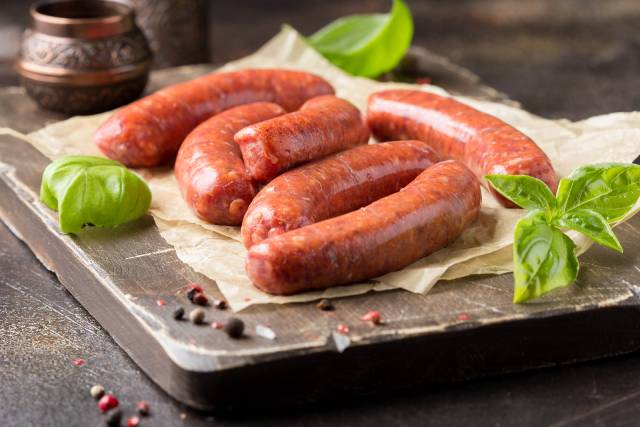
Six uncooked beef sausages.
  • Origin: Multiple countries
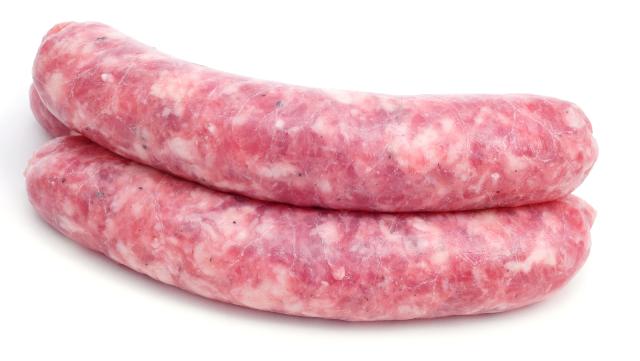
  • Type: Fresh
  • Main ingredients: Beef, salt, herbs, and spices

Fresh beef sausages are popular worldwide, particularly in Germany, Poland, the United Kingdom, and the United States.

These sausages contain a mixture of ground beef, salt, and various herbs and spices.

Here are the typical nutritional values for cooked beef sausages per 100 grams:

  • Calories: 332 kcal
  • Carbohydrates: 0.35g (<1% DV)
  • Fiber: 0g (0% DV)
  • Sugars: 0g
  • Fat: 28.0g (36% DV)
  • Saturated: 10.9g (55% DV)
  • Monounsaturated: 12.6g
  • Polyunsaturated: 0.66g
  • Protein: 18.2g (36% DV)
  • Cholesterol: 82 mg (27% DV)
  • Sodium: 813 mg (35% DV)

Source: USDA data for cooked beef sausage

2) Berliner

Berliner sausage cut into pieces.
  • Origin: Germany
  • Type: Cooked sausage
  • Main ingredients: Beef, pork, salt, spices

The Berliner is a cooked and smoked sausage containing pork or beef.

Some Berliner products may also include liver, and the sausage typically has a high salt content.

Per 100 grams, the typical nutritional profile for Berliner sausage is as follows:

  • Calories: 230 kcal
  • Carbohydrates: 2.59g (1% DV)
  • Fiber: 0g (0% DV)
  • Sugars: 2.35g
  • Fat: 17.2g (22% DV)
  • Saturated: 6.08g (30% DV)
  • Monounsaturated: 8.0g
  • Polyunsaturated: 1.58g
  • Protein: 15.3g (31% DV)
  • Cholesterol: 46.0 mg (15% DV)
  • Sodium: 1300 mg (57% DV)

Source: USDA data for cooked berliner sausage

3) Beyond Sausage (Original Brat)

Plant-based sausages on a grilling machine.
  • Origin: United States
  • Type: Fresh, vegan alternative
  • Main ingredients: Water, pea protein, avocado oil, flavorings, salt

Beyond Sausage is a plant-based vegan alternative to traditional sausages launched in June 2023.

It uses a combination of pea protein, vegetable oil, and various flavorings designed to recreate the taste and texture of traditional meat sausages.

Nutritionally, Beyond Sausage is high in protein and has a similar fat content to reduced-fat pork and beef sausages.

Note: These nutritional values are as-provided by Beyond Meat for their ‘original brat’ product, based on 1 link sausage rather than per 100g:

  • Calories: 210 kcal
  • Carbohydrates: 7g (4% DV)
  • Fiber: 1.0 g (4% DV)
  • Sugars: <1.0g
  • Fat: 13.0 g (17% DV)
  • Saturated: 2.0 g (10% DV)
  • Monounsaturated: 7.0 g
  • Polyunsaturated: 2.0 g
  • Protein: 17.0 g (34% DV)
  • Cholesterol: 0 mg (0% DV)
  • Sodium: 460 mg (20% DV)

Source: Beyond Meat product page for Beyond Sausage

Learn more: Is Beyond Sausage a Healthy Choice? A Nutritional Guide

4) Blood Sausage

A chef cutting blood sausage into pieces with a knife.
  • Origin: Multiple countries
  • Type: Cooked
  • Main ingredients: Blood, animal fat, grain (typically barley, oats, or rice), pork, salt, herbs, and spices

There are many different varieties of blood sausage around the world, including ‘black pudding’ in the United Kingdom, boudin noir (France), blodkorv (Sweden), and sundae (Korea).

Most blood sausage is pre-cooked, but people typically recook it before consumption.

A typical blood sausage product has the following nutritional profile per 100g:

  • Calories: 379 kcal
  • Carbohydrates: 1.29g (<1% DV)
  • Fiber: 0g (0% DV)
  • Sugars: 1.29g
  • Fat: 34.5g (44% DV)
  • Saturated: 13.4g (67% DV)
  • Monounsaturated: 15.9g
  • Polyunsaturated: 3.46g
  • Protein: 14.6g (29% DV)
  • Cholesterol: 120 mg (40% DV)
  • Sodium: 680 mg (30% DV)

Source: USDA data for cooked blood sausage

5) Boerewors

South African boerewors sausage.
  • Origin: South Africa
  • Type: Fresh
  • Main ingredients: Beef, sometimes pork or lamb, allspice, black pepper, cloves, coriander, nutmeg, salt, vinegar

Boerewors is a fresh type of sausage from South Africa primarily made with beef.

It may also include pork or lamb, and the sausages contain a mixture of herbs and spices in addition to salt and vinegar, with the vinegar providing unique flavor characteristics compared to other sausages.

Based on data from the NCC Food and Nutrient Database, here are the nutritional values for 100 grams of cooked boerewors:

  • Calories: 233 kcal
  • Carbohydrates: 1.02g (<1% DV)
  • Fiber: 0g (0% DV)
  • Sugars: 1.02g
  • Fat: 18.68g (24% DV)
  • Saturated: 8.02g (40% DV)
  • Monounsaturated:
  • Polyunsaturated:
  • Protein: 16.41g (33% DV)
  • Cholesterol: -—
  • Sodium: 704.19 mg (31% DV)

Source: NCC Food and Nutrient Database data for cooked boerewors

6) Bockwurst

Three whole bockwurst sausages.
  • Origin: Germany
  • Type: Fresh
  • Main ingredients: Veal, pork, salt, paprika, white pepper

Bockwurst is another fresh German sausage that typically contains a combination of veal and pork.

It can also be smoked and may contain various herbs and spices.

The USDA database only has data for raw, uncooked bockwurst, which is shown below per 100 grams:

  • Calories: 301 kcal
  • Carbohydrates: 2.95g (1% DV)
  • Fiber: 1.0g (4% DV)
  • Sugars: 1.33g
  • Fat: 25.9g (33% DV)
  • Saturated: 10.3g (52% DV)
  • Monounsaturated: 13.1g
  • Polyunsaturated: 2.33g
  • Protein: 14.0g (28% DV)
  • Cholesterol: 93 mg (31% DV)
  • Sodium: 756 mg (33% DV)

Source: USDA data for raw bockwurst

Note: The cooking process reduces the water content of sausages, thereby increasing the concentration of fat, protein, and other nutrients. This means that, gram-for-gram, 100 grams of cooked sausages will contain more calories and a higher amount of fat, protein, and other nutrients.

7) Chorizo

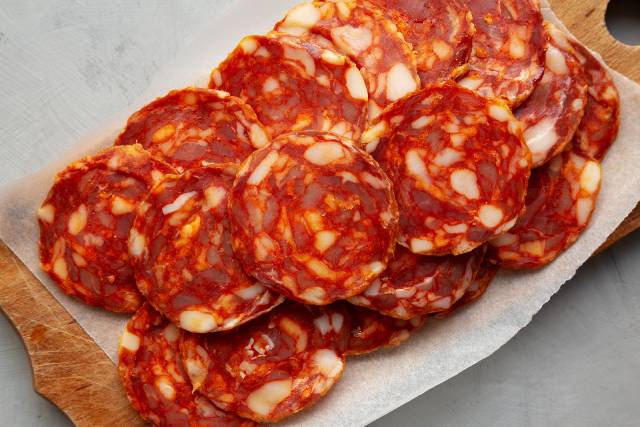
Spanish chorizo fermented sausage cut into slices.
  • Origin: Spain, Portugal
  • Type: Typically dry but can be fresh
  • Main ingredients: Pork, fat, smoked paprika, salt, possibly sodium nitrite and nitrate

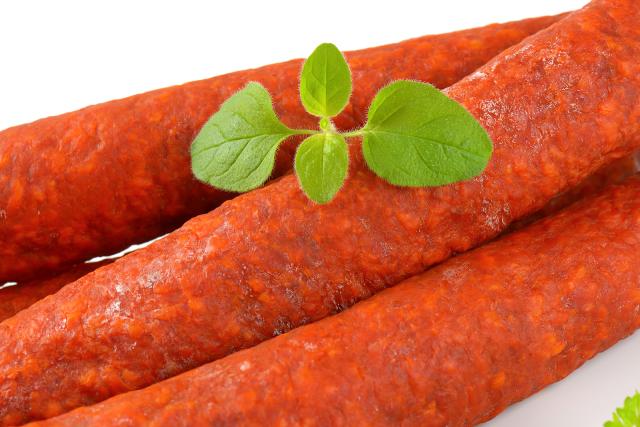
Chorizo is a popular sausage from Spain which has typically been cured and can be eaten as it is. However, some versions are fresh and require cooking, so be sure not to confuse the two!

In other words, carefully check the label of chorizo for any information on preparation requirements.

Chorizo has an intense red color, which comes from its smoked paprika content. The sausage has a chewy texture and a slightly spicy taste.

Here are the typical nutritional values of chorizo per 100 grams:

  • Calories: 341 kcal
  • Carbohydrates: 2.63g (1% DV)
  • Fiber: 0g (0% DV)
  • Sugars: 0g
  • Fat: 28.1g (36% DV)
  • Saturated: 9.45g (47% DV)
  • Monounsaturated: 11.7g
  • Polyunsaturated: 4.74 g
  • Protein: 19.3g (39% DV)
  • Cholesterol: 107 mg (36% DV)
  • Sodium: 983 mg (43% DV)

Source: USDA data for cooked chorizo

Learn more: What Is Chorizo and Is It a Healthy Choice?

8) Frankfurter

Frankfurter hot dog in a bun.
  • Origin: Germany
  • Type: Cooked and smoked
  • Main ingredients: Pork, chicken, beef, fat, salt, herbs and spices, sodium nitrate and/or nitrite

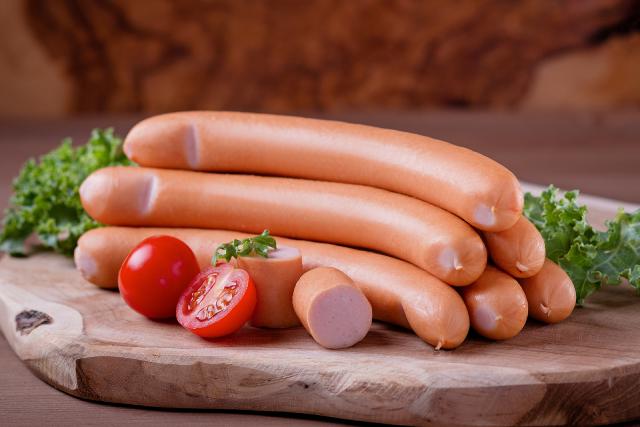
Frankfurters are perhaps more famously known as ‘hot dogs.’ They originate in the German city of Frankfurt and are one of the two sausages commonly called hot dogs, alongside Vienna sausages.

Most frankfurters are primarily made of pork, but they may also contain chicken, beef, or even a mixture of the three. They typically contain sodium nitrate and/or sodium nitrite as preservatives.

Per 100 grams, frankfurters typically provide the following nutritional values:

  • Calories: 290 kcal
  • Carbohydrates: 4.17g (2% DV)
  • Fiber: 0g (0% DV)
  • Sugars:
  • Fat: 25.8g (33% DV)
  • Saturated: 7.67g (38% DV)
  • Monounsaturated: 11.4g
  • Polyunsaturated: 4.4g
  • Protein: 10.3g (21% DV)
  • Cholesterol: 77 mg (26% DV)
  • Sodium: 1090 mg (47% DV)

Source: USDA data for cooked frankfurters

9) Kielbasa (kielbasa Polska)

Kielbasa Traditional Polish Sausage.
  • Origin: Poland
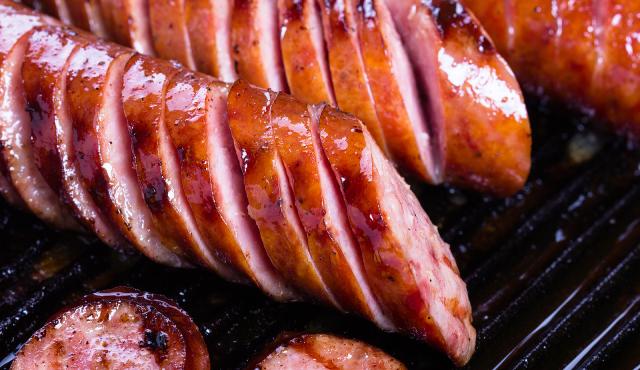
  • Type: Cooked and smoked
  • Main ingredients: Pork, beef, salt, garlic, various herbs and spices

Kielbasa simply means ‘sausage’ in Polish, and there are actually many different types of kielbasa in Poland. Some varieties may be fresh, and others could be pre-cooked or smoked.

However, ‘kielbasa’ typically refers to a smoked and pre-cooked sausage known as ‘kielbasa Polska.’ Since this sausage has already been cooked, it just needs reheating before consumption.

Assuming kielbasa is kielbasa Polska, it can also be eaten without cooking, but please check the product label carefully to confirm.

100 grams of cooked kielbasa provides the following nutritional profile:

  • Calories: 337 kcal
  • Carbohydrates: 5.03g (2% DV)
  • Fiber: 0g (0% DV)
  • Sugars: 2.39g
  • Fat: 29.7g (38% DV)
  • Saturated: 9.89g (49% DV)
  • Monounsaturated: 12.6g
  • Polyunsaturated: 5.38g
  • Protein: 12.4g (25% DV)
  • Cholesterol: 73 mg (24% DV)
  • Sodium: 1060 mg (46% DV)

Source: USDA data for cooked kielbasa

10) Liverwurst

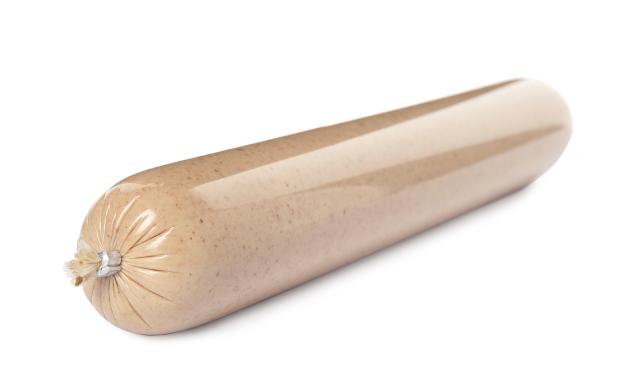
Long liverwurst sausage (sealed).
  • Origin: Germany
  • Type: Cooked
  • Main ingredients: Liver, meat, fat, herbs and spices

Liverwurst is a German sausage containing liver, typically mixed with a combination of meat, fat, herbs, and spices.

As a pre-cooked sausage, it is ready to eat and available to buy in two main varieties:

  • Firm: Firm liverwurst can be sliced and used in sandwiches
  • Spreadable: Similar to pâté, spreadable liverwurst is typically spread onto foods like toast.

Liverwurst is high in fat and calories, but it also contains a wide range of vitamins and minerals in high amounts.

Learn more: A Nutritional Guide to Liverwurst

Here are the nutritional values per 100 grams of spreadable liverwurst:

  • Calories: 305 kcal
  • Carbohydrates: 5.89g (2% DV)
  • Fiber: 2.5g (9% DV)
  • Sugars: 1.65g
  • Fat: 25.4g (33% DV)
  • Saturated: 9.92g (50% DV)
  • Monounsaturated: 12.3g
  • Polyunsaturated: 2.43g
  • Protein: 12.4g (25% DV)
  • Cholesterol: 118 mg (39% DV)
  • Sodium: 700 mg (30% DV)

Source: USDA data for liverwurst spread

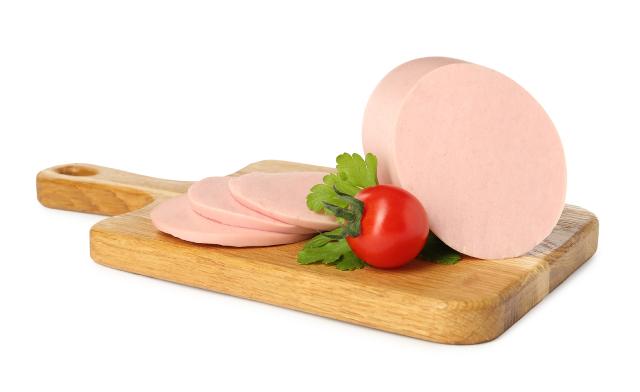
11) Luncheon sausage

Luncheon sausage with several slices cut off on a wooden board.
  • Origin: United States
  • Type: Cooked
  • Main ingredients: Pork, beef, fat, flour, sugar, herbs and spices, sodium nitrate and/or sodium nitrite

Luncheon sausage is a sausage-shaped variety of luncheon meat with origins in the United States.

As well as being available in convenient, pre-sliced packs, it can also be bought as a large sausage.

Since luncheon meat is already cooked, it is ready-to-eat.

Each 100 grams of luncheon sausage typically offers the following nutritional values:

  • Calories: 260 kcal
  • Carbohydrates: 1.58g (<1% DV)
  • Fiber: 0g (0% DV)
  • Sugars:
  • Fat: 20.9g (27% DV)
  • Saturated: 7.62g (38% DV)
  • Monounsaturated: 9.93g
  • Polyunsaturated: 2.05g
  • Protein: 15.4g (31% DV)
  • Cholesterol: 64 mg (21% DV)
  • Sodium: 1180 mg (51% DV)

Source: USDA data for luncheon sausage

12) Longaniza

Two uncooked longaniza sausages.
  • Origin: Spain
  • Type: Typically fresh, but can be dry (cured)
  • Main ingredients: Pork, salt, pepper, garlic, nutmeg, sometimes vinegar and paprika

Longaniza typically refers to a traditional fresh Spanish sausage that must be cooked before eating.

However, there are some cured varieties that can be eaten in a similar way to other dry sausages.

Longaniza is also popular in Spanish-speaking South American countries, such as Argentina, Mexico, and Peru. While the traditional Spanish recipe includes black pepper for seasoning, there are variations in the ingredient profile by country.

Using data from the NCC Food and Nutrient Database, here are the nutritional values for cooked longaniza per 100 grams:

  • Calories: 271 kcal
  • Carbohydrates: 2.86g (1% DV)
  • Fiber: 1.43g (5% DV)
  • Sugars: 0g
  • Fat: 24.29g (31% DV)
  • Saturated: 8.57g (43% DV)
  • Monounsaturated:
  • Polyunsaturated:
  • Protein: 12.86g (26% DV)
  • Cholesterol: 64.29 mg (21% DV)
  • Sodium: 857 mg (37% DV)

Source: NCC data for cooked longaniza

13) Pepperoni

Cured pepperoni sausages.
  • Origin: United States
  • Type: Dry
  • Main ingredients: Pork, beef, fat, salt, paprika, spices, sodium nitrate and/or sodium nitrite

Pepperoni is a cured, dried sausage and has not been cooked. It is ready to eat upon purchase.

Among its many culinary uses, pepperoni is arguably the most popular pizza topping.

Some people may think pepperoni pizza has origins in Italy, but it is an American pizza, with pepperoni itself entering the U.S. market shortly after the first world war.

100 grams of pepperoni provides the following nutritional profile:

  • Calories: 504 kcal
  • Carbohydrates: 1.18g (<1% DV)
  • Fiber: 0g (0% DV)
  • Sugars: 0g
  • Fat: 46.3g (59% DV)
  • Saturated: 17.7g (89% DV)
  • Monounsaturated: 20.8g
  • Polyunsaturated: 4.46g
  • Protein: 19.2g (38% DV)
  • Cholesterol: 97 mg (32% DV)
  • Sodium: 1580 mg (69% DV)

Source: USDA data for pepperoni

14) Pork sausage

Four cooked pork sausages on the grill.
  • Origin: Multiple countries
  • Type: Fresh
  • Main ingredients: Pork, herbs, spices, sometimes flour, salt

A typical fresh pork sausage is sometimes also known as a ‘banger’ or ‘breakfast sausage.’

Fresh, raw pork is the primary ingredient in these sausages, and it is usually mixed with additional ingredients for seasoning, such as herbs, spices, salt, and pepper. Depending on the sausage, it may also include a small amount of flour as a thickener and binder.

A typical cooked pork sausage has the following nutritional values per 100 grams:

  • Calories: 325 kcal
  • Carbohydrates: 1.42g (<1% DV)
  • Fiber: 0g (0% DV)
  • Sugars: 1.09g
  • Fat: 27.2g (35% DV)
  • Saturated: 8.83g (44% DV)
  • Monounsaturated: 11.5g
  • Polyunsaturated: 5.12g
  • Protein: 18.5g (37% DV)
  • Cholesterol: 86 mg (29% DV)
  • Sodium: 814 mg (35% DV)

Source: USDA data for cooked pork sausage

15) Salami

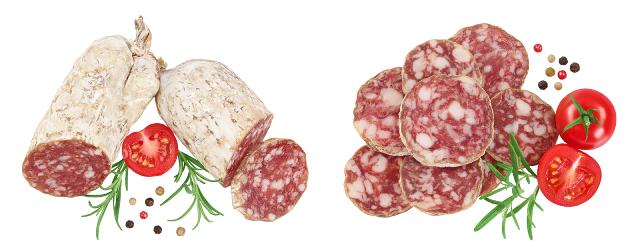
Cured salami sausage with some slices cut off.
  • Origin: Italy
  • Type: Dry
  • Main ingredients: Pork, beef, salt, pepper, herbs and spices, sodium nitrate and/or sodium nitrite

Originating in Italy, salami is a fermented, cured dry sausage typically made from pork, but some salami may instead (or also) contain beef.

As with other dried sausages, salami has a significantly higher fat and calorie content than fresh sausages. Per 100 grams, pork salami provides the following nutritional values:

  • Calories: 425 kcal
  • Carbohydrates: 1.2g (<1% DV)
  • Fiber: 0g (0% DV)
  • Sugars: 1.2g
  • Fat: 37g (47% DV)
  • Saturated: 13.1g (66% DV)
  • Monounsaturated: 18.2g
  • Polyunsaturated: 3.6g
  • Protein: 21.7g (43% DV)
  • Cholesterol: 80 mg (27% DV)
  • Sodium: 1890 mg (82% DV)

Source: USDA data for Italian pork salami

16) Turkey sausage

Turkey sausages on a plate.
  • Origin: Multiple countries
  • Type: Fresh
  • Main ingredients: Turkey, salt, spices, sometimes flour

Fresh turkey sausages, a form of ‘breakfast sausage’ or ‘banger,’ look quite similar to beef and pork sausage in appearance. The only visual difference is that they typically have a lighter color.

However, they have a milder taste and a lower fat and saturated fat (and therefore calorie) content.

Since they contain less fat, they generally have slightly higher amounts of protein too.

Due to this nutritional profile, some people see turkey sausages as a “healthier” type of sausage, but they can still contain significant amounts of sodium.

Cooked turkey sausages provide the following typical nutritional profile per 100 grams:

  • Calories: 196 kcal
  • Carbohydrates: 0g (0% DV)
  • Fiber: 0g (0% DV)
  • Sugars: 0g
  • Fat: 10.4g (13% DV)
  • Saturated: 2.27g (11% DV)
  • Monounsaturated: 2.99g
  • Polyunsaturated: 2.71g
  • Protein: 23.9g (48% DV)
  • Cholesterol: 92 mg (31% DV)
  • Sodium: 665 mg (29% DV)

Source: USDA data for cooked turkey sausages

Learn more: Are Turkey Sausages a Healthy Choice?

17) Vienna sausage

Vienna sausages on a wooden board.
  • Origin: Austria
  • Type: Cooked smoked
  • Main ingredients: Pork, beef, chicken, herbs and spices, salt, sodium nitrate and/or sodium nitrite

We saw Frankfurters earlier in the guide, and Vienna sausages are the other type of sausage often labelled as a ‘hot dog.’

Pork is typically the main ingredient, but other meats such as beef, chicken, turkey, or a combination may feature.

As Vienna sausages are pre-cooked, they can be consumed straight from the packet. However, most people recook them before eating.

Vienna sausages provide the following nutritional profile per 100 grams:

  • Calories: 230 kcal
  • Carbohydrates: 2.6g (1% DV)
  • Fiber: 0g (0% DV)
  • Sugars: 0g
  • Fat: 19.4g (25% DV)
  • Saturated: 7.12g (36% DV)
  • Monounsaturated: 9.63g
  • Polyunsaturated: 1.29g
  • Protein: 10.5g (21% DV)
  • Cholesterol: 87 mg (29% DV)
  • Sodium: 879 mg (38% DV)

Source: USDA data for cooked Vienna sausages

18) Weisswurst

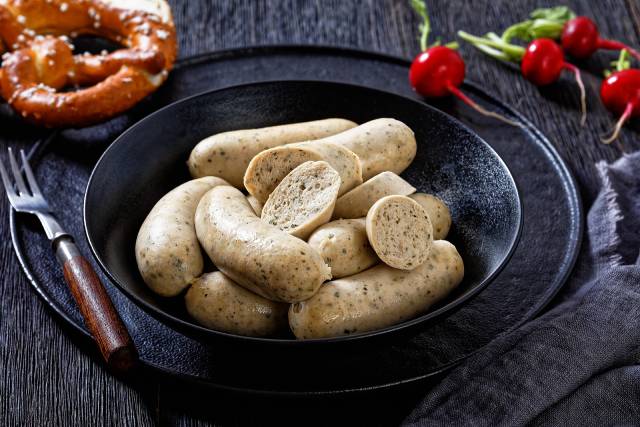
Weisswurst white sausages in a black bowl.
  • Origin: Germany
  • Type: Fresh
  • Main ingredients: Veal, back bacon, salt, parsley, lemon zest, and other herbs and spices

‘Weisswurst’ is a fresh German sausage that means “white sausage” in English.

The primary ingredient is veal, which tends to have a lighter color than pork or beef, resulting in the mild, off-white color of weisswurst.

Additionally, weisswurst does not contain sodium nitrate or sodium nitrite, which adds a pink tinge to food when cooked.

A typical weisswurst sausage has the following nutritional profile per 100 grams:

  • Calories: 283 kcal
  • Carbohydrates: 1.77g (<1% DV)
  • Fiber: 0g (0% DV)
  • Sugars: 0g
  • Fat: 26.6g (34% DV)
  • Saturated: 8.85g (44% DV)
  • Monounsaturated:
  • Polyunsaturated:
  • Protein: 10.6g (21% DV)
  • Cholesterol: 53 mg (18% DV)
  • Sodium: 646 mg (28% DV)

Source: USDA data for weisswurst sausages per 100g

Reduced Fat Sausage Varieties

In addition to regular beef and pork sausages, it is possible to buy low-fat varieties.

These low-fat options have a lower fat, saturated fat, and overall calorie provision and correspondingly higher protein content. For this reason, they may be a good choice for people wishing to limit their overall calorie or saturated fat intake.

Beef and pork sausages, reduced fat

Reduced-fat beef sausages with a fat content of 20% typically provide the following nutritional values per 100 grams:

  • Calories: 267 kcal
  • Carbohydrates: 0.15 g (<1% DV)
  • Fiber: 0 g (0% DV)
  • Sugars: 0 g
  • Fat: 20.3 g (26% DV)
  • Saturated: 6.03 g (30% DV)
  • Monounsaturated: 8.02 g
  • Polyunsaturated: 4.19 g
  • Protein: 20.9 g (42% DV)
  • Cholesterol: 82 mg (27% DV)
  • Sodium: 698 mg (30% DV)

Source: USDA data for cooked reduced fat beef sausages

The USDA has also listed identical nutritional data for reduced fat pork sausages, based on both options having the same (20%) fat content.

Credentialed Nutritionist’s Take

  • Saturated fat: Almost all sausages contain high amounts of animal fat, which gives them a high saturated fat content. If you’re looking to limit saturated fat, then turkey sausages are a good option. Plant-based options that use primarily unsaturated vegetable oils (like avocado oil) are another low-saturated fat option.
  • Be aware of the sodium content: When I look at the nutrition labels of sausage products, one thing that stands out is the significant amounts of salt most contain. This is true of most sausages, whether they’re made from pork, beef, turkey, or plants. Since high sodium intakes can potentially lead to elevated blood pressure, it is a good idea to be aware of the amount of sodium in sausages and how it fits with your overall diet. Individuals prescribed a low-sodium diet or with any concerns about their blood pressure should discuss this with their healthcare provider.
  • Sodium nitrate and nitrite: Most sausages contain sodium nitrate and sodium nitrite, preservatives that help extend shelf life and reduce the risk of spoilage. However, these compounds can lead to the formation of nitrosamines, which are recognized carcinogens. The preservatives used in processed meat (which is classed as a group 1 carcinogen) are one of the reasons public health guidelines advise limiting its intake. While most sausages contain sodium nitrate or nitrite, you may be able to find some fresh options that don’t include these ingredients – check ingredients labels carefully.

Summary

This article shows that ‘sausage’ can mean quite different things, from high-fat to low-fat options, and everything in between.

However, most sausages are high in saturated fat, sodium, and preservatives like sodium nitrate. As a form of processed meat, dietary guidelines also advise limiting their intake.

For those who enjoy sausages, it is better to use them as an occasional food rather than a staple, and unprocessed meat is likely a better option.

Photo of author

Michael Joseph, MSc, ANutr

Michael works as a nutritionist in a community setting and holds a Master's degree in Clinical Nutrition. He is a Registered Associate Nutritionist (ANutr) with the Association for Nutrition (AfN), and has published peer-reviewed research.