If you’re trying to increase the amount of fat in your diet, there are more nutritious options than simply increasing the amount of oils and solid fats you use.
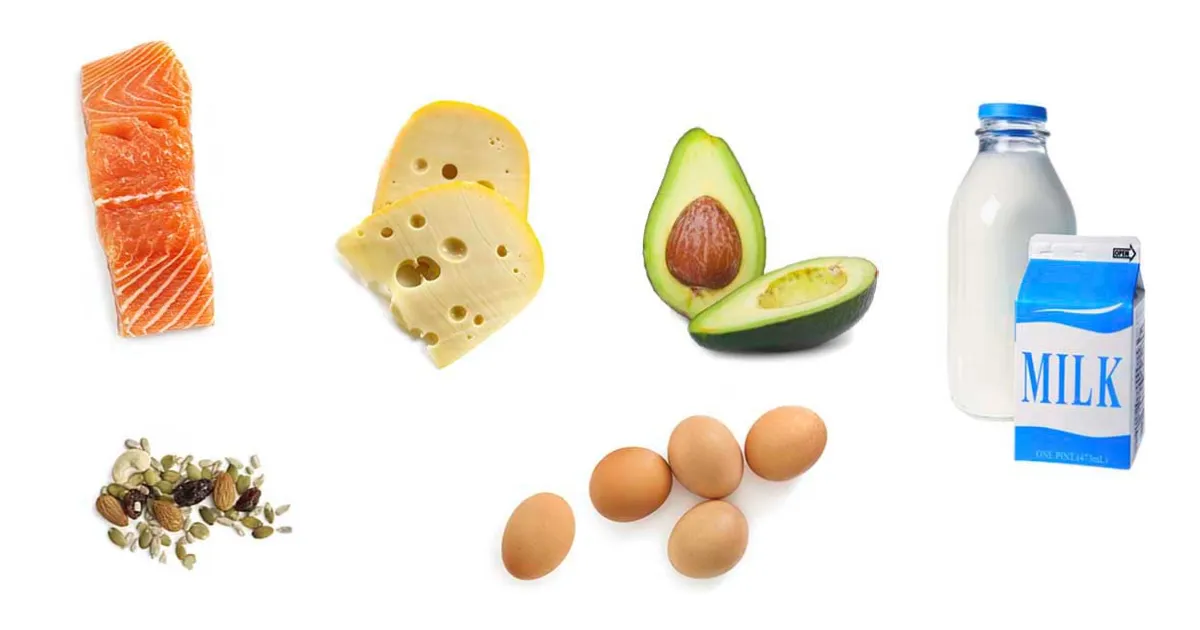
Numerous nutrient-rich whole food sources of fat can be healthy options, including oily fish, nuts, seeds, eggs, avocado, yogurt, and soybeans to name a few. Each of these foods offers numerous beneficial nutrients in addition to their dietary fat content.
This guide provides a list of healthy whole food fat sources. For each food, you can see its fat content per 100g and per typical serving, as well as the key nutrients it contains in high amounts.
We have based “high amounts” on the FDA’s classification of a food being high in a particular nutrient if it provides 20% of the Daily Value or more per serving.
So, if you’re trying to increase your fat intake in a healthy way, read on to discover some of the best options.
Please note that the exact fat content of nuts will depend on the specific variety; the nutritional data above is for mixed nuts.
As well as fats, nuts provide some fiber, protein, and vitamins and minerals. A 2025 systematic review of randomized controlled trials also found that nut intake may lower LDL cholesterol and total cholesterol.
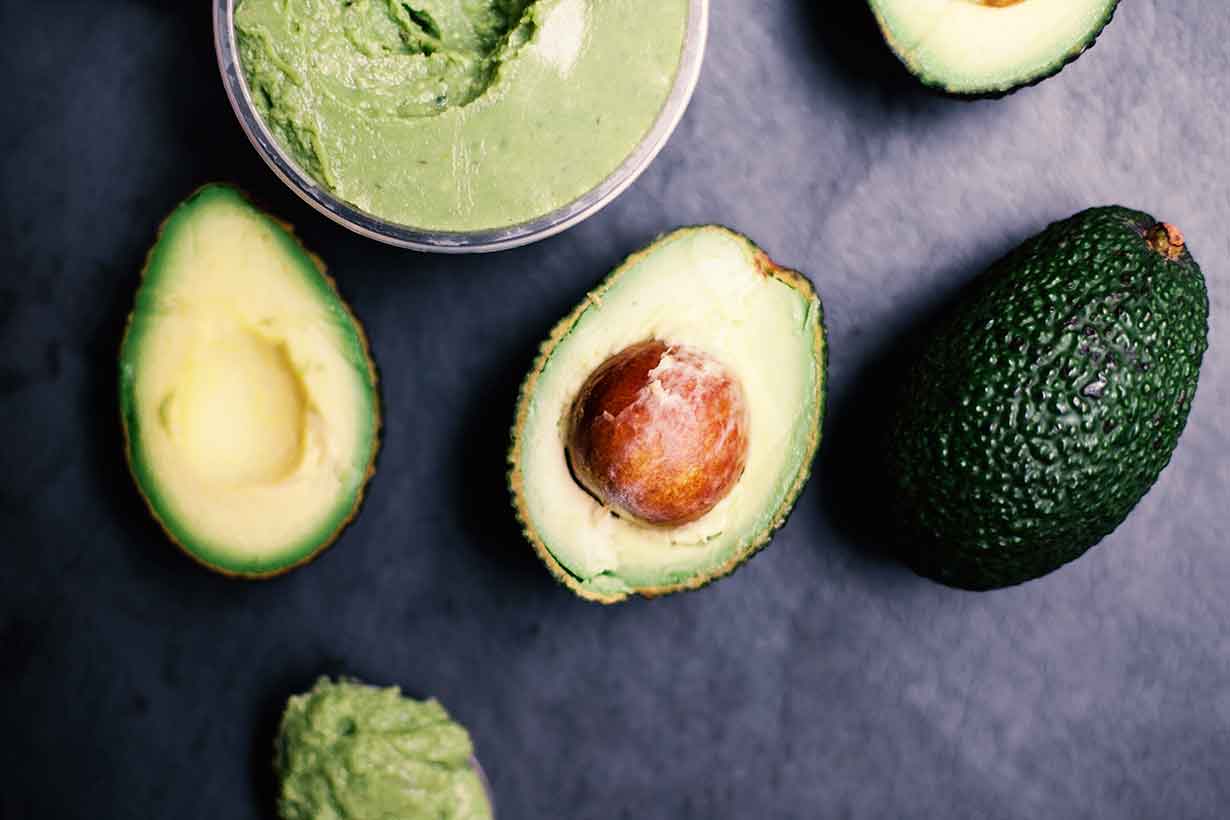
In addition to containing around 30 grams of fat, a typical avocado also provides approximately 13.5 grams of fiber, making it a great all-rounder.
As for avocado’s potential health effects, a 2025 umbrella review of systematic reviews found that avocados may lower LDL cholesterol in people with high cholesterol levels.
Unlike the other foods in this list, oily fish is high in the highly bioavailable omega-3 fatty acids EPA and DHA, which are thought to have beneficial health effects.
While monounsaturated fat is the main fat that oily fish contains, their polyunsaturated omega-3 content is arguably more notable.
Cardiovascular disease mortality: Compared to no oily fish consumption, consuming one serving of oily fish per week was associated with a 15% reduced risk of cardiovascular mortality.
All-cause mortality: One serving of oily fish per week was also associated with a 7% reduced risk of all-cause mortality.
While yogurt only contains vitamin B12 in “high” amounts (20% or more of the Daily Value), it offers a broad range of nutrients in lower amounts. These include a notable content of calcium, riboflavin (B2), and phosphorus.
The main fat in yogurt is saturated fat, but research suggests saturated fats in whole dairy foods like milk and yogurt may act differently to those in more concentrated fats like butter and palm oil.
It has been proposed that this may be due to a dairy matrix known as the milk fat globule membrane (MFGM) which encases the fatty acids, with research suggesting the MFGM itself may help lower cholesterol.
A 2023 systematic review found that high yogurt intake compared to low intake was significantly associated with a lower risk of death from all causes and from cardiovascular disease.
5) Seeds
Seeds are packed with healthy fats, with some options offering high amounts of omega-6 and others providing the plant form of omega-3, alpha-linolenic acid.
Sunflower seeds, which are among the most popular edible seeds, have the following characteristics:
A 2022 umbrella review of systematic reviews found that the available evidence supports consuming a daily handful of seeds or nuts for various health outcomes, including an improvement in fasting blood glucose levels.
6) Edamame
Edamame refers to green, immature fresh soybeans. While technically a legume, edamame is eaten as a vegetable.
As the above nutrient list shows, edamame provides an excellent package of nutrients in addition to its fat content.
Not only does a cup of edamame increase your fat intake, but it also provides 18.5 grams of protein and 8 grams of fiber.
7) Cheese
While not technically a ‘whole food,’ cheese is a minimally processed food made mainly from milk, with a few additional ingredients like salt, rennet, and a starter culture.
Let’s look at the fat content of Cheddar cheese:
Fat per ounce (28g) slice: 9.46g
Fat per 100g: 33.8g
Primary fat: Saturated fat
Key nutrients: While a 28g slice of Cheddar isn’t high (≥20% DV) in any nutrients, it offers more than 10% of the Daily Value for calcium, phosphorus, selenium, riboflavin, and vitamin B12.
One thing to watch is that cheese is quite high in saturated fat and salt, so go easy on the portion size: a typical serving is around one ounce (28g).
That said, as with yogurt, cheese also contains MFGM, so the health effects from its saturated fat content may not be equal to saturated fat from other sources.
Eggs are one of the best dietary sources of choline and selenium, and two large eggs provide more than 20% of the Daily Value for protein too.
9) Soybeans
We already covered immature soybeans in edamame, but mature soybeans, which are typically referred to just as soybeans, arguably provide a more concentrated source of nutrients — including fat.
While the study did not specifically focus on only whole soybeans, a large umbrella review of 114 systematic reviews and meta-analyses found that soy intake is generally associated with improvements across cardiovascular, metabolic, and other health outcomes.
10) Whole Milk
Whole milk provides dairy fat as well as particularly high levels of calcium.
While only calcium and riboflavin are present at ≥20% of the Daily Value, whole milk also contains notable amounts (≥15% DV) of: phosphorus, selenium, pantothenic acid, and vitamin D.
Perhaps surprisingly, despite its higher fat and calorie content, a large 2024 observational study found that whole milk intake is associated with lower body weight. The authors mentioned that this may be due to whole milk’s impact on satiety (lowering appetite), but further research is necessary for more clarity.
While whole milk may have both benefits and some downsides (saturated fat, lactose intolerance, allergy, etc), the authors of a 2021 umbrella review of systematic reviews on milk and its health impacts concluded that it “does more good than harm for human health.”
How to Choose Whole Food Fat Sources
In this article, we’ve looked at many different whole foods that contain substantial amounts of fat and provide beneficial nutrients.
If you wish to increase your fat intake, then some of these options may be worth exploring. However, there is no need to incorporate all (or even any) of them.
The best way of building a sustainable way of eating involves choosing the foods that are right for you, so opt for the options you prefer and actually enjoy eating.
There is also nothing wrong with adding more concentrated fat sources like olive oil. However, oils contain high amounts of calories and have relatively few nutrients compared to whole food fat sources.
Michael works as a nutritionist in a community setting and holds a Master's degree in Clinical Nutrition. He is a Registered Associate Nutritionist (ANutr) with the Association for Nutrition (AfN), and has published peer-reviewed research.