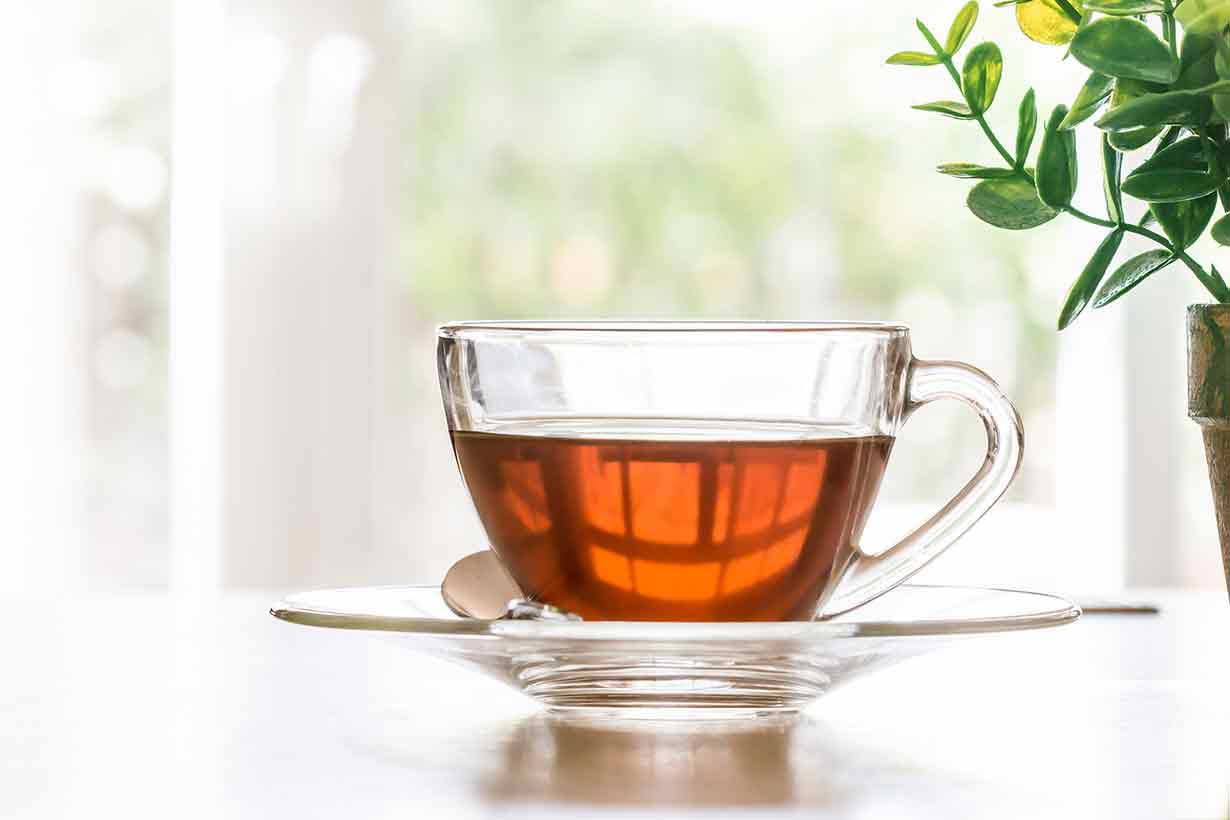
Tea comes in a wide range of varieties and flavors, and most types of tea are almost calorie-free drinks that may, in some cases, offer potential health benefits.
Considering its lack of added sugars, low calorie content, and polyphenols, tea can be a healthy drink choice. However, there are many different teas with distinct characteristics to learn about.
In this article, we introduce you to 30 types of tea, examining the flavor and scientific properties of each one, covering true tea, popular herbal teas, and some lesser-known tea infusions.
All “true tea” comes from the leaves of the Camellia sinensis plant. The differences between varieties can be due to the cultivar and how the leaves are prepared and processed.
1) Black Tea
Name
Black tea
Scientific name
Camellia sinensis
Caffeine
Yes
Flavor
Slightly bitter, fruity, malty
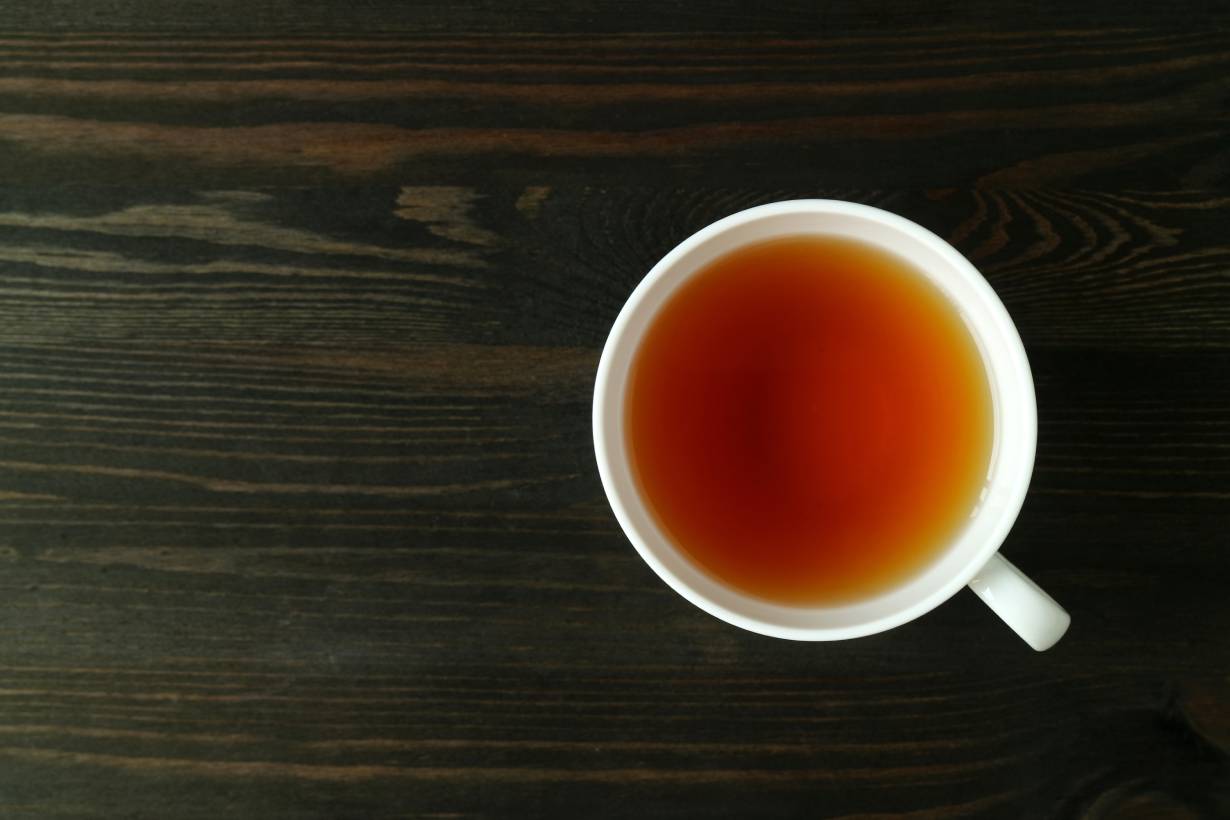
Made with the dried and oxidized leaves of the Camellia sinensis plant, black tea is a true tea.
It’s also one of the most popular drinks in the world, enjoying notable popularity in countries like India, Ireland, and the United Kingdom. In fact, British people are thought to drink approximately 100 million cups of black tea every single day.
Due to the slightly bitter taste of stronger black tea varieties, some people enjoy adding a small amount of milk to them.
Black tea is a rich source of polyphenols, and systematic reviews indicate it may help to lower blood pressure, but further research is necessary.
While chai tea is not a specific variety of tea, it is a popular tea drink made by combining black tea, steamed milk, and various herbs and spices. These spices typically include cinnamon, cardamom, cloves, and ginger, among others.
Depending on the specific tea and spices used, the flavor can vary, but it is generally mildly spicy, slightly sweet, and it has a warming mouthfeel.
It is worth noting that some modern varieties of chai tea found in cafes may provide high amounts of added sugars. For example, a Grande Chai Latte from Starbucks contains 29 grams of sugar.
3) Green Tea
Name
Green tea
Scientific name
Camellia sinensis
Caffeine
Yes
Flavor
Earthy, grassy
While black tea is the popular choice in the Western world, East Asia favors green tea, particularly in countries like China and Japan.
Compared to black tea, green tea has a lighter, grassy flavor, which some people may find smoother to drink. There are many different varieties of green tea, with some of the most famous including sencha, genmaicha, and matcha.
However, the doses in this review ranged from 99 mg of green tea extract to 10g of green tea leaves, which is likely equivalent to a high number of cups of green tea. An exact dose-equivalent is difficult to calculate.
4) Matcha Tea
Name
Matcha green tea
Scientific name
Camellia sinensis
Caffeine
Yes
Flavor
Bitter, bold, grassy
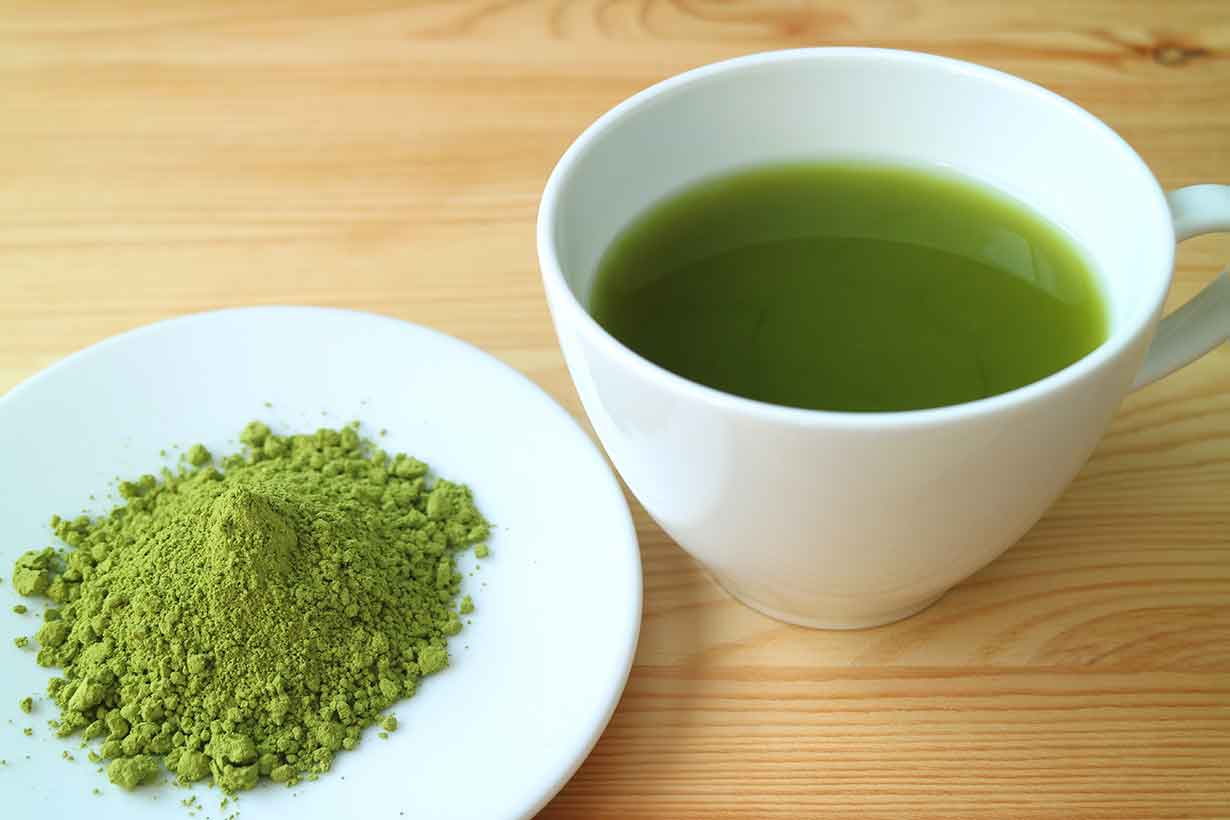
Matcha is a unique variety of green tea. Unlike regular green tea drinks where you brew the leaves, matcha is made of powdered green tea leaves. This powder is mixed with hot water or steamed milk to make matcha tea.
Matcha is popular in Japan and it has been steadily growing in global appeal. The drink has a strong, bitter, and grassy taste, but some matcha latte products can be very sweet due to high amounts of added sugar.
Marketing for matcha tea products often makes strong claims of health benefits due to matcha providing a higher number of polyphenols than regular green tea.
It is likely true that it provides more polyphenols since the leaves are powdered and consumed rather than simply being infused in water. However, there is a lack of scientific research to support the claims of increased benefits.
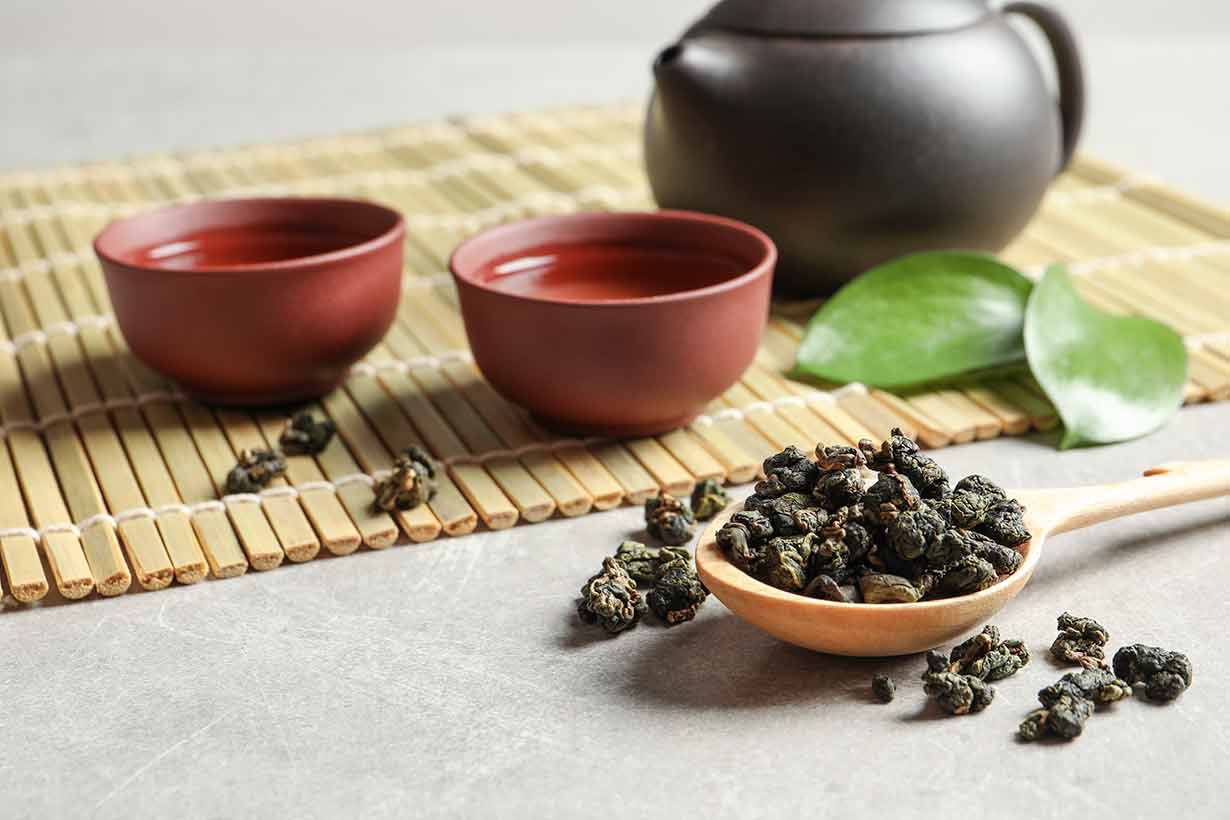
Oolong is another of the “true” teas and it is made from the partially oxidized leaves of the Camellia sinensis plant.
Its flavor profile sits somewhere in the middle of the minimally oxidized green tea and fully oxidized black tea. Depending on how oxidized its leaves are, it can taste relatively light and grassy like green tea or take on a bolder, distinct flavor like black tea.
Unlike the other true tea drinks, pu-erh tea is made by fermenting the leaves of the Camellia sinensis plant with a fungus such as Aspergillus niger.
Pu-erh is a traditional Chinese drink with a very different flavor profile from black tea. Despite having complex earthy flavors, it is smoother and not as bitter.
Pu-erh can be made from a range of different tea leaves, and will have a similar caffeine content to the type of green or black tea it is made from.
7) White Tea
Name
White tea
Scientific name
Camellia sinensis
Caffeine
Yes
Flavor
Earthy, grassy
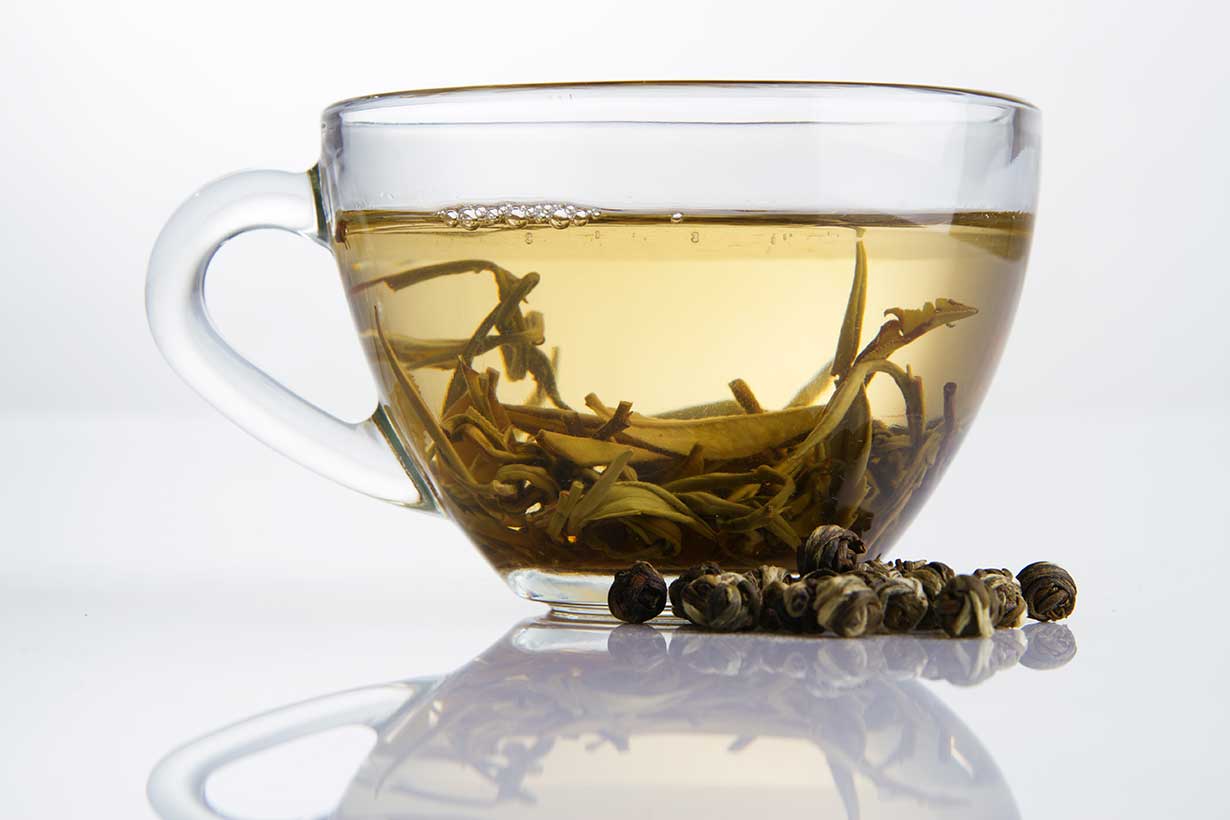
If black is the strongest of the true teas, then white is the mildest.
As with all true teas, white tea comes from the Camellia sinensis plant and uses the youngest, least oxidized leaves available.
This is because the leaves don’t undergo processing such as rolling or oxidation, leaving them with a naturally milder, lighter taste.
Chamomile tea comes from the edible flowers of the Matricaria chamomilla plant, more simply known as chamomile.
When people think of chamomile tea, they may relate to relaxing or bedtime due to how the tea is commonly marketed.
While research is ongoing, a 2024 systematic review of ten clinical trials investigated chamomile’s impact on sleep. Notably, the data indicated that chamomile improved the ease of getting to sleep and lowered the number of awakenings after falling asleep. However, overall sleep duration did not change.
Chamomile is among the most popular types of herbal tea and it provides a relatively light and floral taste. Its lack of caffeine and the research into its sleep properties makes it a good alternative to caffeinated drinks in the evening.
9) Hibiscus Tea
Name
Hibiscus tea
Scientific name
Hibiscus sabdariffa
Caffeine
No
Flavor
Fruity, tart
Hibiscus is a dark, blood-red tea made from the dried petals of the roselle flower with a tart and fruity flavor.
The reason for the tart taste is the high acid content of hibiscus, with the tea containing hibiscus acid and malic, tartaric, citric, and ascorbic acids. In fact, previous research has found that the total acid content of hibiscus petals is approximately 35–61%.
In terms of its potential health effects, a large amount of research has focused on hibiscus tea’s potential to help reduce blood pressure.
The dried leaves of the peppermint plant (Mentha x piperita) make a bold, refreshing, and very minty tea.
If you like minty flavors then peppermint should be an enjoyable tea to drink. If not, then you may not appreciate the strong flavor.
While there is less available research on peppermint than true teas, a 2025 systematic review found that peppermint may be effective for improving menstrual disorders. However, the study had limitations, such as relying on self-reports rather than clinical assessments.
11) Rooibos Tea
Name
Rooibos tea
Scientific name
Aspalathus linearis
Caffeine
No
Flavor
Earthy, fruity, nutty
Rooibos is one of the most popular herbal teas. While it originates in South Africa, it tends to be on store shelves around the world.
The tea is also known by the name ‘red bush’ and has an interesting mix of flavors, with fruity, earthy, and nutty notes. Some people drink rooibos in a similar way to black tea, with some even adding milk, but unlike black tea, rooibos is naturally caffeine-free.
Rooibos tea has attracted some research interest, partly due to its high concentration of polyphenols. However, the current evidence base is weak.
A systematic review found that rooibos may lower blood glucose in rodents with diabetes, but there is a lack of research involving human participants.
12) Spearmint Tea
Name
Spearmint tea
Scientific name
Mentha spicata
Caffeine
No
Flavor
Minty
While it shares some traits with peppermint tea, spearmint has its own unique flavor notes.
There is a lack of substantial scientific research on spearmint involving human participants.
13) Yerba Mate Tea
Name
Yerba mate
Scientific name
Ilex paraguariensis
Caffeine
Yes
Flavor
Earthy, grassy, slightly bitter
Yerba mate is a traditional tea from South America where it is highly popular, and it is becoming more known globally. The leaves of a plant belonging to the holly family that grows in South American rainforests are used to make yerba mate.
Yerba mate is often claimed to have energy-boosting properties, and this is likely correct as it contains high amounts of caffeine and theobromine, which can both have such effects. Its caffeine content per cup is higher than green and black tea and similar to a typical cup of coffee.
A 2025 systematic review of randomized controlled trials found evidence for yerba mate decreasing blood glucose levels after a meal in patients with pre-diabetes. However, further research is necessary to confirm these findings.
Other Tea Infusions
14) Artichoke Tea
Name
Artichoke tea
Scientific name
Cynara cardunculus var. scolymus
Caffeine
No
Flavor
Earthy, grassy, slightly bitter
You may know the vegetable, but did you know that artichoke tea is a thing? This lesser-known tea is an infusion made by steeping the dried leaves, roots, and stems of the artichoke. It has a slightly bitter and earthy taste.
While it is possible to find health claims about the tea, particularly from companies promoting it, there is very little relevant scientific research on the tea itself.
However, these studies used concentrated artichoke leaf extracts rather than the tea, so they cannot establish whether drinking artichoke tea has similar effects.
15) Barley Tea
Name
Barley tea
Scientific name
Hordeum vulgare
Caffeine
No
Flavor
Nutty, smoky, slightly bitter
Barley tea enjoys the most popularity in East Asia, and it’s a staple drink in China, Japan, and Korea. It is made by boiling toasted barley and can be consumed hot or cold.
This grain-based infusion has a nutty, smoky, and slightly bitter flavor, and there is limited research on its potential health effects.
Brown rice tea is a popular Korean tea infusion made by steeping roasted brown rice in boiling water.
The tea has an earthy flavor and tastes somewhat like toasted rice. It is a light and refreshing tea without any strong flavor notes.
There has been limited research investigating the potential health effects of this tea.
17) Chaga Tea
Name
Chaga mushroom tea
Scientific name
Inonotus obliquus
Caffeine
No
Flavor
Earthy, slightly bitter
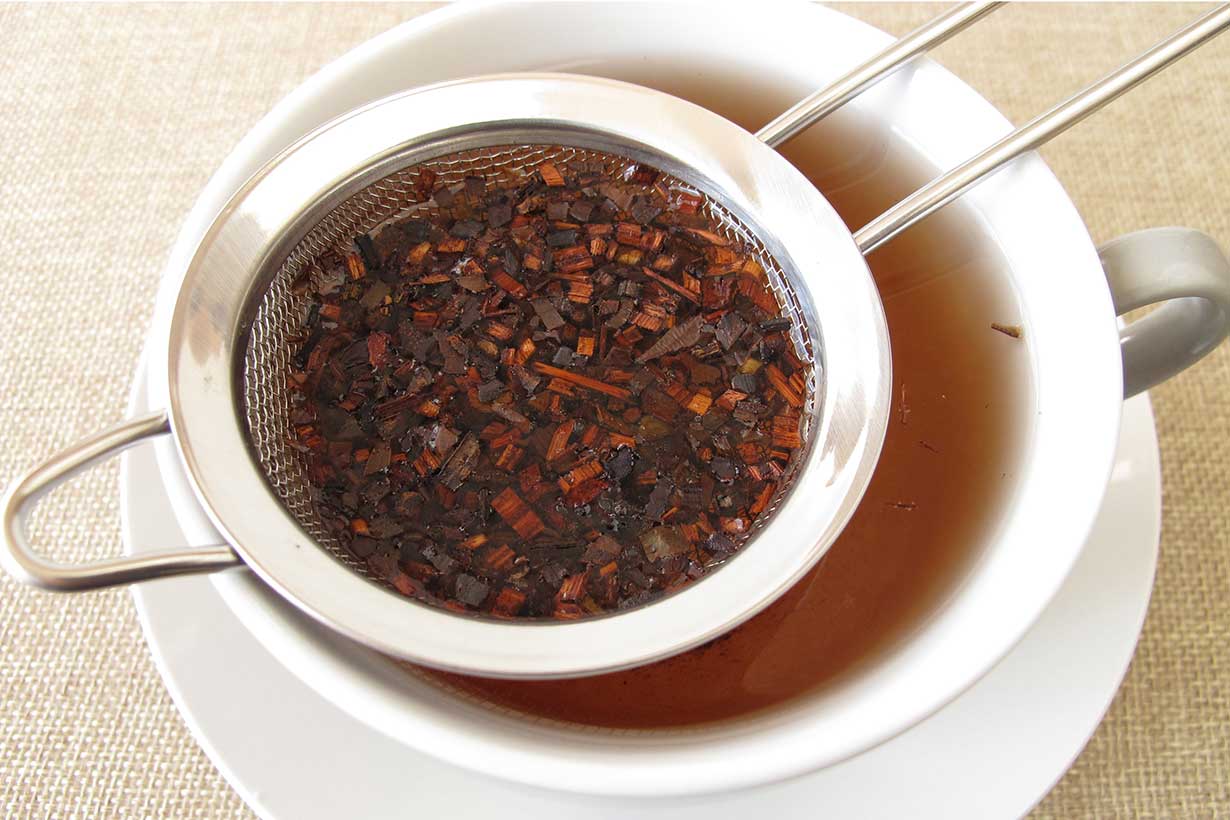
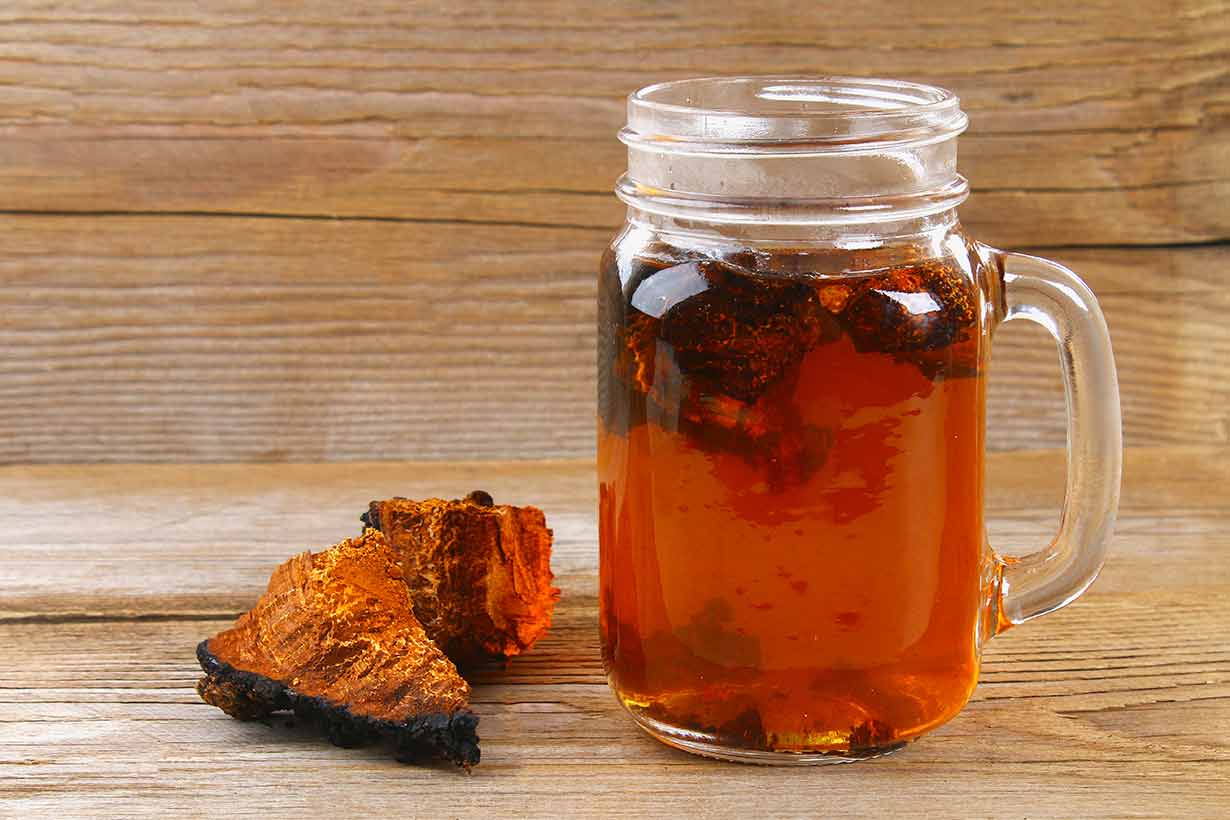
The chaga mushroom is a fungus that grows on birch trees, and the tea is made by boiling dried pieces of the mushroom. The tea doesn’t taste how you might imagine a mushroom tea to taste, and it has a somewhat earthy and bitter flavor.
Mushroom tea has become a popular drink over recent years due to its purported medicinal properties.
However, much of the interest in chaga mushroom tea stems from its long history of use as a traditional herbal remedy in Russia and Siberia.
The actual science behind its potential health effects is uncertain, with no randomized controlled trials testing its effects in humans.
18) Chrysanthemum Tea
Name
Chrysanthemum tea
Scientific name
Chrysanthemum indicum
Caffeine
No
Flavor
Mild, floral, mildly sweet
Chrysanthemums are flowering plants that can vary in color. By steeping these dried flowers in hot water, we can make chrysanthemum tea.
Like some other flower teas, chrysanthemum has a floral aroma and a light, mildly sweet flavor. Traditionally used as a herbal medicine in East Asia, there are claims that the drink may have anti-inflammatory properties.
Chrysanthemum extracts have been investigated for their potential health effects due to the high concentrations of polyphenols they contain.
In one example, a randomized controlled trial found that chrysanthemum extract could slightly reduce the post-meal blood sugar rise and increase blood antioxidant levels after consuming a high-fat meal.
However, there is limited research on chrysanthemum tea itself.
19) Dandelion Tea
Name
Dandelion tea
Scientific name
Taraxacum officinale
Caffeine
No
Flavor
Mild and earthy to bold and nutty
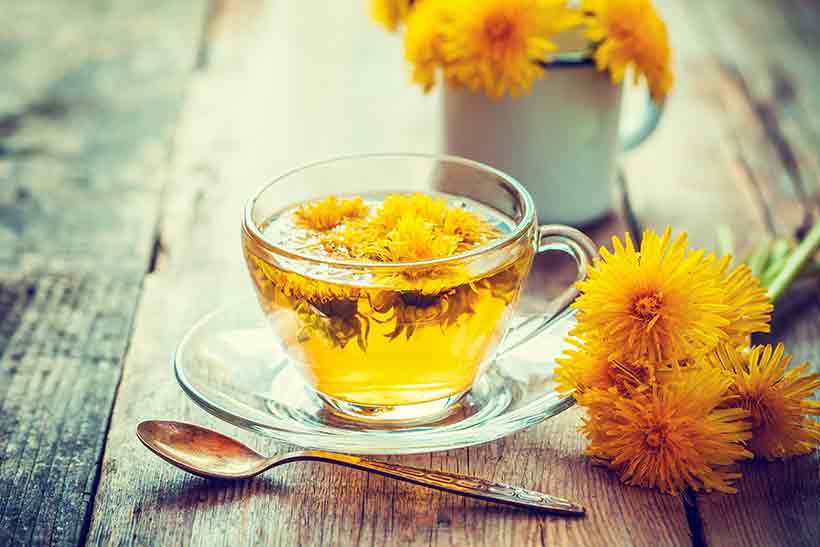
Dandelions grow on almost every continent, so you may spot them in local fields or even in your garden. But did you know that their leaves, flowers, and roots are all edible and can be used to make tea?
While the flowers and leaves are light and mildly sweet, the roasted roots impart a bolder, earthy, and nutty flavor.
There are claims that dandelion tea has digestive benefits, but there is limited evidence to support these claims. For instance, the National Institutes of Health notes that “there’s no compelling scientific evidence supporting the use of dandelion for any health condition.”
20) Essiac Tea
Name
Essiac tea
Scientific name
N/A (it’s a blend)
Caffeine
No
Flavor
Earthy, grassy, slightly bitter
Essiac tea is a tea from Canada made from several herbs, including burdock root, slippery elm, sheep sorrel, and Indian rhubarb root.
The tea has a slightly bitter, earthy and grassy flavor.
Essiac tea has received media attention largely due to overconfident claims about it having an “anticancer” effect. This mainly comes from some (but not all) cell and test tube studies indicating that large doses of essiac extracts may have DNA-protective effects in cells.
The dried leaves of the lemon balm plant make a refreshing tea with a mild citrusy and slightly minty flavor. This makes sense, as lemon balm is a member of the mint family of plants.
Some recent randomized controlled trials have suggested that lemon balm extracts may help improve insomnia symptoms and lower blood pressure in patients with high blood pressure. The limitation here is that these were concentrated extracts rather than the tea.
That said, a randomized controlled trial using actual lemon balm teabags found that twice daily consumption over 12 weeks slightly reduced fasting blood sugar, total cholesterol, and triglyceride levels.
However, this was just one small study involving 60 participants, so further research is necessary to confirm the findings.
23) Moringa Tea
Name
Moringa tea
Scientific name
Moringa oleifera
Caffeine
No
Flavor
Earthy, grassy, slightly bitter
Moringa tea is made from the dried leaves of the moringa plant. With a light, earthy and grassy taste, the tea is mild but it has slightly bitter notes.
Interestingly, moringa leaves are a notable source of vitamin C, providing around 200 mg per 100 grams. However, a typical moringa tea will likely contain less than 2 grams of dried leaf; it’s unclear what the vitamin C content would be after drying.
There is limited evidence on moringa leaves or tea from human trials, with most studies focusing on extracts.
However, a 2023 clinical trial found that consuming 20–60g of moringa leaves daily for 14 days had no significant effect on blood sugar, blood pressure, or cholesterol. Given the substantially lower amounts of leaf used for tea, it is unlikely that moringa tea would have an effect on these health markers.
24) Nettle Tea
Name
Nettle tea
Scientific name
Urtica dioica
Caffeine
No
Flavor
Mild, grassy
While nettles can cause painful stings, nettle tea has a light and grassy, refreshing taste.
Notably, a systematic review of 8 randomized controlled trials indicated that nettle leaf may have benefits for controlling fasting blood glucose, but the authors noted that further research is necessary due to the mixed quality of the included studies.
25) Pau d’arco Tea
Name
Pau d’arco tea
Scientific name
Handroanthus impetiginosus
Caffeine
No
Flavor
Earthy, fruity, woody
Pau d’arco tea is also known as lapacho and it is made from the dried and cut bark of the pau d’arco tree. The tree grows predominantly in the Americas, particularly Central and South America.
The tea has an interesting and complex flavor, with earthy, woody, and fruity notes.
However, there are many unsubstantiated health claims about the tea, largely because it has gained notoriety as a popular “health product” with a wide range of sellers.
There are no controlled human studies that provide evidence of health benefits.
On this note, the Memorial Sloan Kettering Cancer Center notes that while laboratory (cell) studies show antibacterial and anticancer effects, human studies are necessary to confirm these effects.
26) Raspberry Leaf Tea
Name
Raspberry leaf tea
Scientific name
Rubus idaeus
Caffeine
No
Flavor
Earthy, grassy
Raspberries are among the most popular fruits for their sweet and delicate flavor, and the leaves of the plant can be used to make raspberry leaf tea.
However, despite its name, the tea tastes nothing like raspberries and has a similar grassy taste to many leaf teas.
Raspberry leaf has a long tradition of use as a herbal remedy and has been purported to shorten labor. However, a systematic review has shown that the evidence base for these claims is weak.
27) Rose Tea
Name
Rose tea
Scientific name
Rosa species
Caffeine
No
Flavor
Mildly sweet, floral, slightly tart
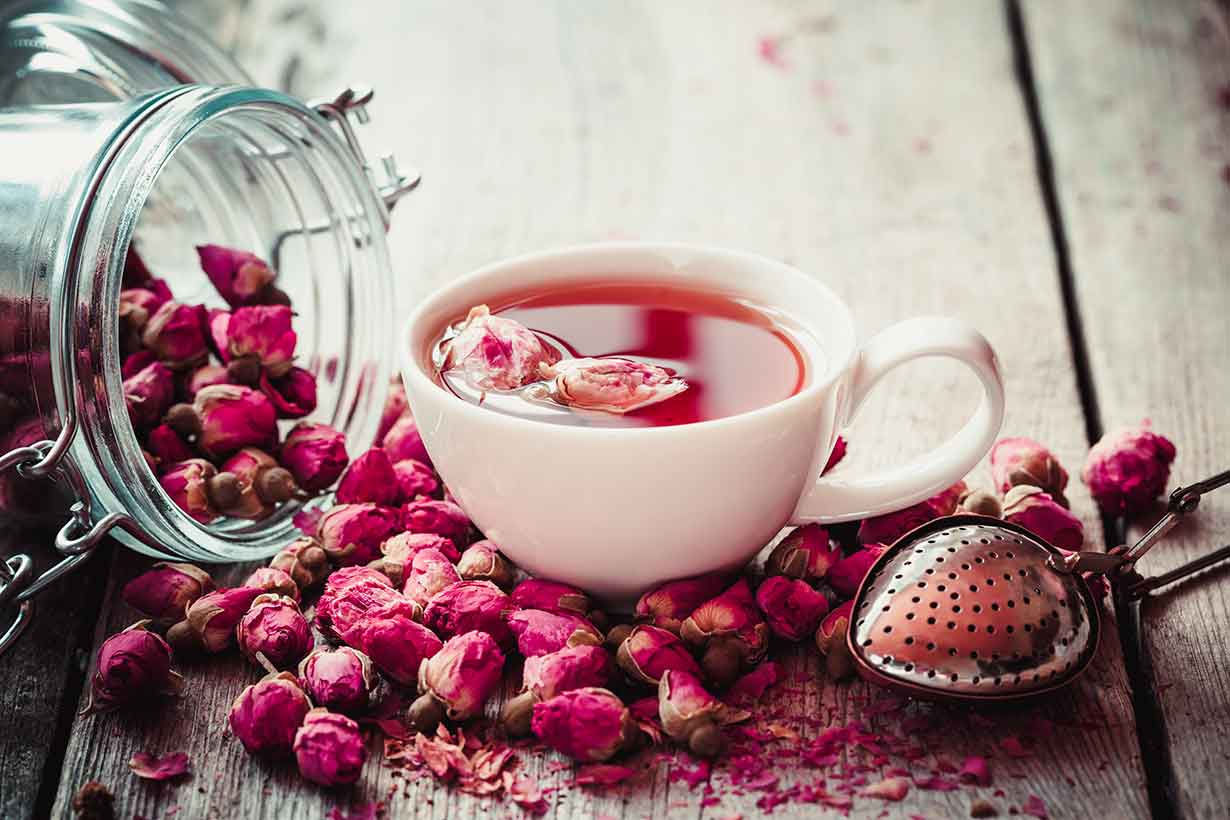
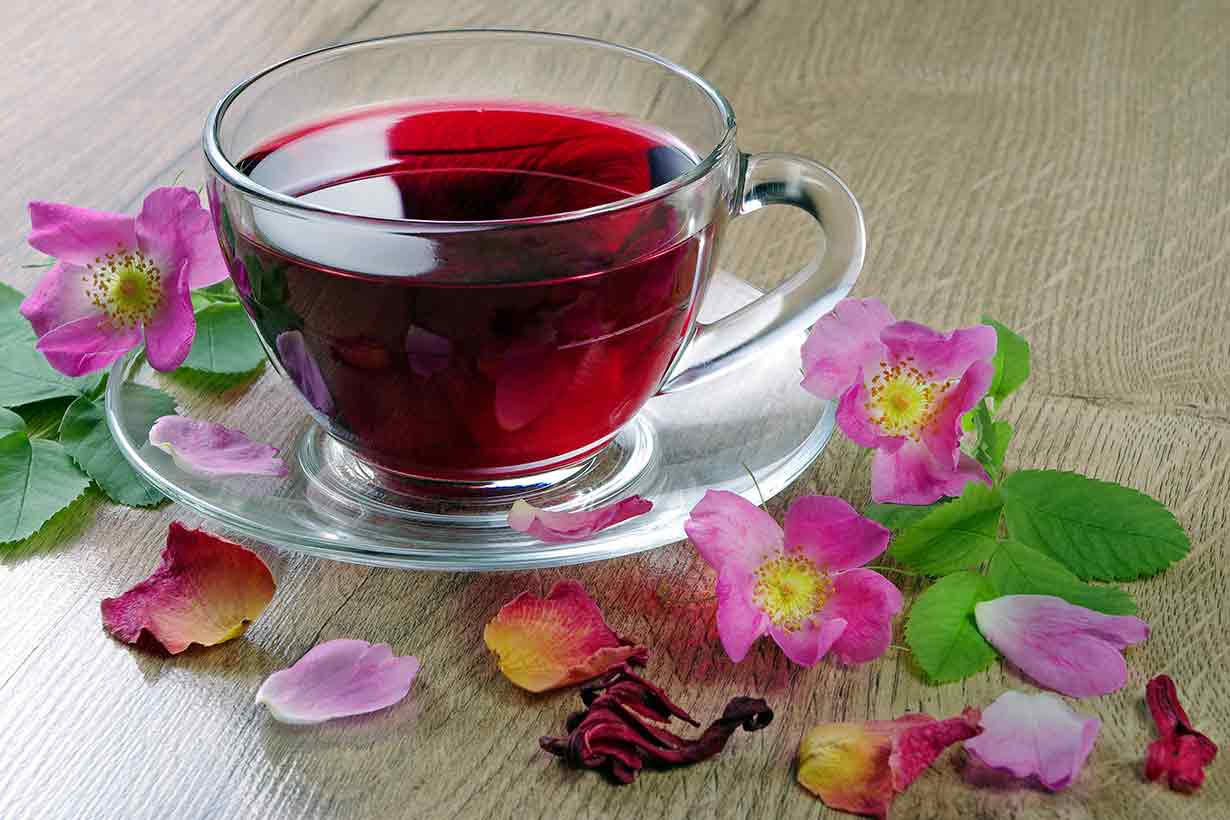
Steeping the dried petals and buds of the rose flower in hot water makes a light, mildly sweet and tart drink known as rose tea.
The slightly tart notes come from the citric and malic acid content of rose petals, which provide a slightly acidic taste similar to other flower petal teas like hibiscus.
Dried rose petals contain a notable amount of anthocyanins, the same class of polyphenols found in berries with blue, purple, red, and black pigments.
A 2005 randomized controlled trial involving 130 adolescents found that rose tea may ease symptoms of menstrual pain. However, there has been little experimental research on this topic since, and as it’s just one study, further research is necessary to support the finding.
28) Rosemary Tea
Name
Rosemary tea
Scientific name
Salvia rosmarinus
Caffeine
No
Flavor
Earthy, minty
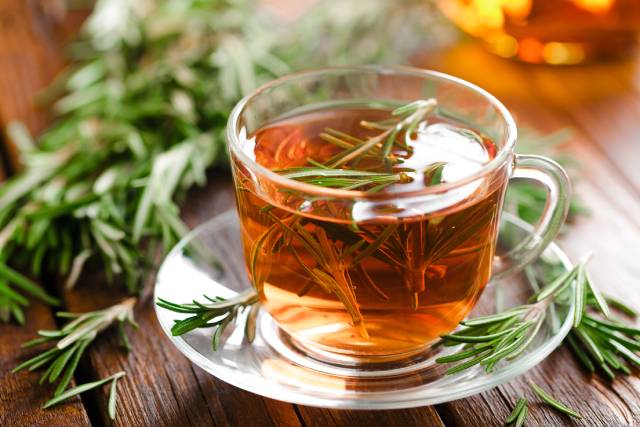
Rosemary isn’t just a herb for culinary purposes, and steeping a teaspoon or so of its dried leaves in hot water makes a herbal tea infusion.
After steeping for several minutes, the color of the water will be light yellow and offer a mild taste, but steeping for longer durations provides a more flavorful, bolder rosemary tea. The taste is slightly earthy and mildly minty.
Rosemary is also a rich source of polyphenols like rosmarinic acid, but there is a lack of strong research from human trials on its potential health effects. While a systematic review suggested rosemary extract may support cognitive improvements in lab animals, this says little about humans drinking the tea.
Senna is a bitter-tasting, earthy tea that comes from a variety of flowering plants known by the same name, or ‘Senna alexandrina‘ scientifically.
Senna is approved for over-the-counter sale in the United States as a laxative, due to research showing senna’s chemical constituents (sennosides) may help to relieve occasional constipation. However, this approval does not apply to senna tea.
There is a lack of research from human trials on senna tea.
30) Butterfly Pea Flower Tea
Name
Butterfly pea flower tea
Scientific name
Clitoria ternatea
Caffeine
No
Flavor
Earthy, floral
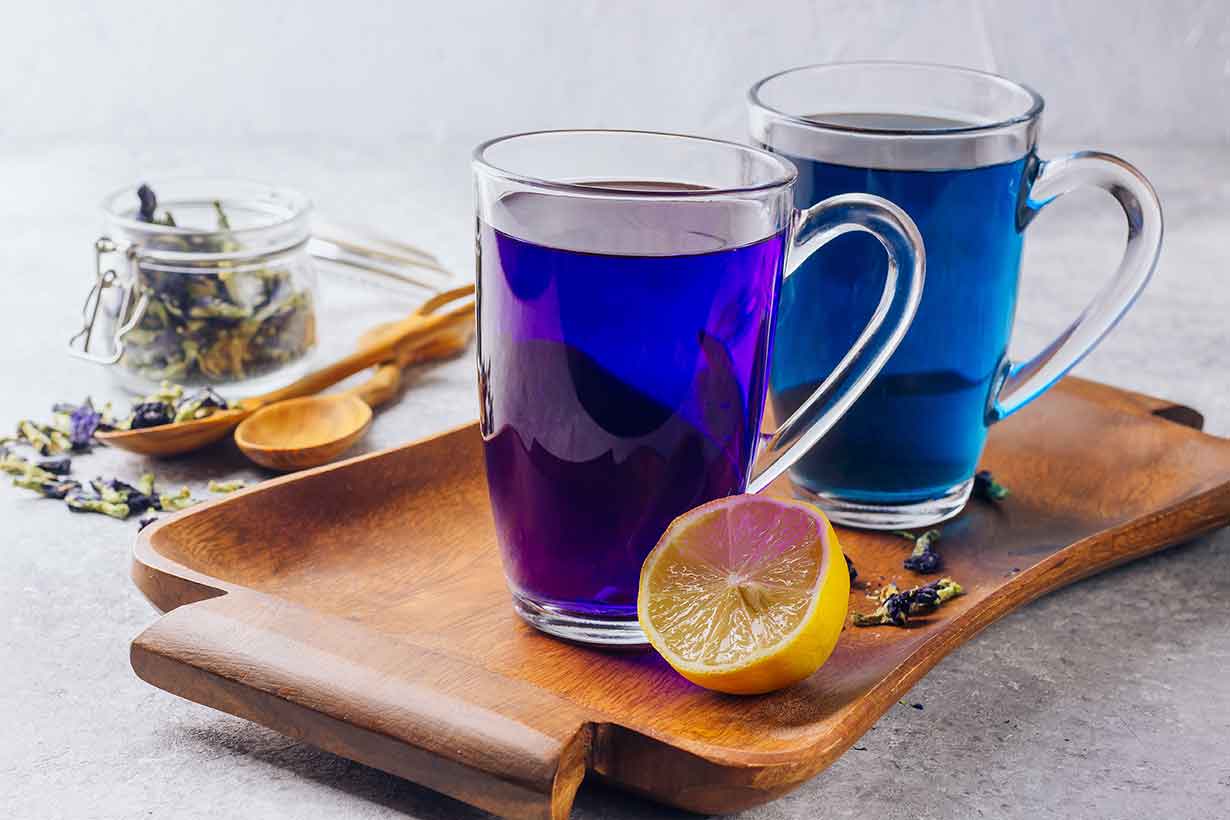
Butterfly pea flower tea is a unique traditional drink from South-East Asia with a striking blue appearance.
The tea has an earthy flavor, and the color attracts attention. This deep blue color comes from the high anthocyanin content of butterfly pea flower petals.
A randomized crossover trial found that consuming butterfly pea flower tea alongside 50 grams of sugar improved post-meal blood sugar, insulin, and antioxidant levels compared to sugar alone.
However, this was only a small trial involving 15 participants so the strength of this evidence is relatively low. Other than this small trial, there is limited research on butterfly pea flower tea’s effect in humans.
Which Tea is the Best Choice For You?
Since most teas have a similar calorie-free and polyphenol-rich composition, taste and enjoyment is probably the best reason to choose a specific tea. In this regard, the best-tasting tea is completely subjective, so favorites will vary from person to person.
If you’re looking for something healthy, then the tea options with the most-notable existing research base are probably green and black teas as well as hibiscus.
However, be cautious about overconfident claims surrounding tea, as any single drink will only have minimal (if any) benefits.
It is always the overall dietary pattern that matters most; some tea drinks may contribute to a healthy dietary pattern, but they’re not magic.